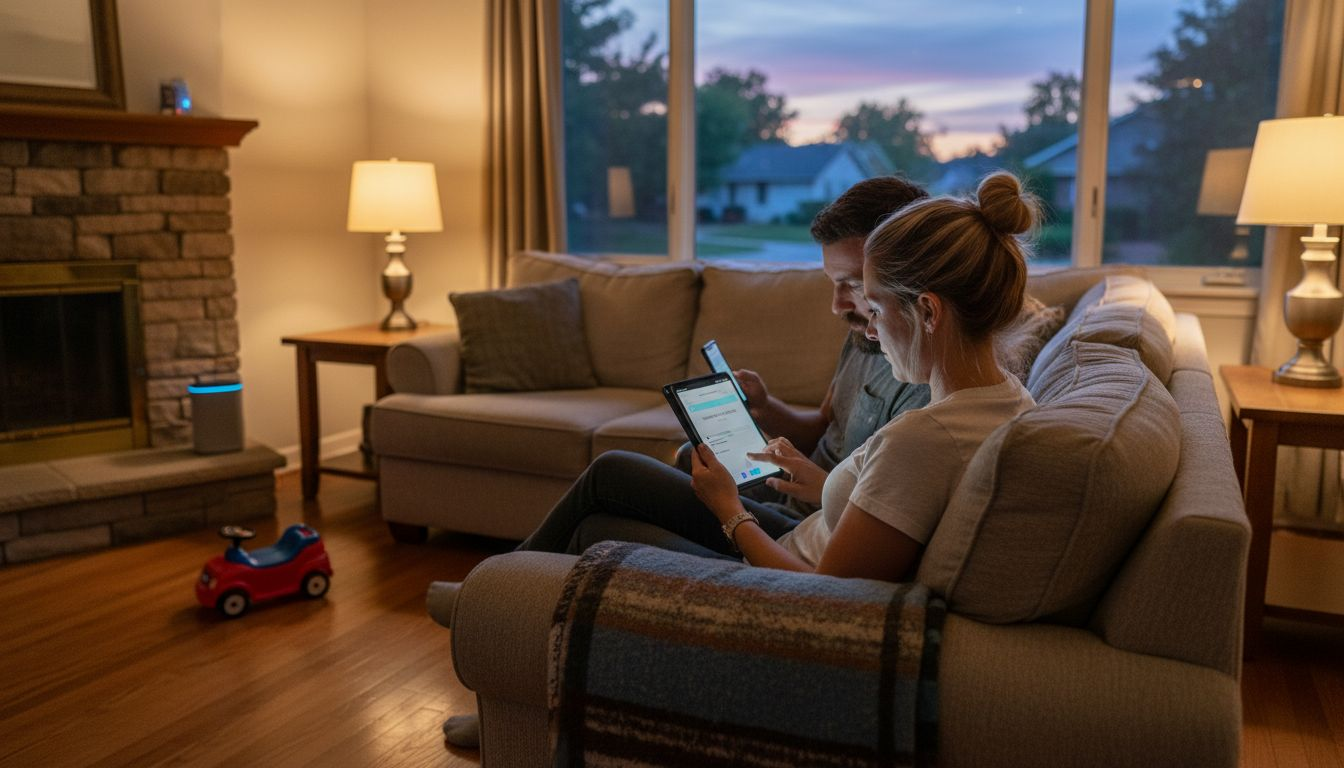
Trying to keep up with lights, temperature, and security while juggling work and family can get overwhelming fast, which is why understanding AI trends in smart homes 2026 matters more than ever. Modern smart home systems are no longer just about convenience—they are fast becoming the core of intelligent living. By 2026, AI-powered automation will let homes in Canada and the United States interact with your habits, predict your needs, and optimize energy use, offering more comfort and better savings with less effort every day.
Table of Contents
- What Makes AI Essential In Smart Homes 2026
- Core Smart Home AI Types And Innovations
- Local AI Processing Vs. Cloud-First Models
- Smart Energy Management And Sustainability Impact
- Advanced Security Integrations And Privacy Safeguards
- Costs, Pitfalls, And Choosing The Right AI Ecosystem
Key Takeaways – AI trends in smart homes 2026
| Point | Details |
|---|---|
| AI Drives Smart Home Transformation | By 2026, AI will transform homes into intelligent environments that anticipate and respond to residents’ needs. |
| Focus on Local Processing | Prioritize smart home devices that process data locally for faster responses and enhanced privacy. |
| Emphasize Energy Efficiency | Implement AI technologies for smarter energy management to reduce environmental impact and utility costs. |
| Robust Security Measures Are Essential | Choose systems that incorporate advanced security features to protect personal privacy and mitigate digital threats. |
What Makes AI Essential in Smart Homes 2026
Artificial Intelligence (AI) is rapidly transforming smart home experiences, turning ordinary living spaces into intelligent, responsive environments. By 2026, AI will be more than a technological novelty – it will become the backbone of home automation and personalized living. Advanced AI technologies are enabling homes to become proactive partners in daily life, anticipating needs and optimizing comfort.
The core value of AI in smart homes centers on its ability to intelligently collect, analyze, and respond to environmental data. Unlike traditional connected devices that simply receive commands, AI-powered systems can learn, predict, and autonomously adjust home conditions. This means your living space becomes dynamically responsive:
- Predictive Climate Control: Automatically adjusting temperature based on occupancy and personal preferences
- Enhanced Security: Real-time threat detection and personalized alert systems
- Energy Optimization: Intelligent power management that reduces waste
- Personalized Ambient Settings: Lighting, sound, and environment tailored to individual moods
The sophistication of AI integration goes beyond simple automation. Intelligent home systems are developing the capability to understand complex human behaviors and preferences. This means your home doesn’t just respond to commands – it anticipates them, creating a truly intuitive living experience.
Pro tip: When upgrading to an AI-powered smart home, prioritize systems with robust machine learning capabilities that can adapt and improve over time.
Core Smart Home AI Types and Innovations – AI trends in smart homes 2026
Artificial Intelligence in smart homes is evolving beyond simple automation, introducing sophisticated AI technologies for intelligent environments. These advanced systems are transforming how we interact with our living spaces, creating responsive, adaptive, and predictive home ecosystems that anticipate and fulfill our needs.
The core AI types driving smart home innovations can be categorized into several groundbreaking technologies:
- Machine Learning Algorithms: Capable of analyzing user behaviors and preferences
- Neural Network Systems: Enabling complex decision-making and pattern recognition
- Voice Recognition Technologies: Facilitating natural language interactions
- Predictive Analytics: Forecasting energy consumption and home maintenance needs
- Computer Vision: Enhancing security and environmental monitoring
Intelligent automation represents the pinnacle of these technological advancements. IoT and AI integration now allows homes to learn, adapt, and optimize themselves continuously. These systems can automatically adjust lighting, temperature, and security protocols based on residents’ habits, creating a truly personalized living experience.
The future of smart homes lies in their ability to understand and predict human behavior. Advanced AI models are developing capabilities that go far beyond simple command responses, creating intuitive environments that feel almost sentient in their responsiveness and anticipation of resident needs.
Here’s a concise overview of how core smart home AI types differ in their capabilities and impact:
| AI Type | Primary Function | Real-World Benefit |
|---|---|---|
| Machine Learning | Analyzes behavioral data | Adapts to resident routines |
| Neural Networks | Executes complex decisions | Enables nuanced environment control |
| Voice Recognition | Processes spoken commands | Offers hands-free interaction |
| Predictive Analytics | Forecasts patterns and needs | Reduces maintenance surprises |
| Computer Vision | Interprets visual information | Enhances security monitoring |
Pro tip: When selecting AI-powered smart home systems, prioritize platforms with robust machine learning capabilities that demonstrate continuous improvement and adaptability.
Local AI Processing vs. Cloud-First Models
Local AI processing strategies are revolutionizing smart home technology, introducing a new paradigm of data management and computational intelligence. The emerging approach prioritizes on-device processing, fundamentally transforming how smart home devices handle information, respond to commands, and protect user privacy.
The key distinctions between local AI processing and cloud-first models include:
- Speed of Response: Local AI provides near-instantaneous device reactions
- Privacy Protection: Minimizes external data transmission
- Network Independence: Continues functioning during internet outages
- Reduced Latency: Processing occurs directly on the device
- Enhanced Security: Limited exposure to external network vulnerabilities
Hybrid architectures are becoming the preferred solution. Smart home technology integration now balances local processing capabilities with cloud-based computational resources. This approach allows devices to handle immediate tasks locally while leveraging cloud infrastructure for complex data analysis and system updates.

The evolution of smart home AI is moving towards a more distributed intelligence model. Local processing hubs can now perform sophisticated machine learning tasks that previously required substantial cloud computing power, enabling more responsive and personalized home environments without compromising data privacy or system reliability.
Use this quick comparison to understand local vs. cloud AI processing in smart homes:
| Aspect | Local Processing | Cloud Processing |
|---|---|---|
| Privacy | Keeps data onsite | Shares with external servers |
| Speed | Immediate responses | Depends on internet speed |
| Reliability | Works offline | Requires active connection |
| Security | Reduced external exposure | Potential network vulnerabilities |
Pro tip: When selecting smart home devices, prioritize systems that offer a balanced approach to local and cloud processing, ensuring both performance and privacy.
Smart Energy Management and Sustainability Impact
Artificial neural networks are revolutionizing energy management in smart homes, transforming how households consume and optimize their power usage. By leveraging advanced AI technologies, homeowners can now achieve unprecedented levels of energy efficiency and sustainability, reducing both environmental impact and monthly utility expenses.
Key strategies for smart energy management include:
- Predictive Energy Consumption: Forecasting and adjusting power use in real-time
- Grid-Aware Appliance Control: Synchronizing device operations with peak and off-peak energy rates
- Dynamic Temperature Regulation: Automatically adjusting heating and cooling systems
- Renewable Energy Integration: Optimizing solar and battery storage performance
- Comprehensive Energy Monitoring: Providing detailed insights into household energy patterns
IoT and AI technologies enable comprehensive energy management by creating intelligent ecosystems that adapt to household behaviors. Smart thermostats, connected appliances, and sensor networks work together to minimize energy waste, automatically making micro-adjustments that collectively produce significant sustainability benefits.

The sustainability impact extends beyond individual homes. As more households adopt these intelligent energy management systems, the cumulative effect can dramatically reduce overall energy demand, supporting broader environmental conservation efforts and helping to mitigate climate change challenges.
Pro tip: Invest in smart home systems that offer granular energy tracking and provide actionable recommendations for reducing your carbon footprint.
Advanced Security Integrations and Privacy Safeguards
AI ethics in smart home security have become a critical frontier in protecting personal privacy and ensuring technological trust. Modern smart home systems are evolving beyond simple monitoring, implementing sophisticated security frameworks that anticipate potential vulnerabilities and proactively defend against emerging digital threats.
Key advanced security technologies include:
- Intelligent Behavior Analysis: Detecting unusual patterns and potential security breaches
- Biometric Authentication: Using facial recognition and voice verification
- Encrypted Communication Protocols: Securing data transmission between devices
- Anomaly Detection Algorithms: Identifying potential cyber threats in real-time
- Contextual Access Control: Managing device permissions based on user context
IoT security integration transforms smart home networks into dynamic, self-protecting ecosystems. Advanced AI systems now continuously learn and adapt, creating multi-layered security approaches that go beyond traditional perimeter defense models. These intelligent systems can distinguish between normal household activities and genuine security risks with unprecedented accuracy.
The future of smart home security lies in creating seamless, transparent protection mechanisms that operate invisibly in the background. By prioritizing user privacy and implementing ethical design principles, these advanced systems ensure that technological convenience never comes at the expense of personal security.
Pro tip: Regularly update your smart home security firmware and use multi-factor authentication to create multiple layers of protection.
Costs, Pitfalls, and Choosing the Right AI Ecosystem
Smart home technology investments require careful consideration of long-term value and potential challenges. The decision to integrate AI into your home ecosystem goes far beyond initial purchase prices, encompassing complex factors like compatibility, maintenance, and potential future upgrades.
Key considerations when evaluating AI ecosystems include:
- Initial Hardware Costs: Upfront device and installation expenses
- Interoperability Challenges: Ensuring devices communicate seamlessly
- Data Privacy Risks: Understanding vendor data collection policies
- Ongoing Maintenance Expenses: Software updates and potential repairs
- Energy Consumption Impact: Long-term operational costs
Smart home ecosystem selection demands a strategic approach that balances technological capabilities with practical constraints. Homeowners should prioritize platforms supporting open standards like Matter 1.3, which enable cross-device compatibility and reduce vendor lock-in risks. This approach ensures greater flexibility and future-proofing of your smart home investment.
Successful AI ecosystem adoption requires understanding potential pitfalls. While advanced technologies promise unprecedented convenience, users must remain vigilant about security vulnerabilities, potential data breaches, and the complexity of managing interconnected systems. The most successful smart home implementations will be those that provide robust security, transparent data practices, and genuine value to users.
Pro tip: Before committing to an AI ecosystem, request comprehensive demonstrations and thoroughly review compatibility specifications with your existing devices.
Unlock the Full Potential of AI in Your Smart Home Today
Navigating the evolving world of AI-powered smart homes can be overwhelming. You face challenges like choosing the right AI ecosystem, ensuring privacy with local versus cloud processing, and managing security without sacrificing convenience. This article highlights the critical need for intelligent, adaptive systems that deliver personalized comfort, energy efficiency, and robust protection. If you want to transform your living environment with technology that truly understands your needs and safeguards your privacy, expert guidance is essential.

Discover how to build a smarter, safer home by exploring The Complete Smart Home Automation Master Guide Archives – Smart Home HQ. Our detailed reviews and step-by-step guides help you select AI-powered devices that prioritize privacy, energy savings, and seamless integration. Whether you are upgrading existing gadgets or starting fresh, our insights give you the confidence to choose wisely and act now. Visit Smart Home HQ to empower your smart home journey and unlock the benefits of AI trends in 2026 and beyond.
Frequently Asked Questions
What are the primary benefits of using AI in smart homes by 2026?
AI in smart homes offers enhanced convenience through predictive climate control, improved security features, energy optimization, and personalized ambient settings that adapt to individual preferences.
How do local AI processing and cloud processing differ in smart home applications?
Local AI processing offers immediate responses and enhanced privacy, while cloud processing relies on internet connectivity and may have increased latency. Hybrid models combine the strengths of both to optimize performance and security.
What types of AI technologies are critical for smart home innovation?
Key AI technologies include machine learning algorithms, neural networks, voice recognition, predictive analytics, and computer vision, all of which contribute to creating intuitive and responsive living environments.
How can homeowners ensure energy efficiency with smart home technology?
Homeowners can achieve energy efficiency through systems that forecast energy consumption, synchronize appliance usage with energy rates, and utilize smart temperature regulation and renewable energy integration.
Recommended
- Smart Home Trends 2026: How AI Reshapes Urban Living
- Role of AI in Smart Homes – Real Impact and Innovation
- Senior Quality Of Life Increases With 2026 Smart Technology
- Why Smart Home Networks Matter for Security and Ease