⚡ The Silent Guardian: How Ting Saved My Home from Electrical Dangers I Never Knew Existed
Affiliate Disclosure: This post contains affiliate links. When you purchase through links on this page, Smart Home HQ may earn a commission at no extra cost to you. This helps support our site and allows us to continue providing helpful smart home reviews and guides.
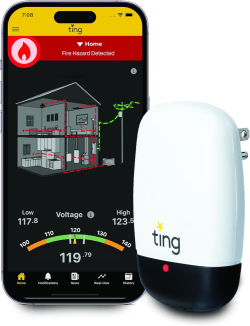
The Ting fire prevention sensor is a revolutionary whole-home electrical monitoring system designed to detect hazardous conditions before they cause fires. After using this device for six months, I’m sharing my complete experience with how it works, what it detected, and whether it’s worth the investment for your home’s safety.
The Ting Fire Prevention Sensor: A 24/7 Electrical Guardian
“Prevents 80% of electrical fires before they start.” The claim, according to the National Fire Protection Association, electrical failures are a leading cause of home fires, making proactive monitoring essential. seemed almost too good to be true. The Ting sensor product page arrived in a simple box—no bigger than a hardcover book. Inside was what looked like a slightly oversized smartphone charger and a promise: this little device would monitor my entire home’s electrical system, learning its unique “signature” and alerting me to dangers I couldn’t see.
I’ll admit, I was skeptical. How could something I plugged into a single outlet protect my entire 2,300-square-foot home? But I made a commitment to becoming a smart home so Ting seemed like a natural addition.
The Two-Minute Miracle: Installation Was Almost Too Easy
My wife watched, amused, as I opened the box. “Another gadget?” she teased. But even she couldn’t argue with the simplicity.
1:15 PM: I plugged Ting into an outlet in our central hallway.
1:16 PM: Downloaded the app.
1:17 PM: Connected to Wi-Fi.
1:18 PM: The green light glowed steadily. We were protected.
“That’s it?” my wife asked.
“That’s it,” I replied, feeling both relieved and somehow underwhelmed. Where were the complicated instructions? The technical setup? The inevitable call to customer support?
But Ting just… worked.
The First Alert: “Your Home Is Experiencing Brownouts”
One week later, I got my first notification. Not a fire alarm. Not a smoking outlet. Something far more subtle—and in some ways, more frightening.
Ting Alert: We’ve detected brief voltage drops (brownouts) in your home’s electrical supply. These occurred yesterday at 6:15 PM and 7:30 PM.
I stared at my phone. Brownouts? In my home? I hadn’t noticed anything. No flickering lights. No electronics resetting. Nothing.
I opened the app and found a detailed timeline showing exactly when these voltage drops had occurred—both times right as our neighborhood was likely cooking dinner, running dishwashers, and watching TV. The app explained that brownouts stress electronics and can indicate problems with the local grid or my home’s electrical system.
This was my first revelation: My home had electrical issues I couldn’t see, hear, or smell. Issues that were quietly damaging our appliances and potentially leading to bigger problems.
Becoming an Electrical Detective: What Ting Taught Me About My Home
Over the next month, Ting transformed from a simple monitoring device into my personal electrical detective. Through the app, I learned:
My Home’s “Baseline”: Ting showed me what normal electrical activity looked like for our house. I could see the gentle uptick when the refrigerator cycled on, the predictable spike when the air conditioner kicked in, the steady draw from our always-on devices.
The Storm Pattern: During a thunderstorm, Ting alerted me to “voltage fluctuations” before the lights even flickered. The app explained this was normal during storms but gave me peace of mind that my system was handling it appropriately.
The Ghost Loads: I discovered several “phantom loads”—devices drawing power even when “off.” That old DVD player in the guest room? Drawing power 24/7. The printer in my office? Same.
The Community of the Protected: 1 Million Homes and Counting
As I’ve lived with Ting, I’ve come to appreciate that I’m part of something larger. The app occasionally shares (anonymous) community insights:
- “15 homes in your state detected similar issues this month”
- “Your electrical health score is better than 82% of similar homes”
- “1,023 potential electrical fires prevented this week nationwide”
There’s comfort in numbers. Knowing that over 1 million homes are being monitored, that 15,000 families have potentially been saved from disaster—it transforms Ting from a “gadget” into a movement. A quiet revolution in home safety.
The Real Cost: Beyond Dollars and Cents
Yes, there’s the initial investment for the Ting fire prevention sensor and first year of service. Yes, there’s the annual fee after that. But how do you quantify:
- Sleeping through the night without worrying about electrical fires?
- Knowing that if something goes wrong, I’ll be alerted immediately?
- The education about my home’s electrical system that I never knew I needed?
- The potential prevention of a fire that could cost tens of thousands in damages—or worse?
For me, it breaks down to about 13 cents per day after the first year. Less than a postage stamp. Less than a single load of laundry. For 24/7 protection.
The Limitations: What Ting Can’t Do
In the interest of full transparency, Ting isn’t magical:
- It can’t pinpoint exact locations of issues within walls (though it can identify affected circuits)
- It requires Wi-Fi (though this is necessary for its function)
- It’s U.S. only for now
- It doesn’t replace smoke detectors or common sense
- It won’t prevent all electrical fires (though 80% is remarkable)
- It can’t detect smoke, carbon monoxide, or water leaks
Six Months Later: A Transformed Relationship with My Home
Today, Ting sits quietly in my hallway, its green light a constant, gentle reminder: “I’ve got this.”
The anxiety that followed my brownout experience has largely faded. I don’t unplug everything at night anymore. I don’t jump at every flicker. Instead, I have data. Understanding. Awareness.
My biggest surprise wasn’t discovering a major fault—it was learning about the brownouts. Those silent, invisible voltage drops that were stressing my electronics and indicating grid issues I never knew existed. That knowledge alone has saved me potential thousands in appliance repairs.
Would I Recommend Ting? A Heartfelt Yes—With Context
If you’re considering Ting, here’s my advice:
- You own your home (especially if it’s older)
- You’ve ever had electrical concerns or issues
- You want proactive rather than reactive protection
- You value data and understanding your home’s systems
- Peace of mind is worth a modest investment to you
Consider alternatives if:
- You’re on an extremely tight budget (though I’d argue safety isn’t where to cut corners)
- You rent and can’t get landlord approval
- You live outside the U.S.
- You want something that requires zero ongoing costs
The Bottom Line: An Ounce of Prevention
They say an ounce of prevention is worth a pound of cure. In the case of electrical fires, I’d argue it’s worth far more. Ting has given me something no smoke detector ever could: early warning. The kind of warning that comes not when smoke appears, but when the conditions for smoke begin to develop.
That little white device in my hallway? It’s more than technology. It’s a guardian. A teacher. A watchful eye on the invisible currents that power our lives.
And in a world where we can monitor our fitness, our finances, and our social connections from our phones, doesn’t it make sense to monitor the very thing that could save—or take—everything we’ve built?
Your Turn: Have you experienced electrical scares in your home? Are you using any monitoring technology? I’d love to hear your stories and questions in the comments below. Let’s make our homes safer, together. 🔌❤️🏠
Note: I purchased Ting with my own funds and have no affiliation with the company. This narrative reflects my genuine experience as a homeowner seeking greater safety and peace of mind.