Blog

  • Bathroom Exhaust Fan Fire Danger

    Bathroom Exhaust Fan Fire Danger

    Bathroom Exhaust Fan Fire Danger: A Smart Homeowner’s Wake-Up Call

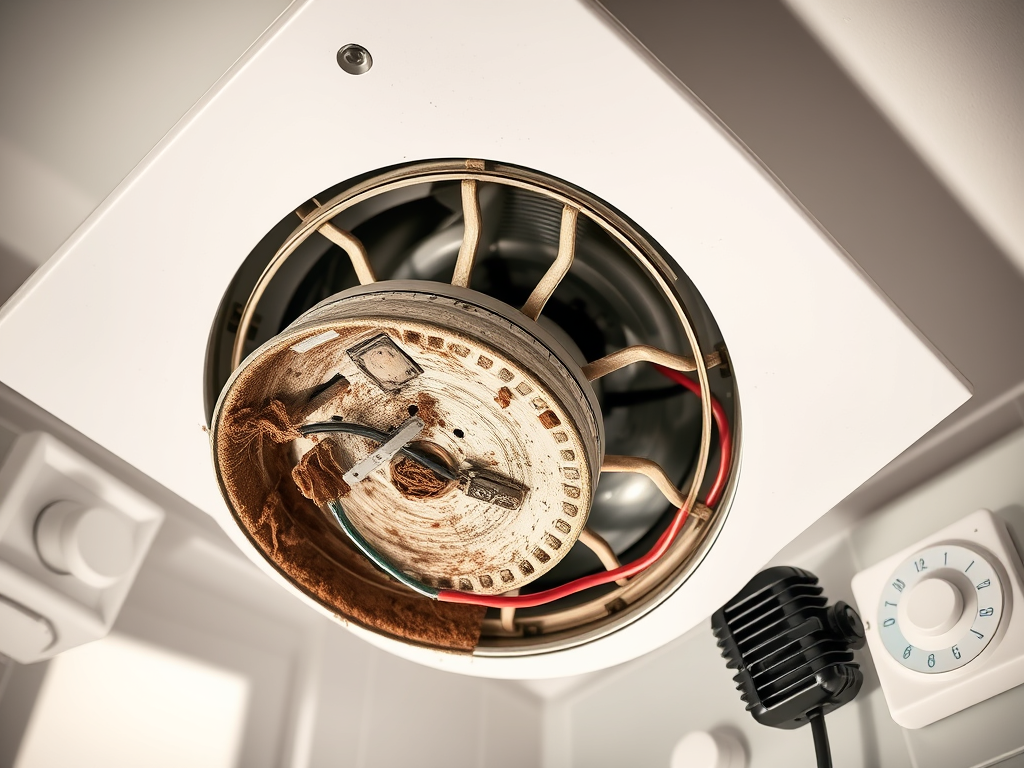
    Two fires in my neighborhood in just ten months—both traced back to bathroom exhaust fans—have me rethinking home safety. As someone who writes about smart homes, I see this as a critical intersection of technology, personal protection, and preventing disasters that could wipe out your connected devices and more. So let’s look at bathroom exhaust fan fire danger a little more in depth.

    The Real Risk: Bathroom Exhaust Fan Motors Danger

    Bathroom exhaust fans run quietly for hours, pulling moisture from showers. However, their motors can overheat and ignite due to age, dust buildup, or electrical faults. Verified research highlights electrical components in fans as common ignition points in home fires, especially in older models where insulation degrades over time. In my case, neighbors’ incidents underscore how these “set-it-and-forget-it” appliances become hidden hazards—motors seize, wires fray, and sparks fly without warning.


    This post contains affiliate links. We earn a commission if you click and purchase.


    Proven Ways to Slash Bathroom Exhaust Fan Fire Risk

    Don’t wait for smoke. Here are actionable steps grounded in safety best practices:

    • Replace the fan motor proactively: Swap out old, worn motors with energy-efficient, UL-listed models designed for longevity. This directly addresses overheating—the primary culprit in fan-related fires.
    • Install a timer switch: In my home, a simple timer switch limits runtime to 20-30 minutes post-shower, cutting exposure and eliminating “forgotten fan” worries when leaving the house. It’s a low-cost smart upgrade that pairs perfectly with home automation.

    Check out this reliable timer switch on Amazon (affiliate link): Recommended Bathroom Fan Timer Switch.

    • Upgrade to a full Matter smart exhaust fan (affiliate link) with humidity sensors that auto-shutoff, reducing motor strain.

    These tweaks can lower fire probability by minimizing runtime and heat buildup, based on electrical safety guidelines. I recommend using a licensed electrician for safe installation.

    Ting Sensor: Detecting Bathroom Fan Electrical Hazards

    For broader protection, the Ting Sensor device (Ting sensor and service) monitors your home’s electrical system 24/7, detecting arcs and faults—like those in fan motors—before they spark fires. Ting is statistically proven to prevent ~80% of electrical fires, significantly reducing electrical fire risk in homes. Ting alone cannot eliminate 100% of electrical fire risks. It sends instant app alerts, giving you time to act. Many insurance companies cover the cost (check yours!), or grab it affordably:

    Get the Ting Sensor at Amazon: Ting Electrical Fire Prevention Device (affiliate link). Peace of mind for under $100

    Beyond Bathroom Exhaust Fan Safety: Layered Smart Home Fire Protection

    No single tool suffices—combine with smoke and CO alarms on every level, tested monthly, and a security system that notifies residents and the fire department. In a smart home, integrate these via hubs like Alexa or Google Home for automated evacuations and pro monitoring.

    Recommended essentials:

    • Top-rated Smoke & Carbon Monoxide DetectorKidde Smoke & Carbon Monoxide Detector (affiliate link)
    • Whole-home security system starterRing Alarm Kit (affiliate link). Add Ring Alarm Smoke & CO Listener (affiliate link) (With a Ring Protect subscription (sold separately). Ring Alarm Smoke and CO Listener alerts you on your smart phone when your existing smoke and carbon monoxide detectors sound their alarms.)

    Protecting your smart home starts with fire prevention. Two neighbors’ scares were my alert—make it yours before it’s too late. Stay safe!

    Bathroom exhaust fan danger

  • Why Smart Home Security Matters for Urban Living

    Why Smart Home Security Matters for Urban Living

    Urban households today face a surge in digital threats that traditional locks cannot handle. With more than 60 percent of American homeowners now considering smart home security upgrades, safeguarding personal spaces has never demanded more attention. The security landscape is shifting for tech-focused families who want control, privacy, and real-time oversight. This guide breaks down the latest smart security options, helping you make confident decisions that protect your home and keep your data safe.

    Table of Contents

    Key Takeaways

    Point Details
    Integration of Devices Smart home security systems comprise interconnected devices ensuring comprehensive monitoring and protection.
    Enhanced Detection Capabilities Advanced technologies like machine learning enable precise threat identification while reducing false alarms.
    Privacy and Cybersecurity Risks Users must be aware of potential data collection and cybersecurity vulnerabilities with smart home devices.
    Cost Considerations Planning for the total cost of ownership, including installation and maintenance, is crucial when investing in security solutions.

    Defining Smart Home Security Solutions

    Smart home security solutions represent a sophisticated technological ecosystem designed to protect residential spaces through interconnected digital devices and intelligent monitoring systems. These advanced solutions go beyond traditional security methods by integrating network-connected devices that communicate seamlessly to provide comprehensive protection. Smart home security systems leverage Internet of Things (IoT) technologies to create adaptive, responsive environments that proactively safeguard urban living spaces.

    At their core, smart home security solutions typically include several key components that work together to create a robust protective network. These often encompass:

    • Motion sensors that detect unexpected movement
    • Smart cameras offering real-time video monitoring
    • Intelligent door locks with remote access control
    • Integrated alarm systems that trigger immediate alerts
    • Smartphone-connected interfaces for remote management

    The technological sophistication of these systems allows urban residents to monitor their homes from anywhere, providing unprecedented levels of control and peace of mind. Modern smart security solutions can distinguish between routine household activities and potential security threats, reducing false alarms while maintaining high-precision detection capabilities. Outdoor security cameras play a particularly crucial role in this ecosystem, offering visual verification and deterrence against potential intrusions.

    Pro tip: When selecting a smart home security system, prioritize compatibility between devices and ensure your chosen solution offers end-to-end encryption to protect against potential digital vulnerabilities.

    Infographic smart security devices features urban

    Types of Smart Security Devices Explained

    Smart security devices form an intricate network of technological guardians designed to protect urban homes through advanced sensing and monitoring capabilities. Smart home device classifications reveal a complex ecosystem of interconnected technologies that provide comprehensive protection against various security risks. These devices range from sophisticated sensors to intelligent monitoring systems, each serving a unique role in creating a comprehensive home security infrastructure.

    The primary categories of smart security devices include:

    • Smart Cameras: High-resolution video monitoring systems with motion detection
    • Smart Door Locks: Keyless entry systems with remote access control
    • Motion Sensors: Advanced detection devices that track unexpected movements
    • Smart Doorbells: Video-enabled entry monitoring with two-way communication
    • Environmental Sensors: Devices that detect smoke, carbon monoxide, and water leaks
    • Window and Entry Sensors: Perimeter protection devices that alert homeowners to unauthorized access

    Each device type brings unique capabilities to home security, leveraging advanced technologies like machine learning and artificial intelligence to distinguish between routine activities and potential threats. Home security reviews consistently highlight the importance of integrating multiple device types to create a comprehensive protection strategy. Modern smart security solutions can communicate across different platforms, allowing urban residents to monitor their homes remotely through smartphone applications and centralized control systems.

    Woman installing smart lock city home

    Here’s how different smart home security device types contribute to overall home protection:

    Device Type Primary Role Key Benefit
    Smart Cameras Visual monitoring Deters intruders and provides evidence
    Smart Door Locks Access control Enhances keyless entry security
    Environmental Sensors Hazard detection Alerts on smoke or water leaks
    Motion Sensors Unusual movement detection Identifies suspicious activity
    Smart Doorbells Visitor verification Enables remote communication
    Window/Entry Sensors Perimeter protection Notifies about forced entry

    Pro tip: When building a smart home security system, prioritize devices with end-to-end encryption and those compatible with multiple communication protocols to ensure robust, flexible protection.

    How Smart Security Systems Work

    Smart security systems operate through a sophisticated network of interconnected devices and intelligent communication protocols that transform traditional home protection into a dynamic, responsive ecosystem. Smart home system architectures reveal a complex infrastructure where devices communicate seamlessly, collecting and processing data to provide comprehensive security monitoring. These systems integrate multiple technologies, enabling real-time threat detection and immediate response mechanisms that go far beyond conventional alarm systems.

    The fundamental workflow of smart security systems typically involves three critical stages:

    • Data Collection: Sensors and devices continuously gather environmental information
    • Signal Processing: Intelligent platforms analyze incoming data for potential security threats
    • User Notification: Immediate alerts are transmitted through smartphone apps or central monitoring stations

    Modern smart security systems leverage advanced technologies like machine learning and artificial intelligence to distinguish between routine activities and potential security risks. Budget security solutions have made these sophisticated systems increasingly accessible to urban homeowners, enabling more comprehensive protection strategies. The systems can now perform complex tasks such as identifying specific types of movement, recognizing authorized versus unauthorized entry, and even predicting potential security vulnerabilities before they become critical threats.

    Pro tip: When selecting a smart security system, prioritize platforms that offer seamless device integration and provide end-to-end encryption to ensure maximum protection and data privacy.

    Smart home security technologies introduce complex privacy and legal challenges that extend far beyond traditional security considerations. Monitoring practices in smart homes reveal significant potential for invasive surveillance, raising critical questions about personal data protection and individual privacy rights. Urban residents must navigate a complex landscape where convenience and security intersect with profound legal and ethical concerns about personal information management.

    Key privacy and safety concerns in smart home security systems include:

    • Data Collection Risks: Potential unauthorized collection of personal information
    • Cybersecurity Vulnerabilities: Potential hacking and unauthorized system access
    • Biometric Data Protection: Risks associated with storing sensitive personal identification data
    • Third-Party Data Sharing: Potential misuse of personal information by device manufacturers
    • Location Tracking: Continuous monitoring of residential occupancy and movement patterns

    Cybersecurity vulnerabilities in smart home devices present significant legal challenges in determining liability and protecting consumer rights. Current product liability frameworks struggle to address the complex nature of software-based security risks, leaving consumers potentially exposed to both digital and physical security threats. The rapid technological evolution outpaces existing legal structures, creating a challenging environment for comprehensive consumer protection.

    Pro tip: Regularly audit your smart home device permissions, disable unnecessary data sharing features, and use strong, unique passwords for each connected device to minimize potential privacy risks.

    Comparing Costs and Avoiding Pitfalls

    Implementing a smart home security system requires careful financial planning and strategic decision-making to balance protection with budget constraints. Smart home security implementation costs encompass more than just initial device purchases, involving complex considerations like network infrastructure, ongoing maintenance, and potential system upgrades. Urban homeowners must navigate a nuanced landscape where investment in security technologies demands both financial prudence and technological awareness.

    Key cost considerations for smart home security systems include:

    • Initial Device Costs: Price ranges for individual security components
    • Installation Expenses: Professional setup versus DIY implementation
    • Monthly Monitoring Fees: Subscription costs for professional tracking services
    • Network Infrastructure: Potential upgrades to support advanced security devices
    • Maintenance and Updates: Ongoing software and hardware maintenance expenses

    Device security trade-offs reveal critical insights into avoiding common pitfalls. Budget-conscious consumers often make dangerous compromises by selecting low-cost devices with inadequate security protocols, potentially exposing their homes to significant risks. The most effective approach involves investing in quality devices with robust security features, prioritizing comprehensive protection over minimal upfront savings. Smart urban homeowners understand that cybersecurity is not an area for cost-cutting, but a critical investment in personal and property safety.

    Pro tip: Calculate your total cost of ownership by including device prices, installation fees, monthly subscriptions, and potential upgrade expenses before committing to a smart home security system.

    Alternatives to Smart Home Security

    Urban residents seeking home protection have multiple security options beyond sophisticated smart home technologies. Traditional home security alternatives offer distinct advantages for those preferring simpler, less technologically complex solutions. Understanding these alternatives allows homeowners to make informed decisions based on their specific security needs, budget constraints, and personal comfort with technology.

    Key alternatives to smart home security systems include:

    • Mechanical Locks: Traditional deadbolts and high-security lock systems
    • Standalone Alarm Systems: Basic motion and entry detection without network connectivity
    • Professional Monitoring Services: Third-party security companies providing 24/7 surveillance
    • Neighborhood Watch Programs: Community-based security collaboration
    • Physical Deterrents: Security gates, reinforced doors, and strategic lighting

    Alternative security business models reveal nuanced approaches that blend technological and traditional security strategies. While smart home systems offer advanced features, traditional alternatives provide straightforward protection with fewer privacy concerns and lower technological complexity. Urban residents can combine multiple approaches, such as using professional monitoring services alongside basic security hardware to create a comprehensive protection strategy that balances technological sophistication with practical simplicity.

    Compare smart and traditional home security solutions by key strengths:

    Solution Type Main Advantage Potential Limitation
    Smart Security Remote monitoring and control Cybersecurity and privacy risks
    Traditional Security Simple operation and reliability Limited real-time awareness

    Pro tip: Evaluate your specific security needs by conducting a personal risk assessment, considering factors like neighborhood crime rates, property layout, and personal comfort with technology before selecting a security solution.

    Secure Your Urban Home with Trusted Smart Security Solutions

    Living in a busy city means protecting your home against new challenges like privacy risks, cybersecurity threats, and the need for seamless remote monitoring. This article highlights common pain points such as detecting real threats without false alarms, managing multiple devices securely, and understanding complex costs. You want a smart home security system that offers reliable motion sensors, encrypted communication, and user-friendly controls so you can feel safe wherever you are.

    At Smart Home HQ, we specialize in guiding homeowners just like you through these exact challenges. Our comprehensive reviews and hands-on testing help you find the best smart cameras, door locks, and full security setups that fit your unique urban lifestyle.

    https://smarthomehq.house

    Ready to gain full control over your home security while avoiding common pitfalls? Visit Smart Home HQ now to explore expert-tested smart home security reviews and step-by-step guides that make installation easy and secure. Don’t wait until a security breach happens. Build your perfect smart security system today and protect your home with confidence.

    Frequently Asked Questions

    What are smart home security solutions?

    Smart home security solutions are interconnected digital devices and monitoring systems designed to protect residential spaces through advanced technologies like the Internet of Things (IoT). They provide comprehensive protection by integrating components such as motion sensors, smart cameras, intelligent door locks, and smartphone interfaces.

    How do smart security systems detect threats?

    Smart security systems operate by continually collecting data from sensors and devices, which is then processed by intelligent platforms. These systems analyze the collected data for unusual activities or potential threats, providing immediate alerts to homeowners via smartphone apps or monitoring stations.

    What types of smart security devices are available?

    Smart security devices include smart cameras, smart door locks, motion sensors, smart doorbells, environmental sensors, and window/entry sensors. Each device serves a unique role in enhancing home security, from visual monitoring to access control and hazard detection.

    What are the privacy concerns associated with smart home security systems?

    Privacy concerns with smart home security systems include unauthorized data collection, cybersecurity vulnerabilities, risks associated with storing biometric data, potential misuse of personal information, and continuous location tracking. Homeowners should regularly review device permissions and use strong passwords to mitigate these risks.

  • What Is a Smart Thermostat and Why It Matters

    What Is a Smart Thermostat and Why It Matters

    Most urban homes spend over a quarter of their energy budget just on heating and cooling, yet smart thermostats help american families reduce costs and save energy year-round. Managing indoor comfort can be surprisingly expensive, especially in densely populated cities with unpredictable weather. This guide explains why these advanced devices are changing the game worldwide, showing how you can gain control, increase comfort, and trim energy bills while preparing your home for the future.

    Table of Contents

    Key Takeaways

    Point Details
    Smart Thermostats Enhance Efficiency These devices use learning algorithms to optimize heating and cooling based on homeowner habits, significantly reducing energy waste.
    Diverse Models Address Various Needs Options range from connected to learning thermostats, each tailored for different preferences and home layouts.
    Installation Affects Cost-Effectiveness Homeowners should assess compatibility with existing HVAC systems to optimize performance and calculate potential energy savings.
    Integration with Smart Home Systems Smart thermostats can coordinate with other devices, creating a comprehensive and efficient home automation experience.

    Smart Thermostats Defined and Core Functions

    A smart thermostat represents a technological leap in home climate management, transforming how homeowners control indoor temperatures. Unlike traditional thermostats, these intelligent devices combine advanced sensors, internet connectivity, and sophisticated software to deliver precision temperature control and significant energy efficiency.

    Smart thermostats operate through complex learning algorithms that analyze thermal characteristics and occupancy patterns to optimize heating and cooling performance. These devices continuously collect data about your home’s temperature preferences, daily routines, and environmental conditions, enabling them to automatically adjust settings for maximum comfort and minimal energy waste. Key features typically include:

    • Remote temperature control via smartphone apps
    • Adaptive learning of household schedules
    • Integration with voice assistants like Amazon Alexa
    • Detailed energy consumption reporting
    • Automatic adjustment based on occupancy and weather conditions

    The technological sophistication of smart thermostats goes beyond simple temperature management. They represent an intelligent ecosystem that transforms how we interact with home climate systems. By leveraging machine learning and internet connectivity, these devices not only maintain comfortable temperatures but also provide actionable insights into energy consumption and potential savings.

    Pro Tip: Before purchasing a smart thermostat, measure your home’s current HVAC system compatibility to ensure seamless integration and optimal performance.

    Common Types and Their Unique Capabilities

    Smart thermostats have evolved into diverse categories, each offering unique technological capabilities to address different home climate management needs. These devices range from basic connected models to sophisticated learning systems that dramatically transform how homeowners interact with their indoor environments.

    The primary categories of smart thermostats include:

    • Connected Thermostats: Provide basic internet connectivity and remote control via smartphone apps
    • Learning Thermostats: Utilize advanced algorithms to automatically adapt to household patterns
    • Sensor-Based Thermostats: Incorporate multiple room sensors for precise temperature management
    • Geofencing Thermostats: Adjust temperature based on occupants’ physical location
    • Multi-Zone Smart Thermostats: Enable independent temperature control for different home areas

    Connected thermostats represent the entry level of smart home climate technology. These devices enable internet-connected temperature control, allowing users to adjust settings remotely through mobile devices, overcoming traditional limitations of manual and programmable thermostats. By providing real-time access and control, they offer unprecedented convenience and potential energy savings.

    Learning thermostats represent the most advanced category, employing machine learning algorithms to understand and predict household temperature preferences. These intelligent systems continuously analyze usage patterns, automatically creating optimal heating and cooling schedules without requiring manual programming. They can detect when residents are home or away, adjusting temperatures to maximize comfort and energy efficiency.

    Here’s a quick comparison of the main smart thermostat types and their ideal use cases:

    Type Best For Key Distinction
    Connected Thermostat Remote access and simplicity Basic internet control via app
    Learning Thermostat Automated energy optimization Machine learning adapts to routines
    Sensor-Based Thermostat Multi-room accuracy Balances temps with extra sensors
    Geofencing Thermostat Location-driven efficiency Uses phone location for adjustments
    Multi-Zone Smart Thermostat Homes with multiple HVAC zones Controls different areas individually

    Pro Tip: When selecting a smart thermostat, consider your home’s specific layout and HVAC system to ensure maximum compatibility and performance.

    How Smart Thermostats Learn and Operate

    Smart thermostats leverage sophisticated machine learning algorithms to transform home climate management into an intelligent, adaptive process. These devices continuously analyze usage patterns, environmental conditions, and occupancy data to create personalized heating and cooling strategies that maximize both comfort and energy efficiency.

    The learning process begins with initial calibration, where the thermostat studies the unique thermal characteristics of your home. Key operational mechanisms include:

    • Tracking temperature preferences at different times of day
    • Monitoring occupancy patterns through motion sensors
    • Analyzing external weather conditions
    • Detecting when residents are home or away
    • Developing predictive temperature adjustment algorithms

    Smart thermostats initially struggle with precise start-up time optimization, reflecting the complexity of developing truly adaptive heating and cooling systems. The initial learning phase requires patience, as the device gradually builds a comprehensive understanding of your household’s specific thermal needs. Machine learning algorithms process multiple data points, including:

    • Time of day
    • Indoor and outdoor temperature variations
    • Individual room temperature differences
    • Humidity levels
    • Historical energy consumption patterns

    The most advanced smart thermostats integrate seamlessly with broader home energy management systems, enabling real-time adjustments that go beyond simple temperature control. By continuously refining their understanding of your home’s unique thermal dynamics, these intelligent devices can significantly reduce energy waste while maintaining optimal comfort levels.

    Woman checking smart thermostat phone app

    Pro Tip: Give your smart thermostat at least two weeks of consistent use to develop an accurate learning profile for your home’s specific heating and cooling requirements.

    Essential Features for Modern Homes

    Smart thermostats have revolutionized home climate management by introducing a suite of advanced features that go far beyond traditional temperature control. These sophisticated devices integrate multiple technologies to create intelligent, responsive home environments that adapt to residents’ lifestyles and environmental conditions.

    The core features that define modern smart thermostats include:

    • Remote Smartphone Control: Adjust temperatures from anywhere using mobile apps
    • Advanced Learning Algorithms: Automatically optimize heating and cooling patterns
    • Voice Assistant Integration: Control temperature through voice commands
    • Occupancy Detection: Automatically adjust settings based on home occupancy
    • Energy Consumption Tracking: Provide detailed insights into energy usage
    • Weather Adaptation: Modify temperature settings based on external conditions

    Smart home technology has transformed thermostats into comprehensive energy management systems that address convenience, sustainability, and personalized comfort. These devices do more than simply regulate temperature; they create intelligent ecosystems that understand and anticipate homeowners’ needs. The integration of machine learning allows these thermostats to develop sophisticated understanding of household patterns, making energy conservation almost effortless.

    Advanced smart thermostats now offer unprecedented levels of customization and control. They can create detailed energy reports, suggest efficiency improvements, and even integrate with solar panels and other renewable energy systems. By providing real-time feedback and actionable insights, these devices empower homeowners to make more informed decisions about their energy consumption and environmental impact.

    Infographic of smart thermostat features and benefits

    Pro Tip: Select a smart thermostat with comprehensive compatibility checks to ensure seamless integration with your existing home technology infrastructure.

    Cost, Savings, and Installation Considerations

    Investing in a smart thermostat involves carefully balancing initial costs with long-term energy savings potential. Installation complexity and potential efficiency gains vary depending on specific home configurations and existing HVAC systems, making it crucial for homeowners to understand the financial implications before making a purchase.

    Typical cost considerations include:

    • Upfront Purchase Price: Ranges from $100 to $500
    • Professional Installation: Optional service costing $100-$300
    • DIY Installation: Free for technically confident homeowners
    • Potential Annual Energy Savings: Approximately 10-15% on heating and cooling expenses

    Energy savings depend significantly on user engagement and regional climate conditions, with payback periods varying based on specific household characteristics. Most homeowners can expect to recoup their initial investment within two to three years through reduced energy consumption. The actual savings potential hinges on factors like local energy rates, home insulation quality, and how consistently the smart thermostat’s features are utilized.

    Installation options range from straightforward DIY projects to more complex professional setups. Wireless smart thermostats have simplified the installation process, allowing many homeowners to complete the setup without specialized technical knowledge. However, homes with older HVAC systems or complex heating configurations might require professional assistance to ensure optimal performance and compatibility.

    The following table summarizes typical costs, savings, and payback periods for smart thermostats:

    Factor Common Range Main Impact
    Upfront Price $100–$500 Affects initial investment
    Installation Free (DIY) or $100–$300 Adds to total cost if professional is required
    Annual Energy Savings About 10–15% of HVAC costs Drives long-term return on investment
    Payback Period 2–3 years Time to recoup purchase through energy savings

    Pro Tip: Before purchasing, verify your home’s HVAC system compatibility and calculate potential energy savings using online energy calculators to determine your specific return on investment.

    Smart Thermostat Integration with Other Devices

    Smart thermostats have transformed from standalone temperature control devices into sophisticated hub technologies capable of orchestrating entire home ecosystems. These intelligent systems seamlessly integrate with various smart home platforms, creating a comprehensive and interconnected living environment, enabling unprecedented levels of home automation and energy efficiency.

    Key integration capabilities include:

    • Voice Assistant Connectivity: Control through Amazon Alexa, Google Assistant
    • Smart Lighting Synchronization: Adjust lighting based on temperature settings
    • Security System Coordination: Modify temperature when security systems detect occupancy
    • Energy Management Platform Linking: Track and optimize overall home energy consumption
    • Renewable Energy System Integration: Coordinate with solar panels and battery storage

    Modern IoT home systems enable smart thermostats to interact with multiple sensors and platforms, providing real-time monitoring and automated environmental adjustments. This interconnectedness allows for nuanced responses to changing household conditions, such as automatically lowering temperatures when windows are opened or adjusting settings based on individual room occupancy.

    The true power of smart thermostat integration lies in its ability to create holistic home management experiences. By connecting with other smart devices, these systems transform from simple temperature regulators into intelligent home management tools that can anticipate needs, optimize energy consumption, and provide unprecedented levels of comfort and efficiency.

    Pro Tip: Prioritize smart thermostats with open-standard compatibility to ensure maximum flexibility in future smart home expansions.

    Unlock the Full Potential of Your Smart Thermostat

    Understanding what a smart thermostat is and why it matters is only the first step toward a smarter, more energy-efficient home. Many homeowners struggle with choosing the right device that truly fits their HVAC system and lifestyle while maximizing comfort and savings. The article highlights key challenges such as ensuring compatibility, leveraging learning algorithms, and integrating with other smart home devices. These concerns can feel overwhelming when faced with countless product options and technical details.

    At Smart Home HQ, we take the guesswork out of the equation. Our expert reviews and detailed guides cover the latest smart thermostats to help you identify models that adapt perfectly to your home layout and energy goals. We explore crucial features like occupancy detection, geofencing, and voice assistant integration to ensure your choice matches your unique needs. Avoid costly mistakes and start enjoying reliable comfort right away by visiting our comprehensive advice on smart thermostat essentials.

    Take control now and transform your home climate management with confidence.

    https://smarthomehq.house

    Discover tested and trusted smart thermostat solutions at Smart Home HQ so you can enjoy personalized comfort and meaningful energy savings today.

    Frequently Asked Questions

    What is a smart thermostat?

    A smart thermostat is an advanced device that allows homeowners to manage their indoor climate using internet connectivity, sensors, and algorithms for improved temperature control and energy efficiency.

    How do smart thermostats learn household preferences?

    Smart thermostats utilize machine learning algorithms to analyze occupancy patterns, daily routines, and environmental conditions, allowing them to create personalized heating and cooling strategies automatically.

    What are the main types of smart thermostats?

    The main types of smart thermostats include connected thermostats, learning thermostats, sensor-based thermostats, geofencing thermostats, and multi-zone smart thermostats, each designed for different climate management needs.

    How can smart thermostats help save on energy costs?

    Smart thermostats can save homeowners approximately 10-15% on heating and cooling expenses by optimizing energy use through features like occupancy detection, weather adaptation, and detailed energy consumption tracking.

  • Why Choose Smart Lighting for Security and Savings

    Why Choose Smart Lighting for Security and Savings

    More than 60 percent of American urban homeowners worry about both rising energy costs and neighborhood security. Furthermore, smart lighting offers a powerful solution, making homes more efficient and safer, while challenging outdated myths about complex installation and high prices. Additionally, today’s smart systems combine wireless control, sensor-driven automation, and integration with other devices to create responsive environments. Finally, Discover practical features and guidance on choosing smart lighting that fits your lifestyle and brings true peace of mind.

    Table of Contents

    Key Takeaways

    Point Details
    Smart Lighting Enhances Efficiency Smart lighting systems optimize energy usage through real-time adjustments based on occupancy and natural light levels.
    User Control and Customization These systems allow control via apps and voice commands, offering personalized lighting settings for users.
    Integration with Smart Home Ecosystems Smart lighting seamlessly integrates with other smart devices, enhancing overall home automation and security.
    Cost and Compatibility Considerations Homeowners should check device compatibility and consider starting with a small setup to gauge performance before full implementation.

    Smart Lighting Defined and Common Myths

    These systems integrate intelligent technologies that adapt and respond to environmental conditions, offering far more than simple on/off functionality.

    At its core, smart lighting is an advanced approach to illumination that uses sensors, internet connectivity, and sophisticated control algorithms. These systems can automatically adjust light quantity and quality based on factors like occupancy, daylight levels, time of day, and user preferences. Unlike conventional lighting, which remains static, smart lighting creates dynamic, responsive environments that enhance both energy efficiency and user experience.

    Common myths about smart lighting often prevent homeowners from exploring this innovative technology. However, Many believe smart lighting is prohibitively expensive, overly complex, or only suitable for tech enthusiasts. In reality, modern smart lighting systems are designed to be user-friendly and adaptable to various home environments, providing significant benefits across different living spaces. Therefore, Understanding why choose smart lighting becomes clearer when you see how these systems address both cost concerns and technical complexity.

    Notably, Key differences between traditional and smart lighting include:

    Here’s a concise comparison of traditional versus smart lighting benefits:

    Aspect Traditional Lighting Smart Lighting
    Energy Efficiency Fixed energy use Adaptive, optimized usage
    User Control Manual wall switches Apps, voice, remote access
    Customization Limited to bulb selection Color, scenes, schedules
    Integration Standalone fixtures Smart home ecosystem
    • Automatic brightness adjustment
    • Remote control capabilities
    • Energy consumption tracking
    • Customizable color and temperature settings
    • Integration with other smart home devices

    Pro Tip: Start with one or two smart bulbs in high-traffic areas to experience the technology’s benefits without overwhelming your entire home setup.

    Major Types and Technology Explained

    Overall, Smart lighting technologies represent a sophisticated ecosystem of interconnected systems designed to revolutionize home illumination. Specifically, Intelligent lighting control systems combine multiple advanced technologies including sensors, artificial intelligence, and multi-system integration, enabling unprecedented control and efficiency.

    Sensor-Based Technologies form the core of smart lighting solutions. These systems utilize various sensing devices to dynamically adjust lighting conditions. Occupancy sensors, daylight sensors, and sophisticated data acquisition modules work together to optimize energy usage through rule-based algorithms, creating responsive lighting environments that adapt in real-time.

    Moreover, The primary types of smart lighting technologies include:

    • Wireless Protocol Systems: Enable remote control and integration with mobile devices
    • Occupancy-Driven Lighting: Automatically adjust brightness based on room presence
    • Daylight Harvesting Systems: Modulate artificial light based on available natural light
    • Color Temperature Tuning: Allow precise adjustment of light warmth and coolness
    • Energy Monitoring Technologies: Track and report precise energy consumption

    Furthermore, Connectivity is another critical aspect of smart lighting, with technologies ranging from Wi-Fi and Bluetooth to specialized protocols like Zigbee and Z-Wave. These communication standards allow seamless integration between lighting systems, smart home assistants, and user interfaces, creating a holistic and intuitive lighting experience.

    Pro Tip: Research compatibility between different smart lighting protocols before purchasing to ensure smooth system integration and future expandability.

    Key Features: Control, Sensors, Integration

    Indeed, Smart lighting systems represent a quantum leap in home illumination technology, offering unprecedented levels of control and customization. Additionally, Future intelligent lighting technologies integrate advanced sensing approaches, including infrared, WiFi-based occupancy detection, and computer vision, enabling truly adaptive lighting environments that respond dynamically to human activities and environmental changes.

    Control Features are the cornerstone of smart lighting functionality. Specifically, Homeowners can now manage their lighting through multiple channels, including smartphone apps, voice assistants, and automated scheduling. These advanced control mechanisms allow for precise manipulation of brightness, color temperature, and energy consumption, transforming how we interact with home illumination.

    The core integration capabilities of smart lighting include:

    • Seamless connectivity with smart home ecosystems
    • Multi-platform control interfaces
    • Automated scene and mood settings
    • Energy consumption tracking and optimization
    • Interoperability with security and home management systems

    Sensor technologies elevate smart lighting beyond simple illumination. In particular, Advanced systems can detect room occupancy, adjust lighting based on natural daylight levels, and even recognize specific user patterns. Ultimately, This intelligent approach not only enhances comfort but also significantly reduces unnecessary energy consumption, providing both environmental and financial benefits.

    Pro Tip: Prioritize smart lighting systems with open protocol compatibility to ensure easier future upgrades and expanded home automation possibilities.

    Energy Efficiency and Savings Detailed

    Smart lighting systems represent a sophisticated approach to energy conservation, utilizing advanced technologies to dramatically reduce electrical consumption while maintaining optimal illumination. By implementing intelligent sensing devices and rule-based algorithms, these systems can significantly minimize unnecessary energy expenditure. This efficiency is exactly why choose smart lighting for homeowners seeking both savings and sustainability.

    Energy Optimization occurs through multiple strategic mechanisms. For example, Sophisticated smart lighting technologies employ occupancy sensors, daylight harvesting techniques, and adaptive brightness controls that automatically adjust illumination based on real-time environmental conditions. Consequently, This dynamic approach ensures that energy is consumed only when and where it is genuinely needed, creating substantial cost savings for homeowners.

    Key energy-saving features of smart lighting include:

    • Automatic light intensity adjustment
    • Precise occupancy detection
    • Daylight synchronization
    • Scheduled lighting management
    • Comprehensive energy consumption reporting

    Modern smart lighting systems leverage LED technology and electronic ballasts to further enhance energy efficiency, reducing power losses and optimizing light distribution. These technologies not only decrease electrical consumption but also provide homeowners with granular insights into their energy usage patterns, enabling more informed decision-making about home energy management.

    Worker installs LED smart bulb in kitchen

    Pro Tip: Install smart lighting in high-traffic areas first to maximize immediate energy savings and understand your system’s performance before full home implementation.

    Why Choose Smart Lighting: Security Benefits and Home Protection

    Smart home security systems have revolutionized residential protection by integrating sophisticated lighting automation with comprehensive surveillance technologies, creating multi-layered defense mechanisms that go far beyond traditional security approaches. Moreover, These intelligent systems transform lighting from a simple illumination source into an active security component.

    Infographic smart lighting security and savings

    Security Strategies emerge through intelligent lighting’s ability to simulate human presence and create dynamic, unpredictable environments. Smart lighting technologies can automatically trigger lights in response to suspicious activities, effectively deterring potential intruders, making homes significantly less attractive targets for criminal elements. Additionally, The systems combine motion sensors, scheduling algorithms, and remote control capabilities to generate realistic occupancy patterns.

    Key security features of smart lighting include:

    • Automated light scheduling mimicking human movement
    • Motion-activated illumination
    • Remote control and monitoring
    • Integration with other security devices
    • Instant smartphone alerts and notifications

    Beyond deterrence, smart lighting provides homeowners with unprecedented control and awareness. Furthermore, Advanced systems can synchronize with security cameras, smart locks, and alarm systems, creating a comprehensive protection network that responds intelligently to potential threats. In addition, The ability to control lighting remotely means travelers and frequent work travelers can maintain the illusion of an occupied home, significantly reducing break-in risks.

    Pro Tip: Configure your smart lighting system to randomize light patterns during evenings and weekends to create a more convincing impression of active occupancy.

    Why Choose Smart Lighting: Costs, Compatibility, and Common Mistakes

    Smart lighting investments require careful financial planning and strategic implementation, with initial costs ranging from $100 to $500 for comprehensive home setups. Meanwhile, Budget-conscious homeowners can start small, gradually expanding their smart lighting ecosystem as they become more comfortable with the technology and recognize its long-term benefits.

    Understanding potential mistakes during smart lighting upgrades is crucial for avoiding costly implementation errors. Typically, Common pitfalls include neglecting compatibility checks, overlooking network stability requirements, and assuming universal control across different device platforms. However, Thorough research and careful system selection can prevent frustrating technical challenges.

    Key Compatibility Considerations:

    • Verify Wi-Fi and communication protocol support
    • Check existing fixture dimensions and socket types
    • Confirm smartphone app integration capabilities
    • Evaluate voltage and electrical requirements
    • Assess cross-platform interoperability

    Cost breakdown for smart lighting typically involves initial hardware expenses and potential long-term energy savings. Entry-level smart bulbs start around $10-$25 per unit, with more advanced systems ranging from $50-$200 for sophisticated color-changing and programmable options. Importantly, Homeowners should consider not just purchase price, but potential energy savings, which can offset initial investments through reduced electricity consumption.

    Finally, Below is a summary of factors affecting smart lighting cost and compatibility:

    Factor Why It’s Important What to Check
    Communication Protocol Affects interoperability Wi-Fi, Zigbee, Bluetooth support
    Fixture Compatibility Prevents installation issues Socket size, bulb dimensions
    App Integration Ensures convenient control iOS/Android compatibility
    Electrical Requirements Avoids safety problems Voltage rating, wiring standards

    Pro Tip: Purchase a single smart lighting starter kit first to test compatibility and performance before committing to a full home system.

    Enhance Your Home Security and Save Energy with Smart Lighting Today

    The article highlights the challenge of balancing home security with energy savings through smart lighting systems that offer automatic adjustments, occupancy detection, and seamless integration with other devices. If you want to avoid common mistakes like incompatibility or high costs while maximizing security benefits and energy efficiency, you need trusted guidance and tested solutions. That’s why choose smart lighting with confidence— Smart Home HQ provides detailed reviews and expert advice on smart lighting technologies, helping you choose devices that fit your home and lifestyle.

    Ready to transform your home with smart lighting that protects your family and reduces your energy bills? Visit Smart Home HQ to explore comprehensive product reviews and practical tips. Learn how to integrate intelligent lighting controls, avoid costly errors, and take control of your home environment with confidence. Start your journey toward a safer, smarter home now by accessing our thorough guides and expert insights at Smart Home HQ.

    Frequently Asked Questions

    What are the primary security benefits of smart lighting?

    Smart lighting enhances home security by simulating human presence through automated scheduling and motion-activated illumination, effectively deterring potential intruders and creating unpredictable environments.

    How do smart lighting systems reduce energy consumption?

    Smart lighting systems utilize advanced technologies such as occupancy sensors and daylight harvesting to automatically adjust lighting based on real-time environmental conditions, ensuring energy is used only when needed and leading to substantial cost savings.

    Can smart lighting be integrated with other home security systems?

    Yes, smart lighting can be integrated with security devices like cameras and smart locks, creating a comprehensive protection network that responds intelligently to potential threats and allowing remote control and monitoring.

    Why choose smart lighting and what should I consider when selecting it for my home?

    When selecting smart lighting, consider compatibility with existing fixtures, communication protocols for interoperability, control options through apps, and energy efficiency to ensure optimal performance and user experience.

  • Smart Home Automation Tutorial: Step-by-Step Setup Guide

    Smart Home Automation Tutorial: Step-by-Step Setup Guide

    Finding the right smart home setup can feel overwhelming when so many options fill the market. For the average American homeowner and their peers worldwide, energy costs and security concerns drive a growing interest in automation. Studies show almost half of urban homeowners now consider smart tech essential for peace of mind and lower bills. This guide helps you pinpoint the best beginner-friendly solutions to make your home safer and more efficient with confidence.

    Table of Contents

    Quick Summary

    Key Insight Explanation
    1. Assess Automation Needs First Identify your goals and lifestyle needs to choose effective smart home technologies.
    2. Select Compatible Devices and Platforms Ensure devices communicate well by choosing those with compatible protocols, like Wi-Fi or Zigbee.
    3. Optimize Device Placement Position devices strategically for optimal signal strength and performance within the home.
    4. Use a Central Hub for Integration Integrate all devices through a central hub or app for streamlined automation and management.
    5. Continuously Test and Optimize Regularly verify device performance and adjust automation settings based on real-world usage.

    Step 1: Assess your home’s automation needs

    Assessing your smart home automation requirements is the critical first phase of creating a connected living space. This process helps you understand which technologies will genuinely improve your daily life and provide meaningful benefits.

    Start by walking through each room and considering your primary goals. Are you looking to enhance security, reduce energy consumption, improve convenience, or create a more comfortable living environment? Smart home components can transform your living space by addressing specific needs like automatic lighting, temperature control, security monitoring, or entertainment system integration.

    Consider your lifestyle and daily routines. Do you work long hours and want automated systems that manage energy efficiency? Are you interested in voice-controlled devices that simplify household tasks? Do you have family members with mobility challenges who could benefit from smart home technologies? Each household has unique requirements, so a personalized approach matters most.

    The table below summarizes common automation goals and suggested device types:

    Goal Recommended Device Type Typical Area in Home
    Security Smart cameras, sensors Doors, entryways
    Energy efficiency Smart thermostats, plugs Living areas, bedrooms
    Convenience Voice assistants, switches Kitchen, living room
    Comfort Smart lighting, blinds Bedrooms, lounge spaces

    Infographic matching smart home goals and devices

    Pro tip: Create a spreadsheet listing each room, desired automation goals, and potential smart home solutions to visualize your comprehensive strategy.

    Step 2: Select compatible smart devices and platforms

    Choosing the right smart home devices and platforms is crucial for creating a seamless and efficient automated home environment. Your goal is to select technologies that communicate effectively and integrate smoothly with each other.

    Start by understanding the core communication protocols that enable device connectivity. Smart home devices typically use networks like Wi-Fi, Zigbee, and Z-Wave to communicate, so compatibility becomes your primary consideration. Consider a central smart home hub that can act as a bridge between different device types and communication standards. Popular platforms like Amazon Alexa, Google Assistant, and Apple HomeKit offer extensive device ecosystems that can simplify your integration process.

    Here is a quick reference comparing popular smart home communication protocols:

    Protocol Range Primary Use Cases
    Wi-Fi Up to 150 feet indoor Cameras, streaming devices, hubs
    Zigbee 30-60 feet indoor Lighting, sensors, small devices
    Z-Wave 100 feet indoor Security, locks, alarms
    Bluetooth 30 feet indoor Door locks, presence sensors

    When selecting devices, prioritize those that support multiple communication protocols and offer broad platform compatibility. Look for devices with clear integration specifications and check their compatibility with your preferred smart home assistant. Verify that the devices you choose can work together seamlessly and provide the specific automation features you want for each area of your home.

    Pro tip: Create a compatibility matrix documenting each device’s communication protocol, supported platforms, and specific integration capabilities before making any purchases.

    Step 3: Install devices and connect to your network

    In this crucial stage, you will physically install your smart home devices and establish their network connections to create a unified automation system. This process transforms your existing home infrastructure into an intelligent interconnected environment.

    Configuring wireless communication protocols requires strategic sensor placement and precise network integration. Begin by carefully positioning each device in its optimal location. Smart home sensors and actuators need strategic placement near power outlets and within reliable wireless signal range. Download the corresponding mobile app for each device and follow the manufacturer’s specific setup instructions. Most devices will require you to create an account, connect to your home Wi-Fi network, and complete a registration process through their dedicated smartphone application.

    Person installing smart home sensor

    Ensure each device is powered correctly and within communication range of your central smart home hub or primary network router. Check signal strength and test device responsiveness before finalizing your installation. Verify that all devices can communicate seamlessly and respond to commands from your chosen smart home platform or voice assistant.

    Pro tip: Create a physical map of your home marking exact device locations and network connection points to troubleshoot potential signal interference or connectivity issues.

    Step 4: Integrate automation using a central hub or app

    Creating a cohesive smart home ecosystem requires thoughtful integration of your devices through a central control platform. This step transforms individual smart devices into a unified, responsive home automation system.

    Smart home automation integration uses a centralized hub or app to send commands across different network protocols, enabling seamless communication between your devices. Choose a hub or app that supports multiple device types and communication standards. Popular platforms like Home Assistant offer comprehensive integration capabilities that allow you to create complex automation rules and schedules. Look for platforms that support voice control through Amazon Alexa or Google Assistant, providing hands-free management of your smart home environment.

    Take time to explore your chosen platform’s automation capabilities. Set up routines that connect multiple devices and create intelligent responses to specific triggers. For example, you might configure a morning routine that gradually raises smart lighting, adjusts your thermostat, and starts your coffee maker simultaneously. Test each automation carefully to ensure reliable performance and make incremental adjustments as you become more comfortable with the system.

    Pro tip: Begin with simple automation sequences and gradually build complexity to avoid overwhelming your system and ensure smooth integration.

    Step 5: Test and optimize your smart home system

    The final stage of your smart home automation journey involves carefully testing and fine tuning your newly installed system to ensure seamless performance and reliability. This critical step transforms your initial setup into a truly responsive and intelligent home environment.

    Testing a smart home system requires systematic verification of communication stability and automation rule execution. Start by methodically checking each device and automation routine. Trigger your preset scenarios manually and observe how devices interact. Verify voice commands work consistently, check response times, and confirm that complex multi device automations perform exactly as you intended. Pay close attention to potential communication delays or unexpected behaviors that might disrupt your desired smart home experience.

    Optimization is an ongoing process that involves continuous refinement. Update firmware across all devices regularly, adjust device placement to improve network signal strength, and refine automation rules based on your actual usage patterns. Consider creating backup configurations and documenting your setup to make future troubleshooting easier. Listen to feedback from family members and be prepared to make incremental adjustments that enhance the system’s overall usability and effectiveness.

    Pro tip: Create a digital log tracking device performance, firmware versions, and automation rule changes to maintain a comprehensive record of your smart home system’s evolution.

    Unlock Your Smart Home Potential with Expert Guidance

    Setting up a smart home can feel overwhelming when you face challenges like selecting compatible devices, integrating diverse platforms, and optimizing automation for your unique lifestyle. This tutorial highlights key pain points such as choosing communication protocols like Zigbee or Z-Wave, strategically installing devices, and ensuring seamless network connectivity. If you want to avoid costly mistakes and unlock the full benefits of convenience, security, and energy savings, professional insights can make all the difference.

    Discover how Smart Home HQ can guide you through each crucial step with unbiased reviews, real-world testing, and easy-to-follow setup instructions tailored to beginners and tech enthusiasts alike.

    https://smarthomehq.house

    Take control of your connected home journey right now. Explore our comprehensive resources and make confident choices with expert tips on compatible devices, integration strategies, and troubleshooting solutions at Smart Home HQ. Start transforming your living space into the smart home you deserve today.

    Frequently Asked Questions

    How do I assess my home’s automation needs?

    Start by walking through each room and identifying your primary goals, like enhancing security or improving energy efficiency. Create a list of desired functionalities for each space to visualize your automation strategy.

    What smart home devices should I choose for my setup?

    Select devices that are compatible with different communication protocols like Wi-Fi, Zigbee, or Z-Wave. Prioritize those that communicate well with your central hub and meet your specific automation goals, such as smart lights or security cameras.

    How do I install and connect my smart home devices?

    Physically install your devices in optimal locations, ensuring they are within range of your central hub. Follow the manufacturer’s setup instructions to connect each device to your home Wi-Fi and register it using the corresponding app.

    How can I integrate my smart home devices into one system?

    Use a central hub or app that supports multiple device types to manage your smart home automation. Set up automation routines by linking devices together, like configuring a schedule that turns on lights and adjusts the thermostat simultaneously.

    What steps should I follow to test my smart home system?

    Systematically check each device and automation routine to verify functionality. Manually trigger scenarios and observe interactions to ensure everything works as intended, adjusting settings to optimize performance if necessary.

    How do I optimize my smart home system over time?

    Maintain regular updates for each device’s firmware and refine your automation rules based on actual usage. Keep track of device performance and configurations in a digital log to facilitate future troubleshooting and improvements.

    • How to Make a Smart Home: A Complete Guide – Smart Home HQ

  • Matter

    Matter

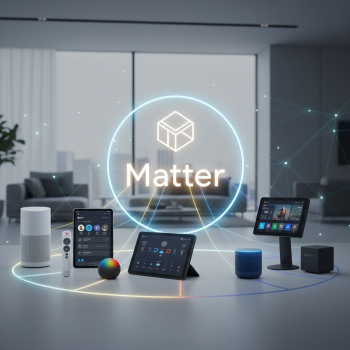
    The Matter Smart Home Protocol: Unifying Alexa, Apple, and Google in Your Smart Home 🏠

    📖 Introduction

    Welcome to Smart Home HQ, where we simplify the complex world of connected living. Today, we’re diving into Matter—the revolutionary smart home protocol poised to end compatibility wars between major ecosystems like Amazon Alexa, Apple Home, and Google Home. If you’ve ever struggled with smart devices that won’t talk to each other, this guide explains how Matter changes everything, its impact on smart device management, and what it means for your home automation future.


    🔍 What is Matter? Understanding the Universal Protocol

    Definition & Background

    Matter (formerly Project CHIP—Connected Home over IP) is an open-source, royalty-free connectivity standard developed by the Connectivity Standards Alliance (CSA), with backing from industry giants including Amazon, Apple, Google, Samsung, and hundreds of other companies. Launched in late 2022, Matter aims to create interoperability across smart home devices, allowing them to communicate seamlessly regardless of brand or ecosystem.

    How It Works

    • Unified Language: Matter uses IP-based communication (Wi-Fi, Thread, and Ethernet) as its foundation, creating a common “language” for devices.
    • Local Control: Unlike many cloud-dependent systems, Matter prioritizes local network control, reducing latency and increasing reliability even without internet.
    • Simplified Setup: Devices feature a QR code or numeric code for easy, secure onboarding across supported platforms.

    🤝 Matter’s Relationship with Major Ecosystems

    Amazon Alexa

    • Integration: Alexa supports Matter over Wi-Fi and Thread via compatible Echo devices (4th gen, Echo Show, etc.).
    • Device Management: Manage Matter devices directly through the Alexa app; voice control works seamlessly.
    • Current Support: Lights, plugs, locks, thermostats, and sensors.

    Apple Home (HomeKit)

    • Integration: Apple was an early Matter advocate; support is built into iOS 16+ and HomePod.
    • Device Management: The Home app automatically recognizes Matter devices; setup uses Apple’s secure home architecture.
    • Current Support: Extensive accessory support with strong privacy emphasis.

    Google Home

    • Integration: Google supports Matter via Google Nest devices and Android.
    • Device Management: Control through Google Home app; voice commands via Google Assistant.
    • Current Support: Core device types with ongoing expansion.

    🛠 Impact on Smart Device Management

    Centralized Control

    • Single App Management: Users can potentially manage all Matter devices through one preferred app (e.g., Apple Home, even for Google-made devices).
    • Unified Networks: Matter creates a cohesive network where devices communicate locally, reducing cloud dependency.

    Enhanced Security

    • Built-In Standards: Matter requires encryption and secure authentication for all devices, raising baseline security across brands.
    • Regular Updates: Certified devices receive standardized security updates.

    Simplified User Experience

    • Easy Setup: QR code scanning replaces complex pairing processes.
    • Cross-Platform Flexibility: Choose your ecosystem without being locked in; switch controllers without replacing devices.

    ⚖️ Pros and Cons of Each Ecosystem with Matter

    Amazon Alexa

    ✅ Pros:

    • 🗣️ Extensive Voice Control: Largest skill library and voice assistant capabilities
    • 🛒 Ecosystem Integration: Deep ties with Amazon shopping, Prime, and Ring
    • 💰 Affordable Hardware: Broad range of budget-friendly Echo devices
    • 🌐 Wide Compatibility: Historically supports most third-party devices

    ❌ Cons:

    • ☁️ Cloud Dependency: Many functions require internet connectivity
    • 🔒 Privacy Concerns: Amazon’s data collection practices raise questions for some users
    • 📱 App Experience: Alexa app can feel cluttered compared to competitors

    Apple Home (HomeKit)

    ✅ Pros:

    • 🔐 Privacy-First Approach: End-to-end encryption and on-device processing
    • 🎨 User Experience: Clean, intuitive Home app interface
    • 🍎 Ecosystem Integration: Seamless operation with iPhone, iPad, Apple Watch, and Mac
    • 🏠 Home Architecture: Robust local control with HomeKit Secure Video

    ❌ Cons:

    • 💸 Higher Cost: Apple-compatible devices often carry premium pricing
    • 📱 Platform Limitation: Best experience requires Apple devices
    • 🔌 Limited Hardware: Historically fewer compatible devices than competitors

    Google Home

    ✅ Pros:

    • 🔍 Powerful Assistant: Superior natural language processing and search integration
    • 📱 Android Integration: Deep ties with Android ecosystem and services
    • 🎵 Media Excellence: Superior music and video streaming capabilities
    • 🤖 AI Features: Advanced routines and automation suggestions

    ❌ Cons:

    • 🔄 Product Discontinuation: History of abandoning products and services
    • ☁️ Cloud-Centric: Heavy reliance on Google’s servers
    • 📊 Data Collection: Extensive data gathering for advertising purposes

    🚀 Future Outlook & Recommendations

    The Matter Advantage

    Matter’s greatest strength is ending ecosystem lock-in. Users can now:

    • Mix and match devices from different brands
    • Choose their preferred voice assistant
    • Switch ecosystems without replacing hardware
    • Enjoy more competitive pricing as compatibility ceases to be a premium feature

    Current Limitations

    • Phase 1 Focus: Initial release covers core device types (lighting, HVAC, security, etc.)
    • Feature Parity: Some advanced features may still require native apps
    • Adoption Timeline: Full ecosystem integration will take 2-3 years

    Smart Home HQ Recommendations

    1. For New Users: Start with Matter-certified devices for future-proofing
    2. For Existing Homes: Gradually replace non-compatible devices with Matter options
    3. Ecosystem Choice: Select based on your preferred voice assistant and existing devices
    4. Router Upgrade: Consider a Thread border router for optimal Matter performance

    Related Links

    Please Note: Links lead to pages that may include affiliate links. As an Amazon Associate I earn from qualifying purchases.

  • Why Integrate Smart Devices: Transforming Home Life

    Why Integrate Smart Devices: Transforming Home Life

    Today, most urban homeowners want their living spaces to be both efficient and personalized. However, finding the right smart technology can be confusing. Why integrate smart devices? With over 40 percent of American households now using at least one smart device, the trend is shaping how homes function worldwide. Consequently, this guide explains what smart device integration truly means. Moreover, it shows why choosing compatible, scalable solutions matters for anyone serious about optimizing their living environment.

    Table of Contents

    Key Takeaways

    Point Details
    Smart Device Integration Enhances Living Smart devices create a dynamic home environment, automating routines and improving efficiency through interconnected systems.
    Diverse Device Categories Offer Unique Benefits Smart devices range from automation and security to wellness, each providing distinct advantages for daily living and personalization.
    Security and Privacy Awareness is Essential Users must understand potential vulnerabilities in smart home technology and take proactive steps to secure their networks.
    Strategic Investment is Key Carefully selecting a few core devices for initial integration can maximize benefits and minimize costs, easing the transition into a smart home.

    Defining Smart Device Integration in Homes

    Smart device integration transforms homes from static living spaces into dynamic, responsive environments that adapt to residents’ needs. At its core, smart home technology represents a sophisticated network of interconnected digital devices. Importantly, These devices are designed to enhance comfort, efficiency, and control. Moreover, these interconnected ecosystems use AI, IoT, and communication technologies

    The concept of smart device integration involves connecting various home devices. Specifically, This includes thermostats, lighting systems, security cameras, and kitchen appliances. They can communicate, share data, and operate seamlessly. Furthermore, unlike standalone gadgets, integrated smart home systems create a unified network. In this network, devices collaborate intelligently. For instance, a smart thermostat might communicate with window sensors to optimize temperature control. Similarly, security cameras could trigger lighting systems when unexpected motion is detected.

    Understanding smart device integration requires recognizing its multiple complexity levels. Smart home technologies range from basic connected devices to fully automated homes, each offering different capabilities and integration depths. Basic integration might involve simple remote control of individual devices, while advanced integration creates comprehensive ecosystems where devices anticipate and respond to residents’ preferences automatically.

    Smart Home Pro Tip: Start your smart home journey by selecting devices with robust cross-platform compatibility to ensure smoother integration and future expandability.

    Types of Smart Devices and Core Functions

    Smart devices represent a sophisticated ecosystem of interconnected technologies designed to enhance daily living through intelligent functionality. Understanding why integrate smart devices into these categories helps homeowners make informed decisions.These devices encompass a wide range of IoT objects including sensors, smartphones, and tablets with advanced computing and communication capabilities, each offering unique features that transform traditional home interactions.

    The core categories of smart devices include home automation systems, entertainment technologies, security devices, and personal wellness gadgets. Specifically, Home automation devices like smart thermostats, lighting controllers, and voice-activated assistants enable residents to manage energy consumption and create personalized living environments. Entertainment technologies such as smart TVs, streaming devices, and multi-room audio systems provide immersive, interconnected media experiences. Security devices including smart locks, video doorbells, and monitoring cameras offer enhanced protection through real-time alerts and remote access.

    Infographic of smart device types and benefits

    Smart devices form the backbone of interconnected technological ecosystems, collecting contextual data to provide customized cognitive content across multiple domains. For this reason, their primary functions extend beyond simple automation, focusing on adaptive intelligence that learns from user behaviors, anticipates needs, and creates seamless interactions between humans and technology. Advanced smart devices can communicate across different platforms, sharing information and coordinating actions to create more efficient and responsive home environments.

    Here’s a summary of major smart device categories and their primary benefits:

    Device Category Typical Examples Main Benefit
    Home Automation Thermostats, lighting, hubs Energy savings, comfort
    Entertainment Smart TVs, speakers Immersive experiences
    Security Cameras, smart locks Enhanced safety, monitoring
    Wellness & Health Fitness trackers, smart scales Better health insights

    Smart Device Pro Tip: When selecting smart devices, prioritize those with robust cross-platform compatibility and standardized communication protocols to ensure smoother integration and future scalability.

    Benefits of Integrating Smart Devices to Streamlines Daily Routines

    Smart home integration transforms mundane daily tasks into seamless, efficient experiences by leveraging advanced technological capabilities. AI and smart device integration simplifies routines by automating complex tasks such as managing calendars, setting reminders, and personalizing user experiences, effectively acting as an intelligent personal assistant that anticipates and responds to individual needs.

    Man leaving home, smart devices in action

    The practical applications of smart home integration span multiple aspects of daily life. For example, In the morning, connected devices can automatically adjust thermostats, brew coffee, and provide personalized news briefings based on individual preferences. Throughout the day, smart systems can manage home security by monitoring entry points, adjusting lighting for energy efficiency, and sending real-time alerts to smartphones. Likewise, evening routines become equally streamlined, with devices coordinating entertainment systems, managing meal preparations, and creating optimal ambient environments for relaxation.

    Integrating technology into daily routines creates interactive environments that enhance efficiency and support diverse personal needs.

    Additionally, advanced smart home systems learn from user behaviors, gradually optimizing their responses and creating increasingly personalized experiences. Also, this adaptive intelligence means that over time, devices become more attuned to individual schedules, preferences, and lifestyle patterns, reducing manual intervention and cognitive load associated with routine management.

    Smart Routine Pro Tip: Start by integrating one or two smart devices that address your most time-consuming daily tasks, allowing you to gradually build a more comprehensive and personalized smart home ecosystem.

    Security, Privacy, and Safety Implications of Smart Home Technology

    Smart home technology introduces complex security challenges that demand proactive and informed user engagement. Thus, when considering why integrate smart devices, security must be a top priority. Smart home devices expose users to increased risks in network security, information privacy, and physical safety, with many consumers lacking deep understanding of potential vulnerabilities, creating a critical need for comprehensive risk management strategies.

    However, the primary security concerns encompass multiple dimensions of digital and physical protection. Network vulnerabilities can allow unauthorized access to personal data, potentially enabling remote device manipulation or comprehensive home surveillance. To illustrate, cybercriminals might exploit weak encryption, unpatched software, or inadequate authentication protocols to infiltrate smart home ecosystems. Physical safety risks include potential breaches that could compromise home security systems, allowing unauthorized entry or manipulating locks, cameras, and alarm mechanisms.

    Researchers advocate for implementing security and privacy labels similar to nutrition labels to inform consumers about device risks and empower users with transparent information. These comprehensive labels would help users understand potential security threats, data collection practices, and privacy implications before integrating devices into their home networks. Similarly, proactive measures such as regular firmware updates, using strong unique passwords, implementing two-factor authentication, and carefully reviewing device permissions can significantly mitigate potential security risks associated with smart home technologies.

    Security Pro Tip: Create a separate network for your smart home devices using a guest WiFi network to isolate potential security breaches and protect your primary personal and financial digital infrastructure.

    Costs, ROI, and Common Setup Pitfalls

    Smart home technology represents a significant investment that requires careful financial and strategic planning. Before deciding why integrate smart devices, homeowners should carefully evaluate costs and benefits. Smart home adoption involves balancing perceived benefits such as convenience, safety, and energy savings against barriers like high costs, steep learning curves, and privacy concerns. Consequently it is crucial for homeowners to understand the true value proposition of their technological investments.

    In fact, the return on investment (ROI) for smart home devices varies widely depending on specific technologies and individual household needs. Notably, Energy-efficient devices like smart thermostats and lighting systems can generate measurable savings through reduced utility costs, typically offsetting their initial purchase price within 18 to 36 months. Meanwhile, Security systems provide less tangible but equally important returns by potentially reducing insurance premiums and offering peace of mind through enhanced home protection. On the other hand, Entertainment and convenience-focused devices contribute to quality of life improvements that are more difficult to quantify but nonetheless valuable.

    Smart Home Adoption: Perceptions and Implementation Challenges

    Older adults and diverse demographic groups perceive smart homes differently, with varying expectations about value, usability, and long-term benefits. Common setup pitfalls include incompatible device ecosystems, complex installation processes, and insufficient user training. Homeowners frequently encounter challenges such as network connectivity issues, software update complications, and unexpected integration problems that can diminish the initial excitement of smart home adoption. Finally, successful implementation requires thorough research, careful device selection, and a strategic approach to building an interconnected home technology environment.

    To illustrate, compare key smart home integration benefits with common setup challenges:

    Integration Benefit Resulting Improvement Setup Challenge Potential Impact
    Routine automation Saves daily time Device incompatibility Frustrating user experience
    Adaptive intelligence Personalized services Complex installation Delays and extra costs
    Remote monitoring and alerts Increased home security Network connectivity issues Missed notifications
    Energy-efficient operation Lower utility expenses Software update problems Less cost savings

    Budget Pro Tip: Start with a few core smart devices that address your most pressing needs, and gradually expand your system to spread out costs and minimize potential integration challenges.

    Take Control of Your Smart Home Journey Today

    Integrating smart devices can feel overwhelming with challenges like device incompatibility, security concerns, and setup complexities. Why integrate smart devices? This article highlights how seamless smart home integration transforms routine tasks and enhances safety while also addressing common pitfalls such as network vulnerabilities and costly mistakes. Hence, if you want to avoid frustration and build a connected home ecosystem that truly works for you, expert guidance every step of the way is essential.

    https://smarthomehq.house

    Discover trusted advice, thorough reviews, and step-by-step guides at Smart Home HQ designed to simplify your smart home experience. Whether you are starting with smart thermostats, security cameras, or lighting systems, we help you navigate device selection, ensure cross-platform compatibility, and safeguard your home network. Finally, don’t let confusion or fear hold you back from enjoying the benefits of energy savings and personalized automation. Visit Smart Home HQ now and take the first step toward a smarter, safer, and more efficient home.

    Frequently Asked Questions

    What is smart device integration?

    Smart device integration refers to connecting various home devices, such as thermostats, lights, and security systems, into a unified network that allows them to communicate and operate seamlessly together.

    How can smart device integration simplify my daily routines?

    Smart device integration can automate complex tasks, such as adjusting temperature, managing security, and controlling entertainment systems, streamlining your daily routines and enhancing convenience.

    What are the potential security risks associated with smart home devices?

    The main security risks include unauthorized access to personal data, potential remote manipulation of devices, and vulnerabilities in network security that could compromise safety.

    Therefore, it’s crucial for users to implement strong security measures, such as regular updates and robust passwords.

    Why integrate smart devices to ensure compatibility when selecting smart devices?

    Finally, to ensure compatibility, prioritize devices that support robust cross-platform communication and standardized protocols, allowing for easier integration with existing systems and future expandability.

    • How to Make a Smart Home: A Complete Guide – Smart Home HQ

  • Why Build a Connected Home: Security, Savings, Comfort

    Why Build a Connected Home: Security, Savings, Comfort

    More than 68 million American households now own at least one smart device, reflecting a surge in connected living. For tech-savvy homeowners, upgrading to an integrated home network is about far more than adding gadgets. Today’s solutions promise seamless security and unmatched convenience. This guide clears up what a connected home truly means, exposes widespread myths, and helps you make practical decisions as you modernize your space.

    Table of Contents

    Key Takeaways

    Point Details
    Connected Home Concept A connected home is an integrated ecosystem, enhancing living experiences through smart device interconnectivity.
    Myth Busting Connected home solutions are now affordable and user-friendly, debunking the belief that they are only for tech enthusiasts.
    Core Features Key features of smart homes include enhanced security, efficiency in energy management, and precise control over home environments.
    Financial Considerations While initial costs can be high, smart home systems often lead to long-term savings through reduced utility bills and potential insurance discounts.

    Connected Home Defined and Common Myths

    Imagine a home that works for you. A connected home represents more than just a collection of smart devices – it’s an integrated ecosystem where technology seamlessly works together to enhance your living experience. Experts define a connected home as a sophisticated network enabling interconnection and interoperability across multiple devices, services, and applications spanning communications, entertainment, security, and home automation.

    Contrary to popular belief, a connected home isn’t simply about having the latest gadgets. It’s a carefully orchestrated system where devices communicate intelligently, providing real-time, contextual experiences for household inhabitants. The technology allows remote monitoring and control, transforming how we interact with our living spaces. These systems integrate networking, media, security, energy management, and even healthcare technologies into a unified platform.

    Several persistent myths often misrepresent connected home technology. Some people believe it’s prohibitively expensive or only for tech enthusiasts. In reality, connected home solutions have become increasingly affordable and user-friendly. Another common misconception is that these systems are complicated to set up and manage. Modern connected home platforms prioritize intuitive design, making installation and operation straightforward for average homeowners.

    The core purpose of a connected home goes beyond convenience – it’s about creating a responsive, efficient environment that adapts to your lifestyle. By integrating sensors, smart devices, and intelligent platforms, these systems can optimize energy consumption, enhance security, and provide unprecedented control over your home’s functionality.

    Pro tip: Start your connected home journey by selecting a single, versatile smart device that addresses an immediate need, like a smart thermostat or security camera, to understand the ecosystem without overwhelming yourself.

    Main Types of Smart Home Systems

    Smart home technologies have evolved into a diverse ecosystem of interconnected systems, each designed to enhance different aspects of home living. Researchers have identified multiple categories of smart home technologies that span a comprehensive range of functionalities, from basic connectivity to advanced automation.

    The primary types of smart home systems can be categorized into several key areas:

    • Security Systems: Encompassing smart cameras, doorbell cameras, motion sensors, and integrated alarm networks
    • Energy Management Systems: Smart thermostats, power monitoring devices, and automated lighting controls
    • Entertainment Systems: Networked audio/video devices, smart speakers, and integrated media platforms
    • Home Automation Systems: Platforms that control multiple device interactions, including voice-activated assistants and centralized control interfaces
    • Health and Wellness Systems: Remote monitoring devices, air quality sensors, and integrated health tracking technologies

    These systems are distinguished not just by their individual capabilities, but by their communication protocols. The European Commission’s research highlights the complexity of networking technologies used to connect devices, including Wi-Fi, Zigbee, Z-Wave, and proprietary communication standards. This technological diversity allows homeowners to create customized ecosystems that suit their specific needs and preferences.

    Modern smart home systems are not one-size-fits-all solutions but rather flexible platforms that can be tailored to individual lifestyles. The sophistication ranges from simple connected devices to fully integrated, intelligent home environments that can learn and adapt to residents’ behaviors and preferences.

    Here’s a summary comparing the main smart home system types and their core benefits:

    System Type Main Function Typical Benefit
    Security Home safety Enhanced protection
    Energy Management Utility monitoring Lower utility costs
    Entertainment Media integration Improved user experience
    Home Automation Device coordination Increased convenience
    Health & Wellness Health tracking Personalized support

    Pro tip: When exploring smart home systems, start by identifying your primary needs and choose compatible devices that can potentially integrate with a broader ecosystem in the future.

    Benefits of a Smart Home Include These  Key Features: Security, Efficiency, Control

    Smart home technologies have revolutionized home management by offering three critical features that transform how we interact with our living spaces: security, efficiency, and control. Advanced home security technologies now integrate sophisticated surveillance and monitoring systems that provide homeowners with unprecedented protection and peace of mind.

    The security dimension of smart homes goes far beyond traditional alarm systems. Modern solutions include:

    • Smart cameras with real-time video streaming
    • Motion sensors that distinguish between routine movements and potential threats
    • Remote locking mechanisms for doors and windows
    • Instant mobile alerts for suspicious activities
    • Integration with local emergency services

    Efficiency represents another cornerstone of smart home technology. Responsible technology adoption emphasizes energy management and user-friendly interfaces that help homeowners reduce waste and optimize resource consumption. Smart thermostats can learn household patterns, automatically adjusting temperature to minimize energy expenditure. Automated lighting systems detect occupancy and natural light levels, ensuring electricity is used only when necessary.

    Woman adjusting smart thermostat in kitchen

    Control is the final critical feature, empowering homeowners to manage their environment with unprecedented precision. Through centralized smartphone applications or voice-activated assistants, residents can monitor and adjust multiple home systems simultaneously. This level of control extends beyond convenience, offering genuine flexibility in managing home environments, security protocols, and energy consumption.

    Pro tip: When selecting smart home technologies, prioritize systems with robust integration capabilities that allow seamless communication between different devices and platforms.

    Real-World Applications for Homeowners

    Smart home technologies offer transformative solutions that address real-world challenges faced by homeowners, providing practical benefits across multiple aspects of daily living. These integrated systems go beyond mere technological novelty, delivering tangible improvements in safety, comfort, and efficiency.

    In the realm of home security, smart technologies provide comprehensive protection strategies:

    • Advanced Surveillance: Real-time camera monitoring with instant mobile alerts
    • Remote Access Control: Smart locks and entry systems manageable from smartphones
    • Comprehensive Monitoring: Integrated sensors detecting unusual activities or potential security breaches

    Energy management represents another critical application. Smart home systems enable precise control over resource consumption through intelligent monitoring. Smart thermostats learn household temperature preferences, automatically adjusting settings to minimize energy waste. Automated lighting systems detect room occupancy, ensuring electricity is used only when necessary, potentially reducing monthly utility expenses by 20-30%.

    Interconnected home ecosystems now adapt to individual lifestyle needs, offering personalized experiences that extend beyond traditional home automation. For individuals with mobility challenges, voice-activated systems provide enhanced independence, allowing control of lighting, temperature, and entertainment systems without physical interaction. Parents can remotely monitor children’s activities, while elderly residents benefit from fall detection and emergency response integrations.

    Infographic showing connected home key benefits

    Pro tip: Begin your smart home journey by selecting one multipurpose device that addresses your most pressing household need, ensuring compatibility with future expansion.

    Upfront Costs, Long-Term Savings, Risks

    Smart home technology investments require careful financial consideration, balancing initial expenses against potential long-term benefits. Homeowners must navigate a complex landscape of technological opportunities and economic challenges when contemplating smart home integration.

    Upfront costs for smart home systems can be substantial, typically ranging from $500 to $3,000 depending on system complexity:

    • Basic Systems: $500-$1,000 (2-3 connected devices)
    • Intermediate Systems: $1,000-$2,000 (comprehensive security and automation)
    • Advanced Integrated Systems: $2,000-$3,000 (whole-home solutions)

    Technological adoption involves evaluating financial barriers and potential risk mitigation strategies, with long-term savings potential offsetting initial investments. Energy management systems can reduce utility expenses by 15-30% annually, while automated security systems may lower insurance premiums by 5-20%. Potential risks include data privacy vulnerabilities, technological obsolescence, and potential system integration challenges.

    Key financial considerations extend beyond direct monetary investments. Homeowners must factor in ongoing maintenance costs, potential system upgrades, and the technological ecosystem’s compatibility. Privacy risks require robust security measures, potentially necessitating additional investments in cybersecurity protection and regular system updates.

    The table below outlines common risks of smart home adoption, along with suggested mitigation actions:

    Risk Type Example Scenario Mitigation Strategy
    Privacy Data leaks via cloud storage Use strong encryption, regular audits
    Obsolescence Devices no longer supported Choose brands with update policies
    Integration Incompatibility between devices Select systems with open standards
    Financial Unplanned upgrade expenses Opt for modular, upgradeable setups

    Pro tip: Prioritize modular smart home systems that allow gradual expansion and provide clear upgrade paths to minimize future replacement costs.

    Troubleshooting and Avoiding Common Pitfalls

    Smart home technology troubleshooting requires a systematic and strategic approach to address potential connectivity, compatibility, and performance challenges. Understanding common issues and their root causes can help homeowners minimize disruptions and maintain a smoothly functioning smart home ecosystem.

    Common smart home system pitfalls include:

    • Connectivity Problems: Weak Wi-Fi signals, network interference
    • Compatibility Issues: Devices from different manufacturers not communicating effectively
    • Software Conflicts: Outdated firmware or application versions
    • Power Management Challenges: Inconsistent power supply or battery-related failures
    • Configuration Errors: Incorrect initial setup or network configuration

    Troubleshooting strategies involve methodical diagnostic steps. Start by verifying basic network infrastructure, ensuring robust and consistent internet connectivity. Check device firmware versions and update them regularly to address potential software conflicts. When compatibility issues emerge, prioritize devices with standardized communication protocols like Zigbee or Matter, which enhance inter-device communication and reduce integration challenges.

    Preventative measures are crucial in maintaining a reliable smart home system. This includes selecting devices from manufacturers with strong ecosystem support, maintaining a centralized management platform, and regularly performing system audits. Homeowners should create a comprehensive device inventory, track firmware versions, and establish a routine maintenance schedule to proactively identify and resolve potential technical issues before they escalate.

    Pro tip: Create a dedicated network segment for smart home devices to isolate potential security risks and improve overall system performance.

    Unlock the Full Potential of Your Connected Home Today

    Start building your connected home today and experience exciting benefits like enhanced security, meaningful savings, and unmatched comfort. The challenge lies in selecting the right devices and creating a seamless, integrated ecosystem that truly adapts to your lifestyle. If you have ever felt overwhelmed by complicated setups, confusing compatibility issues, or were unsure how to optimize your smart home system for maximum efficiency and control this is the solution you need.

    Smart Home HQ guides you through these exact challenges with trusted reviews, detailed comparisons, and real-world usage insights. Learn how to prioritize security features, energy management, and home automation with easy-to-follow guides designed to simplify your journey. Whether you are starting with a smart thermostat or expanding to a fully integrated system, our expert tips help you avoid common pitfalls and maximize long-term savings.

    https://smarthomehq.house

    Take the next step now and transform your living space into a truly connected home. Explore our comprehensive resources at Smart Home HQ and discover how to build your smart home with confidence and clarity. Begin earning peace of mind and energy efficiency today by visiting Start Your Smart Home Journey and empower your home to work smarter for you.

    Frequently Asked Questions

    What are the main benefits of building a connected home?

    A connected home enhances security, improves energy efficiency, and increases overall comfort for residents. It enables better control over home automation and monitoring, providing peace of mind and convenience.

    How do smart home technologies improve security?

    Smart home technologies enhance security through features like real-time video surveillance, motion sensors, remote access control, and instant alerts for suspicious activities. These systems provide comprehensive monitoring options that traditional setups do not offer.

    Can smart home systems help save on energy costs?

    Yes, smart home systems, especially energy management solutions like smart thermostats and automated lighting controls, can help reduce utility costs by 15-30% annually by optimizing energy consumption based on usage patterns.

    What should I consider when starting my connected home journey?

    Begin by identifying your primary needs, such as security or energy management, and selecting a versatile smart device to address that need. Ensure compatibility with future devices to create an integrated ecosystem progressively.

    Related Links


  • A Day-in-the-Life Story

    A Day-in-the-Life Story

    No Keys, No Stress: How Smart Locks Upgrade Safety, Security, and Convenience 🔒✨

    The benefits of smart locks become clear in everyday moments like this: You’re pulling into the driveway, hands full of groceries, the dog is excited, and your phone buzzes—your sitter just left. Instead of juggling keys, you walk up and the door unlocks as you approach. A few minutes later, you get a notification: the door auto-locked behind you. That’s the everyday calm that smart locks bring—security that’s smarter, and convenience that feels effortless.


    The Benefits of Smart Locks: Safety, Security, and Convenience 💡

    • Safety 🛡️
      • No more spare keys hidden under mats
      • Personalized codes reduce the risk of unauthorized entry
      • Auto-locking reduces “Did I lock the door?” anxiety
    • Security 🔐
      • Real-time activity notifications keep you in the loop
      • Remote lock/unlock if someone forgets
      • Temporary and permanent access sharing reduces key duplication risks
    • Convenience 🚪
      • Hands-free auto-unlock as you approach
      • Control via phone or Apple Watch
      • Smooth guest management for family, sitters, house cleaners, and short-term rentals

    Spotlight: Yale Key-Free Smart Lock 🟡

    A modern deadbolt replacement that delivers keyless entry, robust security features, and smooth smart-home integration—ideal for U.S. and Canada households.

    • Access Options 🔑
      • Keypad entry with codes
      • Smartphone control via Yale Access App (iOS and Android)
      • Voice assistant integration (with compatible systems)
      • Apple Watch support
      • Auto-unlock for hands-free entry
    • Smart Security Features 🔒
      • Auto-Lock Function: Automatically locks when DoorSense detects door closure
      • Remote Management: Lock/unlock from anywhere
      • Access Sharing: Grant temporary or permanent access
      • Activity Notifications: Real-time alerts and status updates
    • Installation & Setup 🛠️
      • DIY-friendly: Just a screwdriver needed
      • Direct deadbolt replacement for standard U.S. doors
      • No locksmith or prior experience required
    • Connectivity 🌐
      • Works on 2.4 GHz Wi‑Fi
      • U.S. and Canada availability
      • Apple Watch + iOS/Android compatibility
    • Ideal For ✅
      • Homeowners who want key-free entry
      • Families sharing access without swapping keys
      • Rental property managers and hosts
      • Individuals with mobility challenges
      • Travelers and tech enthusiasts
    • Considerations ⚠️
      • Requires 2.4 GHz Wi‑Fi (not compatible with 5 GHz–only networks)
      • Limited to U.S. and Canada
      • Full feature set depends on smartphone access
      • Requires ongoing battery maintenance
    • Learn more and link it into your setup:

    How Smart Locks Elevate Everyday Life 🌟

    • Families with kids or caregivers 👨‍👩‍👧‍👦
      • Assign unique codes and revoke them anytime
      • Get alerts when someone comes and goes
    • Hosts and property managers 🏘️
      • Share time-limited codes for guests
      • Manage access remotely without rekeying
    • Busy professionals and frequent travelers ✈️
      • Check lock status from anywhere
      • Auto-lock keeps the home secure on tight schedules
    • Accessibility and mobility support ♿
      • Hands-free auto-unlock and Apple Watch entry reduce friction

    Quick Start: From Box to Door in Under an Hour ⏱️

    • Gather a screwdriver and your smartphone
    • Remove existing deadbolt and install the Yale Key-Free Smart Lock
    • Connect to 2.4 GHz Wi‑Fi
    • Set up the Yale Access App and create your first entry code
    • Enable Auto-Lock with DoorSense and test notifications

    Pro tip: Test auto-unlock in your driveway or hallway before relying on it daily, and keep a backup entry code handy.


    Privacy and Security Best Practices 🧠

    • Use strong, unique codes and rotate guest codes regularly
    • Protect your smartphone with a passcode/biometrics
    • Keep the app and firmware up to date
    • Place the lock within solid 2.4 GHz Wi‑Fi range for reliability

    At-a-Glance Benefits with Yale Key-Free 🧩

    • Peace of mind: Auto-lock + DoorSense reduces human error
    • True convenience: Auto-unlock, keypad, app, Apple Watch
    • Control anywhere: Remote management and activity notifications
    • Flexible access: Share and revoke codes in seconds
    • Easy setup: DIY-friendly with basic tools

    Final Verdict ✅

    If you’re upgrading for safety, security, and pure convenience, the Yale Key-Free Smart Lock is a standout choice. It’s easy to install, simple to share access with others, and smart enough to lock itself when DoorSense detects the door is closed. Keep in mind the 2.4 GHz Wi‑Fi requirement and U.S./Canada availability—but for most households, it’s a modern, stress-reducing upgrade. The benefits of smart locks go beyond convenience—they’re a proven investment in home security and peace of mind. For more on smart home security best practices, check out the National Institute of Standards and Technology (NIST) guidance on securing smart home devices.

  • Smart Living Compatibility – Why Device Integration Matters

    Smart Living Compatibility – Why Device Integration Matters

    Types of Smart Living Compatibility Devices

    Finding smart living compatibility devices that actually work together can feel like a puzzle. With almost half of American homeowners reporting frustratioTypes of Smart Home Compatibility Devices

    n over connecting devices from different brands, compatibility standards have never mattered more. Whether you are adding your first smart thermostat or building a full ecosystem, understanding these standards will help you avoid headaches and make confident choices for a truly interconnected home.

    Table of Contents

    Key Takeaways Regarding Smart Home Compatibility

    Point Details
    Smart Home Compatibility Standards Are Essential Establishing standardized communication protocols like IEEE Standard 2785-2023 enhances interoperability among devices from different manufacturers.
    Device Categories and Their Benefits Understanding device categories helps homeowners make informed choices that enhance security, energy efficiency, and convenience in their homes.
    Interoperability Is Key for Smooth Integration Ensuring devices are compatible with open standards like Matter allows for seamless integration and a more responsive smart home environment.
    Proactive Measures Reduce Common Issues Implementing strong security practices and investing in reliable network systems can mitigate many connectivity problems associated with smart home devices.

    Defining Smart  Living Compatibility Standards

    Smart  living compatibility is more than just technological convenience—it represents a fundamental framework for seamless device communication and integration. Importantly, the IEEE Standard 2785-2023 provides a comprehensive architectural blueprint that establishes critical guidelines for intelligent device interoperability across different technological ecosystems.

    At its core, smart living compatibility involves establishing standardized communication protocols that enable diverse devices to interact effectively. Unlike traditional standalone systems, modern smart home technology requires sophisticated communication standards that allow devices from different manufacturers to exchange information, receive commands, and operate cohesively. Furthermore, these standards address several key challenges, including communication frequency, data encryption, network management, and device authentication.

    The landscape of smart living compatibility is complex, with multiple competing communication protocols like Zigbee, Z-Wave, and Matter competing for industry dominance. Research from TU Delft highlights the ongoing technological battle over smart home standards, emphasizing how governance and innovation challenges directly impact widespread technology adoption. However, these protocols each offer unique advantages, but the ultimate goal remains consistent: creating a unified, interoperable smart home environment that provides seamless user experiences.

    Here’s a comparison of leading smart home communication protocols and their key characteristics:

    Protocol Network Type Security Approach Notable Advantages
    Zigbee Mesh AES-128 Encryption Low power, scalable networks
    Z-Wave Mesh S2 Security Framework Interference-free, robust
    Wi-Fi Star WPA2/WPA3 (router dependent) High bandwidth, direct access
    Bluetooth Star/Mesh AES Encryption Easy setup, mobile support
    Matter IP-based/Mesh Strong open industry standards Vendor-agnostic, future-proof

    Pro Tip: When purchasing smart home devices, always check their compatibility protocols and verify they support multiple communication standards to ensure long-term flexibility and integration potential.

    Types of Smart Home Compatibility Devices and Ecosystems

    Smart home technologies represent a diverse ecosystem of interconnected devices designed to enhance convenience, efficiency, and quality of life. Smart home devices span multiple categories that transform traditional living spaces, ranging from household management tools to advanced security systems. These technologies are not just isolated gadgets, but integrated solutions that work together to create intelligent, responsive home environments.

    The primary categories of smart home devices include several key domains. Home Security Systems encompass smart cameras, doorbell cameras, motion sensors, and automated locks that provide real-time monitoring and remote access. Climate Control Devices like smart thermostats and air conditioning units can learn household temperature preferences and optimize energy consumption. Kitchen Appliances now include refrigerators that track food inventory, ovens with precise temperature control, and smart coffee makers that can be programmed via smartphone apps.

    Research indicates that smart home technologies are expanding to support diverse functions beyond convenience, including healthcare monitoring, energy management, and personalized lifestyle optimization. Entertainment systems have also evolved, with smart speakers, intelligent televisions, and integrated sound systems that can be controlled through voice commands or mobile applications. These ecosystems are increasingly designed to communicate with each other, creating seamless, interconnected experiences that adapt to residents’ unique needs and preferences.

    Below is a summary of how main smart device categories impact home life:

    Device Category Example Devices Benefit to Homeowners
    Security Systems Cameras, smart locks Enhanced safety, real-time alerts
    Climate Control Smart thermostats Energy savings, comfort
    Kitchen Appliances Smart fridges, ovens Automation, food tracking
    Entertainment Systems Smart TVs, speakers Voice control, integration
    Health Monitoring Wearables, sensors Wellness, proactive health alerts

    Infographic of smart home device integration

    Pro Tip: When building your smart home ecosystem, prioritize devices that support multiple communication protocols to ensure maximum compatibility and future-proofing of your technology investments.

    How Interoperability Enables Integration

    Interoperability represents the critical backbone of modern smart home technology, enabling devices from different manufacturers to communicate seamlessly and work together. The Matter protocol has emerged as a groundbreaking standard designed to unify smart home device communication, addressing the long-standing challenge of technological fragmentation that has historically hindered smart home adoption.

    Technician troubleshooting smart home device connections

    At its core, interoperability solves complex communication challenges by establishing standardized protocols that allow diverse devices to exchange information, commands, and data. Smart home systems can now integrate components from multiple manufacturers, creating flexible ecosystems that adapt to individual user needs. This means a smart thermostat from one brand can now communicate effectively with security systems, lighting controls, and entertainment devices from entirely different manufacturers, breaking down the traditional barriers of proprietary technologies.

    Research highlights how interoperability transforms smart home functionality by supporting comprehensive automation and management, enabling more sophisticated and intelligent home environments. The key advantages include enhanced energy efficiency, improved security protocols, and personalized user experiences that can dynamically respond to changing household requirements. By eliminating communication barriers, these integrated systems can learn from user behaviors, anticipate needs, and create more responsive living spaces that truly adapt to modern lifestyles.

    Pro Tip: When selecting smart home devices, always verify their compatibility with open communication standards like Matter to ensure long-term system flexibility and seamless integration.

    Challenges in Connecting Different Devices

    Device connectivity in smart home environments presents a complex landscape of technological hurdles that can frustrate even the most tech-savvy homeowners. Researchers have identified multiple critical challenges in connecting different smart home devices, ranging from protocol incompatibility to security vulnerabilities that can compromise the entire home network ecosystem.

    One of the primary obstacles is the diversity of communication protocols used by different manufacturers. Smart home devices often operate on distinct wireless standards like Zigbee, Z-Wave, Wi-Fi, and Bluetooth, which creates significant integration challenges. This technological fragmentation means that a smart thermostat from one brand might struggle to communicate with a security system from another, forcing consumers to navigate a complicated landscape of proprietary technologies and limited cross-compatibility.

    Technical research highlights the frequent connection errors that plague IoT device integration, including network disruptions, configuration mismatches, and authentication failures. These technical challenges not only create user frustration but also introduce potential security risks. Some devices may have outdated firmware, weak encryption protocols, or inconsistent security standards, which can create vulnerabilities that compromise the entire smart home network’s integrity and performance.

    Pro Tip: Before purchasing smart home devices, carefully research their compatibility standards and verify they support common communication protocols like Matter to minimize integration headaches.

    Common Issues and How to Avoid Them

    Smart home technology presents numerous potential pitfalls that can undermine the entire user experience, making proactive problem prevention crucial for successful device integration. Research highlights critical challenges in smart home device connectivity that directly impact consumer trust and technological adoption, emphasizing the need for strategic approach to system management.

    The most frequent issues homeowners encounter include network instability, communication protocol conflicts, and security vulnerabilities. Connectivity problems often arise from inadequate WiFi coverage, which can cause devices to disconnect intermittently or fail to communicate with central control systems. Homeowners should consider investing in robust mesh network systems that provide comprehensive signal coverage and eliminate dead zones, ensuring consistent performance across all smart home devices.

    Security represents another critical concern in smart home ecosystems. Many consumers unknowingly create vulnerabilities by failing to update device firmware, using weak passwords, or connecting devices to unsecured networks. Implementing robust cybersecurity practices is essential, including using strong, unique passwords for each device, enabling two-factor authentication whenever possible, and regularly updating firmware to patch potential security gaps. Additionally, creating a separate network for smart home devices can help isolate potential security risks and protect sensitive personal information from potential breaches.

    Pro Tip: Create a dedicated WiFi network specifically for your smart home devices to enhance security and minimize potential network interference.

    Unlock Seamless Smart Home Integration Today

    Struggling with device compatibility and connectivity issues in your smart home? This article highlights the real challenges homeowners face when trying to unify different smart devices under one ecosystem. From conflicting communication protocols like Zigbee and Z-Wave to security vulnerabilities and unstable networks, smart home integration can quickly become overwhelming. If you want to take control and build a smart home that truly works together, mastering interoperability and choosing the right devices is essential.

    https://smarthomehq.house

    Discover proven solutions and trusted advice at Smart Home HQ, where we provide detailed reviews and step-by-step guides that simplify the selection and installation of compatible devices. Whether you are upgrading your security systems, climate controls, or entertainment setup, our expert tips help you avoid common pitfalls and create a connected home that adapts to your lifestyle. Start exploring how to achieve flawless device integration now by visiting our Smart Home Technology Guide and join thousands of homeowners building smarter, safer, and more efficient homes today.

    Frequently Asked Questions

    What is smart home compatibility?

    Smart home compatibility refers to the ability of different smart devices from various manufacturers to communicate and work together seamlessly. This involves standardized communication protocols that enable interoperability across different devices and ecosystems.

    Why is device integration important in a smart home?

    Device integration is important because it allows for a cohesive smart home experience, enabling devices to work together efficiently. This leads to enhanced automation, energy savings, improved security, and tailored user experiences that adapt to individual preferences.

    What are the main communication protocols for smart home devices?

    The main communication protocols include Zigbee, Z-Wave, Wi-Fi, Bluetooth, and Matter. Each protocol has unique characteristics such as network type, security measures, and advantages, impacting how devices communicate and integrate in a smart home environment.

    What challenges might I face when connecting different smart home devices?

    Challenges include protocol incompatibility, network disruptions, security vulnerabilities, and configuration mismatches. These issues can hinder seamless communication between devices and require careful consideration when selecting smart home technology.