Category: Uncategorized

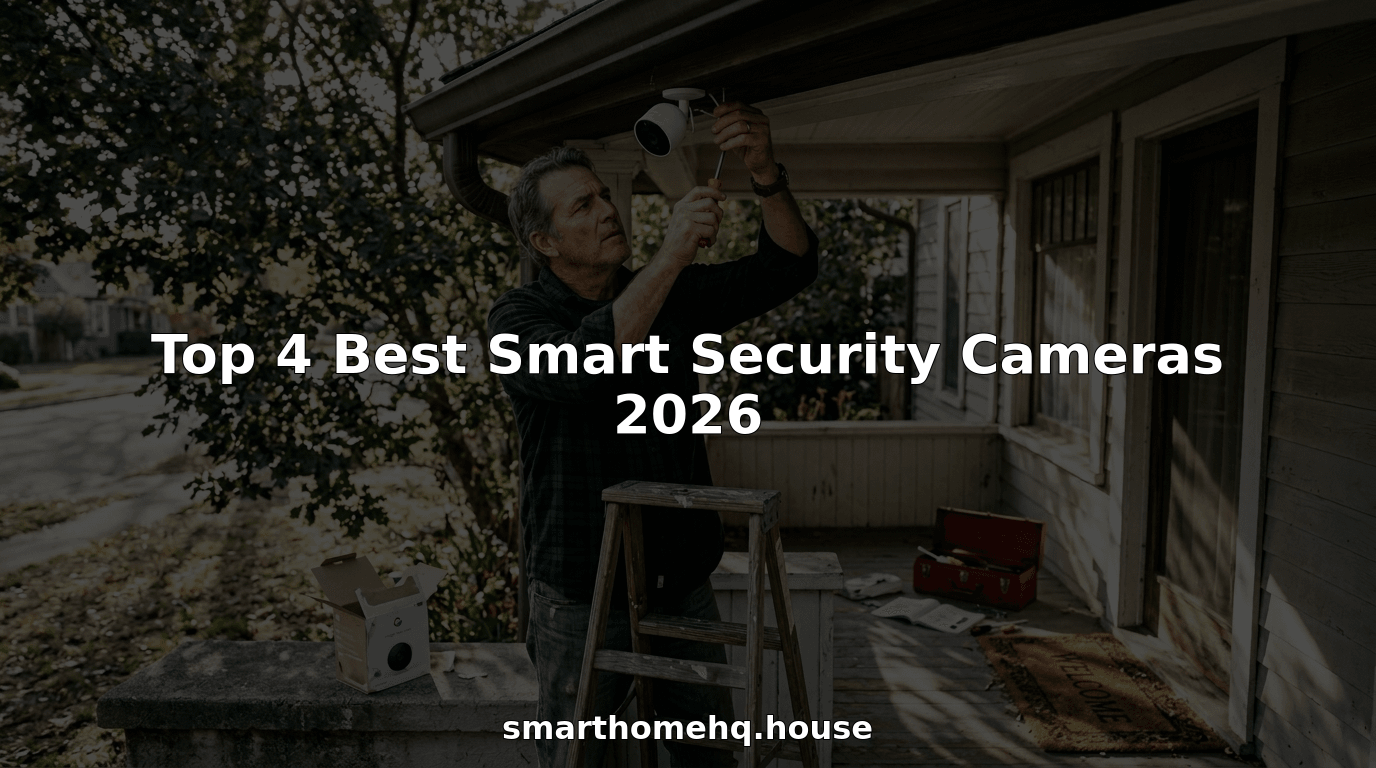
  • Top 4 Best Smart Security Cameras 2026

    Top 4 Best Smart Security Cameras 2026

    A security camera can do much more than just record footage. It can help you keep an eye on your home when you are away, send alerts when something unusual happens, and even connect with your phone so you can check in anytime. Some models are designed to blend in with your décor, others focus on crisp video and sound. With new technology arriving every year, finding the right device can be surprising. Curious about which features matter most and how smart cameras are changing the way we feel safe? Read on to discover what makes these top picks stand out.

    Table of Contents

    Smart Home HQ

    Product Screenshot

    At a Glance

    Smart Home HQ is the clear top pick for homeowners and renters who want a trustworthy, all-in-one resource for smart home security in 2026. It sets the standard with industry-leading reviews, accessibility focus, and real world testing that outperforms competitors.

    Core Features

    The site delivers unbiased smart home device reviews, step by step setup and integration guides, and deep coverage of security and privacy concerns. It also highlights solutions for seniors and hearing impaired family members and tracks the latest smart home innovations and future trends.

    Pros

    • Provides thorough, independent reviews: Each review is based on hands on testing and practical performance checks that reveal real strengths and weaknesses.
    • Offers detailed guides and how to resources: Clear, step by step instructions help beginners and advanced users get devices installed and working together.
    • Focus on accessibility and security: Coverage includes options and settings for seniors and hearing impaired household members, plus privacy focused recommendations.
    • Covers a wide range of smart home devices and categories: From thermostats to cameras, the site compares categories so you can pick best fit hardware for your home.
    • Keeps updated with latest technology trends: Frequent updates and technology briefings mean you see which devices and standards matter now and next year.

    Who It’s For

    Homeowners, seniors, caregivers, and anyone building a safer, accessible smart home will find this site invaluable. Newcomers get clear starter paths and savvy buyers get comparative data to choose higher value devices and systems.

    Unique Value Proposition

    Smart Home HQ combines real world testing, accessibility first reporting, and step by step setup guides to create a single trusted source for smart home decisions. The editorial focus on security and privacy, plus transparent affiliate linking to retailers like Amazon, gives you practical purchasing routes while keeping recommendations independent and evidence based. Sophisticated buyers choose this site because it translates lab style testing into household outcomes such as reduced false alarms, better battery life, and easier voice control for older adults.

    Real World Use Case

    A homeowner uses Smart Home HQ to pick a smart thermostat and a security camera system that cut energy bills and protect doors and windows. The site’s accessibility articles make sure the elderly parent can hear alerts and use voice controls, while privacy checklists lock down data sharing.

    Pricing

    The site itself does not charge for articles or guides. Pricing for recommended devices varies and links point to retailers; the site earns affiliate commissions from purchases. Content and shopping links are free to access and updated regularly.

    Website: https://smarthomehq.house

    Product Screenshot

    At a Glance

    This review covers a product page that returned a blocked response and provided no product name or specifications. Because the site access was restricted, a direct evaluation of capabilities and performance is not possible.

    This section gives a clear bottom line. If you are shopping for a smart security camera, you will need to visit the site directly or request alternative product details before deciding.

    Core Features

    The source data lists features as unavailable and notes an access restriction prevented retrieval. No verifiable information about video resolution motion detection cloud storage or local storage options is present in the dataset.

    Because no features could be confirmed we cannot compare functionality such as night vision two way audio person detection or power options against competing models.

    Pros

    • The site could not be reached to pull data thus no verified pros are available to report in this review.
    • The available dataset explicitly states pros are unavailable which prevents confident recommendation for any strength claims.
    • The absence of information means you avoid assumptions about unsupported features until the vendor confirms details.
    • Relying on direct site verification reduces the risk of buying a camera that lacks features you need.
    • Documenting the access issue highlights the need to verify product pages when making security purchases.

    Cons

    • Data unavailable prevents assessment of reliability build quality or software update policy which are critical for security cameras.
    • Access restriction means pricing and subscription requirements remain unknown and you cannot calculate long term costs.
    • No feature list makes it impossible to check compatibility with voice assistants mobile apps or smart home hubs.
    • The blocked response raises questions about the currency of the product page or temporary server issues which delay research.
    • Lack of user reviews or test data means no real world performance metrics are available for analysis.

    Who It’s For

    This entry is currently useful only for homeowners and renters who want a prompt reminder to verify a vendor page before purchase. If you are new to smart home tech check product pages for clear specs and sample video before committing.

    Unique Value Proposition

    The unique value proposition is unknown because the product details are not accessible. The only verifiable point is the need for direct site access to confirm claims and to gather specifications that matter for home security.

    Real World Use Case

    No real world use case can be verified from the provided data. The record explicitly states use cases are not accessible which prevents accurate scenario planning for installation or monitoring.

    Pricing

    Pricing details are not available due to access issues. Without confirmed pricing you cannot compare subscription costs storage tiers or one time hardware fees.

    Website: https://the-ambient.com

    TechHive

    Product Screenshot

    At a Glance

    TechHive is a focused tech resource that helps homeowners and renters find and use smart home gear with confidence. It delivers clear reviews, hands-on how-to guides, and timely deals so you can buy smarter and set up faster.

    Core Features

    TechHive centers on Product reviews and comparisons, How-to guides and tutorials, and a curated Deals on tech products section. The site also publishes the latest smart home news and practical setup advice for streaming and connected devices.

    Pros

    • TechHive offers comprehensive coverage of smart home products, giving you side-by-side comparisons that make choosing easier.
    • The site publishes regular news updates and articles so you stay current with product launches and firmware changes.
    • TechHive provides clear how-to guides that shorten setup time and reduce frustration when integrating cameras, hubs, and streaming devices.
    • The deals section highlights meaningful savings and seasonal discounts so you can time purchases for the best value.
    • Expert reviews and recommendations draw on testing and practical usage, helping you weigh tradeoffs without reading dozens of sites.

    Cons

    • Most content is published in English which limits accessibility for users who prefer other languages.
    • The editorial focus leans heavily on smart home and streaming tech which means coverage outside those categories is limited.
    • The website design can feel cluttered for first-time visitors which makes finding specific guides slower than it should be.

    Who It’s For

    TechHive suits homeowners and renters who are new to smart home technology and want straightforward guidance on what to buy and how to set it up. It also helps streaming media users and tech enthusiasts who value practical tips and timely deals.

    Unique Value Proposition

    TechHive combines hands-on product testing with step-by-step setup advice and a deal tracker so you not only know what to buy but how to get the best price and make the device work in your home. That combo reduces guesswork and saves time.

    Real World Use Case

    A homeowner researching the best air purifier and indoor air quality monitor can read TechHive reviews, follow a setup tutorial, and check the deals page all in one visit. The result is a confident purchase and a working system in hours rather than days.

    Pricing

    TechHive provides free access to articles, guides, and deal listings so you can research and learn without a subscription. Additional resources or partner offers may appear but core content remains free to read.

    Website: https://techhive.com

    Tom’s Guide Club

    Product Screenshot

    At a Glance

    Tom’s Guide Club gives members a central place for exclusive content and active conversation about the latest gadgets and tech news. The platform pairs regular newsletters with polls, quizzes, and discounts to keep engagement high and information current.

    Core Features

    The club offers 24/7 access, member forums, regular newsletters, and interactive features such as polls and quizzes to drive participation. The platform highlights community perks like exclusive discounts and member competitions with an active base of about 30K members.

    Pros

    • Access to exclusive content: Members get content and offers that are not available to casual visitors which helps you spot deals and product news first.
    • Community engagement: Active forums and discussions let you exchange opinions with other tech enthusiasts and track trending topics.
    • Regular newsletters and updates: Frequent newsletters deliver curated tech news and highlights directly to your inbox so you stay informed.
    • Engagement through quizzes and competitions: Quizzes and competitions provide hands on interaction that keeps learning about new tech fun.
    • Exclusive member discounts: Members receive discounts that can lower the cost of accessories and gadgets while shopping.

    Cons

    • Membership required for full access is a barrier for casual readers who prefer free content and no sign up.
    • Limited focus on tech enthusiasts means the platform is not designed for general interest topics or broad lifestyle coverage.
    • May have regional restrictions which can block access to some offers or content depending on where you live.

    Who It’s For

    Tom’s Guide Club fits tech enthusiasts who want a sense of community and early access to curated news and discounts. It works well for homeowners and renters who follow gadget trends and prefer community feedback before buying new devices.

    Unique Value Proposition

    The platform combines timely tech newsletters with an active membership community to deliver both information and social interaction. That mix of news plus forums creates a place to learn, ask questions, and find member only deals in one hub.

    Real World Use Case

    A member checks the newsletter each morning, joins a forum thread about a smart camera, and enters a competition for a discount code. Over weeks they use polls and discussions to decide which model to buy and then use a member discount to save on the purchase.

    Pricing

    Free to join with optional paid memberships that unlock additional benefits. The basic entry point lets you participate and read many items while paid tiers add perks such as deeper discounts and exclusive competitions.

    Website: https://tomsguide.com

    Smart Home Product Resources Comparison

    To assist in selecting the best sources for smart home product reviews and resources, this table summarizes the key features, audience focus, and offerings of each examined website.

    Website Focus Pros Cons Pricing
    Smart Home HQ Comprehensive smart home resources, with emphasis on reviews, accessibility, and security. Detailed reviews and guides, privacy focus, covers latest trends. Not specified. Free content with affiliate links to vendors.
    TechHive Tech news, product reviews, and hands-on usage guides for smart home and streaming tech. Comprehensive product coverage, clear guides, seasonal deals. Content mainly in English, niche focus. Free access to guides and deals.
    Tom’s Guide Club Membership-based community for exclusive content, discounts, tech discussions, and frequent updates. Exclusive content, active community, regular updates, member discounts. Membership requirement for full features. Free entry with optional paid membership.
    The Ambient A specific product page review resulted in insufficient access, thus information couldn’t be retrieved for detailed analysis. Features and pricing unavailable due to access restrictions, highlighted verification issue. Not applicable. No information provided.

    Secure Your Home with Confidence Using Expert Smart Camera Reviews

    Choosing the best smart security camera can feel overwhelming given the options and technical details like motion detection, video resolution, and privacy controls. If your goal is to protect your home while making installation and daily use simple, then knowing which products truly perform in real life is crucial. Smart Home HQ specializes in unbiased, hands-on testing and clear setup guides designed for homeowners who want reliable security without guesswork.

    https://smarthomehq.house

    Explore our detailed Home Security and Smart Cameras reviews to discover top-rated models that fit your lifestyle. Whether you are upgrading your system or just starting out, visit Smart Home HQ now to take the next step on security that delivers peace of mind with easy integration and real-world results.

    Frequently Asked Questions

    What features should I look for in the top smart security cameras of 2026?

    Look for high-resolution video quality, night vision capabilities, motion detection, and two-way audio. Additionally, consider features like cloud storage options and compatibility with other smart home devices to enhance your security setup.

    How can I ensure my smart security camera is secure from hacking?

    To secure your smart security camera, use a strong, unique password and enable two-factor authentication if available. Regularly update the camera’s firmware and disable features like remote access if you do not need them.

    How do I set up a smart security camera in my home?

    Start by selecting a location with a clear view of the area you want to monitor, then follow the manufacturer’s setup instructions to connect the camera to your Wi-Fi network. Typically, this involves downloading an app, creating an account, and syncing the camera with your smartphone within minutes.

    Can smart security cameras help reduce home insurance premiums?

    Yes, having smart security cameras can potentially lower your home insurance premiums. Speak with your insurance provider about the specific discounts they offer for homes equipped with security systems, which can be around 5-15% off your premiums.

    How can I optimize the placement of my smart security camera?

    Position your smart security camera at least 9 feet off the ground for optimal coverage, targeting areas with high foot traffic. Ensure it’s facing away from bright lights and directed at entry points like doors and windows to enhance its effectiveness.

    What are the benefits of using multiple smart security cameras?

    Using multiple smart security cameras allows you to cover more areas of your property, providing a comprehensive security solution. This can minimize blind spots and enhance monitoring capabilities, helping you maintain a safer environment overall.

  • Best practices for smart home setup in 2026

    Best practices for smart home setup in 2026

    Setting up a smart home in 2026 is easier than ever, thanks to unified standards like Matter and AI-driven automation that eliminate the compatibility headaches of the past. However, choosing the right devices, securing your network, and optimizing energy use still require careful planning. This guide walks you through the essential criteria, device categories, ecosystem comparisons, and security practices to build a reliable, efficient smart home that truly works for you.

    Table of Contents

    Key takeaways

    Point Details
    Unified standards improve compatibility Matter protocol ensures devices work together across Apple, Google, and Amazon ecosystems in 2026.
    Energy monitoring cuts costs Smart Energy Monitoring Systems reduce usage by up to 16.7% and save households $267 annually on average.
    Security is critical The average home now has 25 connected devices, and a breach can compromise your entire network in just 47 minutes.
    Ecosystem choice matters Apple HomeKit prioritizes privacy, Google Home offers superior AI, and Amazon Alexa supports the widest device range.
    Future-proof your setup Selecting Matter-compatible devices ensures long-term interoperability and reduces replacement costs.

    Key criteria for choosing smart home devices

    Selecting the right smart home devices starts with understanding your ecosystem. If you’re an iPhone user, Apple HomeKit integrates seamlessly with iOS and prioritizes privacy. Android users benefit from Google Home’s advanced AI features and voice recognition. Amazon Alexa offers the broadest third-party device support, making it ideal for households mixing brands and budgets.

    Compatibility between different devices remains crucial even with Matter’s arrival. Look for devices that explicitly support the matter smart home protocol to ensure they communicate across platforms. This future-proofs your investment and eliminates the frustration of incompatible gadgets.

    Security protocols should never be an afterthought. Every device you add creates a potential entry point for attackers. Prioritize manufacturers that provide regular firmware updates and transparent security practices. Check reviews for vulnerabilities and avoid brands with poor update histories.

    Energy efficiency directly impacts your utility bills and environmental footprint. Devices that integrate with Smart Energy Monitoring Systems help you track consumption in real time and identify waste. The role of AI in smart homes extends to learning your habits and automatically adjusting settings to minimize energy use without sacrificing comfort.

    Pro Tip: Before buying any device, verify it supports both your chosen ecosystem and Matter. This dual compatibility gives you flexibility to switch platforms later without replacing hardware.

    Balance technology with aesthetics. Smart devices should enhance your home, not clutter it. Consider discreet installations like in-wall switches, recessed sensors, and voice assistants that blend into your decor. The best smart home feels invisible until you need it.

    • Choose ecosystems based on your smartphone preference and privacy needs
    • Verify Matter compatibility for future-proof purchases
    • Prioritize manufacturers with strong security track records
    • Select energy-efficient devices that integrate with monitoring systems
    • Consider installation aesthetics to maintain home appeal

    Top smart home components and their setup best practices

    Smart thermostats top the list for immediate impact. They reduce energy consumption by up to 30% by learning your schedule and adjusting temperatures automatically. Install them in central locations away from direct sunlight or drafts for accurate readings. Connect them to your ecosystem’s app and enable geofencing so heating and cooling adjust when you leave or return home.

    Homeowner installing smart thermostat in hallway

    Smart lighting transforms both ambiance and security. Automated schedules deter intruders by simulating occupancy when you’re away. Start with smart bulbs in high-use areas like living rooms and bedrooms, then expand to outdoor fixtures. The smart home lighting options guide covers color temperature selection and dimming features that support circadian rhythms.

    Security cameras and smart locks form your defense perimeter. Position cameras to cover entry points without invading neighbor privacy. Choose models with local storage options to avoid cloud subscription fees. Smart locks should have physical key backups in case of battery failure or connectivity issues. Enable activity logs to monitor who enters and when.

    Energy monitors provide the data foundation for optimization. The best home energy monitor guide explains how to install current transformers on your electrical panel safely. These devices reveal which appliances consume the most power and when, enabling you to shift usage to off-peak hours or replace energy hogs.

    Voice assistants unify control across device categories. The average U.S. home has 25 connected devices, making voice commands essential for convenient management. Place speakers strategically throughout your home for complete coverage. Create routines that trigger multiple actions with single commands, like

  • Why update smart home firmware in 2026: Security & performance

    Why update smart home firmware in 2026: Security & performance

    A critical vulnerability discovered in early 2025 exposed millions of smart home devices to complete takeover by attackers on local networks. This ESPHome flaw allowed hackers to bypass authentication entirely and install malicious firmware without any credentials. The incident underscores why regular firmware updates are not optional maintenance tasks but essential security measures. This guide explains how firmware updates protect your devices from threats, enhance performance and compatibility, and unlock new features that extend your smart home’s capabilities.

    Table of Contents

    Key takeaways

    Point Details
    Security protection Firmware updates patch critical vulnerabilities that could allow unauthorized device access and control.
    Performance boost Updates improve device responsiveness by 10-20% and fix stability issues affecting daily operations.
    New features Manufacturers add enhanced capabilities like improved voice controls and energy-saving modes through updates.
    Safe updating Backing up settings and ensuring stable power and connectivity prevent update failures and data loss.
    OTA reliability Dual-bank architectures and staged update processes protect devices from bricking during installations.

    Understanding firmware vulnerabilities and security risks

    Outdated firmware creates severe security gaps that attackers actively exploit. ESPHome vulnerability allows attackers to bypass authentication and install their firmware on vulnerable controllers across millions of home automation setups. This specific flaw demonstrates how firmware weaknesses can completely compromise device security.

    The technical details reveal the severity of such vulnerabilities. CVE-2025-57808 undermines Basic Authentication by accepting empty or partially correct Authorization headers, effectively granting attackers full device control over local networks. Once exploited, these vulnerabilities allow unauthorized users to monitor your home, manipulate devices, or use compromised systems as entry points for broader network attacks.

    Security experts consistently identify firmware vulnerabilities as primary attack vectors:

    • Weak authentication mechanisms allow bypassing login requirements entirely
    • Unpatched buffer overflows enable remote code execution on devices
    • Outdated encryption protocols expose communication channels to interception
    • Default credentials remain active when firmware lacks proper security hardening

    Immediate firmware updates close these security gaps by implementing manufacturer patches specifically designed to eliminate known vulnerabilities. The window between vulnerability disclosure and widespread exploitation grows shorter each year, making prompt updating more critical than ever. Taking smart home security improvement steps starts with maintaining current firmware across all connected devices.

    Pro Tip: Subscribe to security bulletins from your device manufacturers to receive immediate alerts about critical firmware updates requiring urgent installation.

    Many homeowners assume their networks’ perimeter security provides sufficient protection. However, vulnerabilities in device firmware create internal weaknesses that bypass network defenses entirely. Prioritizing smart home security requires recognizing that device-level protections are as important as network-level safeguards.

    How firmware updates improve performance and compatibility

    Beyond security patches, firmware updates deliver tangible performance improvements that enhance daily device interactions. Performance improvements range from 10-20% in speed and responsiveness after installing manufacturer updates. These gains accumulate across your entire smart home ecosystem, creating noticeably smoother automation sequences and faster response times to voice commands.

    Woman observing firmware update on smart speaker

    Stability enhancements address common frustrations like connection drops and unresponsive devices. Updates optimize memory management, refine wireless protocols, and eliminate bugs causing intermittent failures. You experience fewer instances where lights fail to respond, thermostats lose connectivity, or security cameras require manual restarts.

    Compatibility updates ensure devices work seamlessly with evolving smart home standards and companion apps. As platforms like Matter gain adoption and hub software receives updates, your devices need corresponding firmware to maintain integration. Firmware updates improve device compatibility with other smart home components, preventing the fragmentation that occurs when different system elements operate on incompatible software versions.

    Manufacturers frequently add valuable features through firmware releases:

    • Enhanced voice assistant integration with improved natural language processing
    • Energy-saving modes that reduce power consumption during off-peak hours
    • Expanded automation triggers based on additional sensor inputs or time conditions
    • Refined user interfaces that simplify device configuration and control
    • Extended support for third-party integrations and ecosystem partnerships

    Pro Tip: Review manufacturer release notes before updating to identify which new features and improvements apply to your specific usage patterns and device models.

    Regular updates prevent the gradual performance degradation that occurs as devices age. Just as smartphone operating systems require updates to maintain optimal function, smart home devices need firmware refreshes to combat accumulated inefficiencies. Understanding smart living compatibility helps you appreciate how current firmware maintains interoperability across your entire connected home.

    Technical aspects of firmware updates: OTA reliability and best practices

    Over-the-air (OTA) updates enable convenient firmware installation without physical device access, but technical challenges affect success rates. OTA updates often fail due to network issues or power availability, not bugs in update code itself. Understanding these technical realities helps you create conditions that maximize update reliability.

    Effective OTA architectures use staged processes that protect device integrity throughout installation:

    Stage Purpose Failure Protection
    Download Retrieve new firmware from manufacturer servers Resumable downloads handle connection interruptions
    Verify Check firmware integrity using cryptographic signatures Invalid files are rejected before installation
    Activate Switch device operation to new firmware version Dual-bank storage preserves working firmware copy
    Validate Confirm new firmware operates correctly Automatic rollback occurs if validation fails
    Rollback Restore previous firmware if issues detected Device remains functional despite update problems

    Dual-bank flash architecture minimizes bricking risk during OTA updates by maintaining two firmware copies. The device boots from one bank (active firmware) while updating the other (inactive bank). Only after successfully verifying the new firmware does the system switch banks, ensuring a working version always remains available.

    Incremental integrity checks throughout the download process prevent corrupted firmware installation. Modern update systems verify checksums on individual data chunks rather than waiting until complete download, allowing earlier detection of transmission errors. This approach reduces wasted bandwidth and speeds recovery from interrupted updates.

    Homeowners can maximize update success by following these practices:

    1. Ensure stable Wi-Fi connectivity by updating during off-peak hours when network traffic is minimal
    2. Back up device settings and configurations before initiating firmware installations
    3. Keep devices powered throughout updates by connecting to AC power sources rather than batteries
    4. Update one device at a time to isolate problems and maintain partial system functionality
    5. Avoid using devices during active firmware installations to prevent conflicts or corruption

    Pro Tip: Position devices within strong Wi-Fi range before updating, and temporarily disable network bandwidth-intensive activities like streaming or large downloads to ensure stable connections.

    Manufacturers implement additional safeguards like signed firmware that prevents unauthorized code installation. Cryptographic signatures verify that updates originate from legitimate sources, protecting against man-in-the-middle attacks where malicious actors attempt to push compromised firmware. Following your smart home upgrade workflow guide ensures systematic update management across all devices.

    Infographic showing smart home firmware update benefits

    Practical tips for updating your smart home firmware safely and efficiently

    Proper preparation prevents update complications and protects your existing configurations. Always back up device settings before firmware updates to prevent data loss or configuration issues. Most smart home apps include backup features that save current settings to cloud storage or local files, enabling quick restoration if updates reset preferences.

    Reviewing release notes before updating reveals whether changes affect your specific use cases. Manufacturers detail bug fixes, new features, and known issues in update documentation. This information helps you decide whether to update immediately or wait for subsequent releases addressing reported problems.

    Automatic updates offer convenience but require thoughtful configuration:

    • Enable auto-updates for security-critical devices like cameras and door locks
    • Disable auto-updates for devices integrated into complex automation routines until testing confirms compatibility
    • Schedule automatic updates during hours when device unavailability causes minimal disruption
    • Review automation settings quarterly to ensure preferences align with current needs

    Timing updates strategically reduces disruption and failure risks. Update when your home network experiences low activity and devices have stable power supplies. Morning hours often provide optimal conditions with minimal competing network traffic and full device batteries after overnight charging.

    Staggering updates across device categories helps identify systemic issues before affecting your entire smart home. Update one device type completely, verify normal operation for 24 hours, then proceed to the next category. This methodical approach prevents situations where simultaneous update failures leave multiple device types non-functional.

    Pro Tip: After updating, systematically test device functionality including automation triggers, voice commands, and app controls before assuming everything works correctly.

    If updates introduce unexpected behavior, manufacturers typically release hotfixes quickly. Monitor device operation for several days post-update, noting any anomalies like increased latency, failed automations, or connectivity problems. Report issues through official support channels with specific details about your device model, firmware version, and observed problems.

    Consider creating a firmware update log tracking which devices updated when and noting any issues encountered. This record proves valuable when troubleshooting problems or determining whether issues correlate with specific firmware versions. Your smart home security workflow guide can incorporate update tracking as part of comprehensive device management.

    Enhance your smart home with the latest devices and expert advice

    Maintaining current firmware represents just one aspect of optimizing your connected home. Exploring latest smart home devices 2026 reveals how newer products incorporate improved security architectures and more reliable update mechanisms from the ground up. Modern devices feature enhanced processors that handle firmware updates more efficiently and dual-bank storage that virtually eliminates bricking risks.

    https://smarthomehq.house

    Upgrading older devices that lack robust update support improves your entire system’s security posture and performance consistency. Our smart home upgrade workflow guide walks you through systematically evaluating which devices warrant replacement versus continued maintenance. Understanding types of smart home devices helps you build a cohesive ecosystem where all components receive manufacturer support and regular firmware updates.

    Frequently asked questions

    What happens if I don’t update my smart home firmware regularly?

    Outdated firmware exposes devices to security vulnerabilities allowing unauthorized access and potential compromise of your entire network. Performance degrades over time as bugs accumulate and compatibility issues prevent integration with updated apps and platforms.

    How can I know when a firmware update is available for my smart home devices?

    Most smart home apps send automatic notifications when manufacturers release updates for your registered devices. You can also manually check manufacturer websites or device settings menus for available firmware versions and release announcements.

    What should I do if a firmware update fails?

    Ensure stable power and strong Wi-Fi connectivity before retrying the update installation. Consult your device manual or manufacturer support site for specific recovery procedures including factory reset instructions. If problems persist, contact manufacturer support before attempting additional fixes to avoid permanent device damage or visiting the smart home security workflow guide for systematic troubleshooting steps.

    Can firmware updates cause my smart home devices to stop working?

    Properly implemented updates rarely cause device failures due to dual-bank architectures and rollback mechanisms protecting against installation problems. Issues typically arise from interrupted updates or incompatible configurations rather than the firmware itself. Following manufacturer instructions and maintaining stable update conditions minimizes risks significantly.

  • Smart Home Tech Older Adult Guide

    Smart Home Tech Older Adult Guide

     🤖 What is AI (Artificial Intelligence)?

    Let’s start with AI, or Artificial Intelligence. Smart home technology is no longer just for tech enthusiasts—it can make everyday life safer, easier, and more comfortable for any older adult. Smart Home Tech Older Adult solutions, like voice-controlled lights, smart thermostats, and helpful reminders, are designed to support independence while keeping you connected to loved ones in simple, stress-free ways.

    To put it simply: AI helps your devices become “smarter” over time, making your life easier!

    Everyday Examples You Might Already Know:

    🗣️ Your phone suggesting words as you type a message – That’s AI learning your vocabulary!

    🎬 Streaming services recommending movies or shows you might like – AI analyzes your viewing history to offer personalized suggestions.

    🌡️ A smart thermostat learning your preferred temperature schedule – It observes when you like it warmer or cooler and adjusts automatically.


    🏠 What is Smart Home Technology?

    Now, let’s explore Smart Home Technology. These are simply everyday devices in your home—things like your lights, thermostats, door locks, or even vacuum cleaners—that have been designed to connect to the internet. Because they’re connected, they can “talk” to each other and be controlled remotely, often from your smartphone, a tablet, or even with your voice.

    The real magic? They can also act automatically based on schedules you set or events that happen (like automatically locking a door at bedtime).

    Popular Smart Home Devices Include:

    • 💡 Smart Lights – Control brightness and color from anywhere
    • 🔐 Smart Locks – Lock/unlock doors remotely and grant access to visitors
    • 📹 Security Cameras – Monitor your home from your phone
    • 🧹 Robot Vacuums – Clean your floors on schedule
    • 🔊 Voice Assistants – Like Amazon Alexa or Google Home

    🧠 How Do AI and Smart Home Technology Work Together?

    Think of it this way: AI provides the “brainpower” that makes smart home devices truly intelligent and intuitive. While smart home devices can be connected and controlled, AI takes it a step further by enabling them to learn, adapt, and predict your needs.

    For example: Your smart home learns that you typically turn on the living room lights at 6 PM. After a few weeks, AI notices this pattern and starts turning them on automatically—without you lifting a finger!

    It’s the combination of connected devices and intelligent AI that transforms a regular house into a truly “smart home” that responds to your lifestyle. 🧠🏠


    🔒 A Quick Note About Safety & Privacy

    Smart home technology is designed with security in mind, but here are simple steps to stay safe:

    •  Use strong, unique passwords for your devices and accounts
    • Keep devices updated – Install updates when prompted
    • Only share access with people you trust

    Remember: You’re always in control of your smart home devices and can turn features on or off anytime.


    🚀 Getting Started: Simple First Steps

    Smart Home Tech Older Adult

    If you’re new to AI and smart home technology, here’s how to begin:

    1. Start Small – Try one device first, like a smart speaker (Amazon Echo or Google Home)

    2. Choose User-Friendly Options – Look for devices labeled “easy setup” or “senior-friendly”

    3. Ask for Help – Have a family member or friend assist with initial setup

    4. Take Your Time – There’s no rush! Learn at your own pace and add devices as you feel comfortable

    5. Explore Voice Control – Voice commands can be easier than using apps or buttons


    🎯Smart Home Tech Older Adult Key Takeaways

    Here’s what to remember about AI smart tech for seniors:

    • 🧠 AI learns your preferences and makes devices work automatically for you
    • 🏡 Smart home devices connect to the internet and can be controlled remotely
    • 🤝 Together, they create convenience and can make daily living easier
    • 🔐 Safety is important – Use good passwords and keep devices updated
    • 👣 Start simple – Begin with one device and expand when you’re ready

    💡 Ready to Learn More?

    Smart Home Tech Older Adult

    Smart home technology is here to help, not to complicate your life. The goal is always to make things simpler, safer, and more convenient for you. Whether it’s adjusting your thermostat from bed, checking who’s at the door, or simply asking a voice assistant about the weather—AI smart tech is designed to serve you.

    Remember: You don’t need to be a tech expert to enjoy the benefits of a smart home. With patience and a willingness to try something new, anyone can embrace these helpful technologies!


    Have questions about getting started with Smart Home Tech Older Adult? Feel free to reach out or explore our other beginner-friendly guides! 

    How a Smart Home Can Help You Age in Place is another resource, available from AARP


  • Smart Home Occupancy Detection: Boosting Security and Efficiency

    Smart Home Occupancy Detection: Boosting Security and Efficiency

    Smart home occupancy detection uses a combination of sensors and intelligent software to understand when people are present in your home, so your system can respond automatically with the right security and energy-saving actions. Put simply, what is smart home occupancy detection if not the link between real-time presence data and smarter lighting, HVAC, and safety routines that adapt to how you actually live every day.

    Table of Contents

    Key Takeaways

    PointDetails
    Advanced TechnologiesSmart home occupancy detection uses diverse sensors like infrared, RF, computer vision, and acoustic systems to accurately track human presence.
    Energy EfficiencyThese technologies optimize energy use by adjusting HVAC and lighting based on actual occupancy, reducing energy costs.
    Security ApplicationsOccupancy detection enhances security by monitoring unauthorized access and generating alerts for unusual activity.
    Privacy ConsiderationsHomeowners should prioritize privacy by implementing data protection measures and using non-visual sensors to safeguard personal information.

    Smart home occupancy detection explained

    Smart home occupancy detection represents a sophisticated technological approach to understanding human presence within indoor environments. This innovative system goes far beyond traditional motion sensors by utilizing advanced sensing techniques that can accurately track and analyze human movement and presence.

    The core functionality of occupancy detection involves multiple sensing technologies designed to identify when people are present in specific spaces. These technologies typically include:

    • Infrared sensors that detect heat signatures
    • Radio frequency (RF) sensors measuring electromagnetic waves
    • Computer vision systems using camera-based tracking
    • Acoustic sensors analyzing sound patterns and human movement

    By integrating these diverse sensing methods, smart home systems can create comprehensive understanding of indoor human activity. The primary goals of such systems include enhancing home security, optimizing energy consumption, and creating more responsive living environments.

    Here’s a comparison of common occupancy detection sensor types:

    Sensor TypeData CapturedMain AdvantageTypical Limitation
    InfraredBody heat signaturesHigh accuracy for humansLimited by walls and objects
    Radio Frequency (RF)Electromagnetic disturbancesNon-intrusive, privacy-friendlyCan be affected by interference
    Computer VisionVisual movement and imagesDetailed activity recognitionPrivacy and lighting concerns
    AcousticSound patterns and noiseWorks without line of sightProne to false triggers (appliances)

    Occupancy detection technologies work through sophisticated algorithms that analyze sensor data in real-time. These systems can distinguish between actual human presence and false triggers like moving curtains or pets, ensuring accurate tracking and minimal unnecessary system activations.

    Pro tip: Consider layering multiple occupancy detection technologies for the most reliable and comprehensive home monitoring experience.

    Sensor technologies and detection methods – What is smart home occupancy detection

    Smart home occupancy detection leverages a diverse array of sensor technologies that work together to provide comprehensive indoor monitoring. Multiple sensor data fusion techniques enable more accurate and reliable human presence tracking across different home environments.

    The primary sensor technologies used in occupancy detection include:

    • Motion sensors that detect physical movement
    • Temperature and humidity sensors tracking environmental changes
    • Infrared sensors measuring heat signatures
    • CO2 sensors analyzing air composition and human respiration
    • Acoustic sensors detecting sound patterns and human activity
    • Electrical consumption meters tracking power usage patterns

    Advanced detection methods go beyond simple threshold-based algorithms, incorporating sophisticated machine learning approaches. Innovative methodologies combining electricity consumption data with change point detection and classification algorithms can significantly improve occupancy interval extraction and energy optimization.

    Infographic summarizing smart home occupancy basics

    These sensor technologies operate through complex algorithmic processes that analyze multiple data points simultaneously. By integrating different sensing methods, smart home systems can create a comprehensive and nuanced understanding of human presence, distinguishing between actual occupancy and potential false triggers like pet movements or environmental fluctuations.

    Pro tip: Combine at least three different sensor technologies for the most accurate and reliable occupancy detection system in your smart home.

    Energy efficiency and security applications

    Occupancy detection technologies offer remarkable dual benefits of enhancing both home security and energy efficiency through intelligent automated systems. Sophisticated detection technologies enable demand-driven control of home environmental systems, dramatically reducing energy waste while simultaneously improving home protection.

    Key energy efficiency applications include:

    • Automatic HVAC system optimization based on actual room occupancy
    • Smart lighting controls that activate only when people are present
    • Precise temperature adjustments matching real-time human presence
    • Appliance power management preventing unnecessary electricity consumption
    • Targeted heating and cooling for actively used spaces

    Security applications leverage occupancy data to create proactive protection mechanisms. These systems can:

    • Detect unexpected presence in restricted areas
    • Generate immediate alerts for unusual occupancy patterns
    • Automatically activate security protocols during unauthorized entry
    • Track movement within different home zones
    • Provide comprehensive activity logging for potential review

    By integrating multiple sensor technologies, smart homes transform raw occupancy data into actionable insights that simultaneously optimize energy consumption and enhance security. The intelligent algorithms analyze complex data patterns, distinguishing between normal household activities and potential security threats with remarkable precision.

    Homeowner viewing occupancy alert on smart display

    Below is a summary of energy and security benefits enabled by smart occupancy detection: – What is smart home occupancy detection

    Benefit AreaHow Occupancy Detection HelpsLong-Term Impact
    Energy EfficiencyAdapts HVAC and lighting to real useReduced energy bills
    SecurityDetects unusual presence, sends alertsFewer false alarms, increased safety

    Pro tip: Configure your occupancy detection system with overlapping sensor technologies to minimize false triggers and maximize both energy savings and security effectiveness.

    Integration with smart home platforms

    Occupancy detection systems are revolutionizing home automation through sophisticated IoT infrastructure and cloud computing integration. These advanced platforms enable seamless communication between diverse sensors, creating a unified and intelligent home ecosystem that adapts to residents’ real-time behaviors and preferences.

    Key integration features of modern smart home platforms include:

    • Centralized data collection from multiple sensor types
    • Real-time monitoring and analysis of occupancy patterns
    • Automated responses across different home systems
    • Interoperability between security, energy, and comfort applications
    • Cloud-based machine learning algorithm optimization

    Wi-Fi and wireless technologies play a crucial role in enabling comprehensive platform integration. WiFi-based sensor fusion methods allow for ubiquitous occupancy tracking, supporting adaptive responses such as:

    • Automatic lighting adjustments
    • Dynamic HVAC temperature control
    • Personalized security alert configurations
    • Energy consumption optimization
    • Predictive maintenance recommendations

    These intelligent platforms transform raw sensor data into actionable insights, creating a responsive and efficient living environment that anticipates and meets residents’ needs with remarkable precision and convenience.

    Pro tip: Select smart home platforms that support open-standard protocols to ensure maximum compatibility and future expandability of your occupancy detection system.

    Privacy concerns and common mistakes

    Occupancy detection technologies introduce significant privacy challenges that homeowners must carefully navigate. Privacy risks emerge from continuous data collection that can potentially reveal sensitive behavioral patterns and personal routines without proper safeguards.

    Common privacy mistakes in smart home occupancy systems include:

    • Using cameras without clear consent mechanisms
    • Neglecting data encryption protocols
    • Failing to anonymize collected sensor data
    • Storing excessive personal information
    • Lacking transparent user control options
    • Ignoring international privacy regulations

    Homeowners should implement robust privacy protection strategies that balance technological convenience with personal data security. Standardized security protocols are essential for maintaining user trust and preventing unauthorized data access. These strategies involve creating comprehensive privacy frameworks that prioritize user consent, data minimization, and transparent information handling.

    Effective privacy management requires selecting sensor technologies that inherently protect personal information. Non-visual sensors like acoustic or radio frequency detectors can provide occupancy insights without capturing identifiable personal data, offering a more privacy-conscious approach to home monitoring.

    Pro tip: Choose occupancy detection systems with built-in privacy controls that allow granular user permissions and automatic data deletion.

    Take Control of Your Smart Home Security and Efficiency Today

    Managing energy use and securing your home can feel overwhelming when faced with complex occupancy detection options and privacy concerns. This article highlights how layered sensor technologies and precise data analysis can transform your living space into a secure, energy-efficient environment. Now imagine simplifying this process with expert guidance on choosing and integrating the best devices to suit your unique needs.

    https://smarthomehq.house

    Discover trusted advice and detailed reviews to build smart systems that truly work for you in our Smart Home Safety Archives – Smart Home HQ. Whether you want to master device categories or dive into automation strategies, The Complete Smart Home Automation Master Guide Archives – Smart Home HQ offers step-by-step support. Access the latest insights and recommendations now at https://smarthomehq.house and start creating a responsive home that maximizes security and energy savings with confidence.

    Frequently Asked Questions

    What is smart home occupancy detection?

    Smart home occupancy detection is a technology that accurately tracks and analyzes human presence in indoor environments using various sensor types, including infrared, radio frequency, computer vision, and acoustic sensors.

    How does occupancy detection improve home security?

    Occupancy detection enhances home security by identifying unusual patterns of presence, sending alerts for unauthorized entry, and monitoring activity in restricted areas. This proactive approach helps protect against potential security threats.

    Can occupancy detection systems help save on energy costs?

    Yes, occupancy detection systems optimize energy consumption by adjusting HVAC settings and lighting based on actual room occupancy. This leads to significant savings on energy bills by preventing unnecessary use of electricity.

    What sensor types are commonly used in smart home occupancy detection?

    Common sensor types include infrared sensors that detect heat signatures, radio frequency sensors measuring electromagnetic waves, computer vision systems utilizing cameras, and acoustic sensors analyzing sound patterns. Each offers unique advantages for accurate occupancy tracking.

  • Seniors Favorite Smart Devices

    Seniors Favorite Smart Devices

    Why Smart Devices Matter for Seniors 🤔

    Aging often comes with challenges like mobility limitations, memory concerns, and the need for increased safety measures. Smart Devices for Seniors are revolutionizing how older adults navigate these challenges, offering tools that promote independence, connectivity, and well-being. From voice-activated assistants that reduce physical effort to health monitors that provide real-time data, technology is empowering seniors to live fuller lives in the comfort of their homes. We’ve spoken to seniors across different communities to uncover their Seniors Favorite Smart Devices, and their stories highlight how these gadgets are not just conveniences but lifelines. Let’s explore the top picks that are making a difference!


    Affiliate Disclosure: This page contains affiliate links. If you buy through our links, we may earn a commission at no extra cost to you.


    Seniors Share Their Favorite Smart Devices 🌟

    We’ve compiled feedback from seniors to bring you the top 5 smart devices they love Each device includes key features, why seniors love it, pros, cons, and real user insights. Prices and availability may vary, so click the links to check the latest offers!

    2.1 Smart Speakers for Voice Assistance 🗣️

    Amazon Echo Dot (newest model), Seniors Favorite Smart Devices
    • Product: Amazon Echo Dot (newest model)
    • Price: ~$49.99
    • Key Features: Voice control with Alexa, compact design, smart home integration, music streaming.
    • Why Seniors Love It: “I don’t have to get up to set reminders or call my daughter. I just say, ‘Alexa, call Mary,’ and it’s done!” – Betty, 78. Seniors appreciate the hands-free control for tasks like setting alarms, checking the weather, or playing audiobooks.
    • Pros: Easy to use, affordable, integrates with other smart devices.
    • Cons: Requires Wi-Fi, occasional voice recognition issues.
    • Review & Buy Now: Amazon Echo Dot (newest model) (affiliate link)

    2.2 Wearable Health Monitors for Safety ⌚

    Apple SE
    • Product: Apple Watch SE (2nd Gen)
    • Price: ~$249.00
    • Key Features: Heart rate monitoring, fall detection, emergency SOS, activity tracking.
    • Why Seniors Love It: “It detected a fall last month and called for help. I feel so much safer wearing it.” – George, 82. Seniors value the health alerts and ability to contact emergency services quickly.
    • Pros: Accurate health data, life-saving fall detection, stylish design.
    • Cons: Higher cost, requires iPhone for full functionality.
    • Review & Buy Now: Apple Watch SE (2nd Gen) (GPS, 40mm) (affiliate link)

    2.3 Smart Home Security Systems for Peace of Mind 🛡️

    Ring Battery Doorbell Plus (newest model
    • Product: Ring Battery Doorbell Plus
    • Price: ~$149.99
    • Key Features: 1080p HD video, motion detection, two-way talk, app control.
    • Why Seniors Love It: “I can see who’s at the door without getting up. It’s a relief not to open for strangers.” – Margaret, 75. Seniors feel secure knowing they can monitor visitors remotely.
    • Pros: Easy installation, enhances home safety, integrates with Alexa.
    • Cons: Subscription for video storage, requires Wi-Fi.
    • Review & Buy Now: Apple Watch SE (2nd Gen) (GPS, 40mm) (affiliate link)

    2.4 Smart Thermostats for Comfort 🌡️

    Google Nest Smart Thermostat
    • Product: Google Nest Thermostat
    • Price: ~$129.99
    • Key Features: App control, energy-saving schedules, voice control with Google Assistant, auto-adjusts temperature.
    • Why Seniors Love It: “I don’t have to fiddle with dials anymore. I tell it to warm up, and it does!” – Harold, 80. Seniors enjoy the ease of maintaining a comfortable home without manual adjustments.
    • Pros: Saves energy, remote control via app, simple interface.
    • Cons: Installation may need assistance, requires Wi-Fi.
    • Review & Buy Now: Google Nest Thermostat – Smart Thermostat for Home – Programmable Wifi Thermostat (affiliate link)

    2.5 Smart Medication Reminders for Health Management 💊

    Julos Smart Pill Dispenser
    • Product: JULOS Smart WiFi Automatic Pill Dispenser
    • Price: ~$139.00
    • Key Features: Built-In Alarm, Integrated Mobile App, Simple Dosage Tracking, Lockable
    • Why Seniors Love It: “I used to forget my pills, but now it beeps and lights up. My son gets a text if I miss a dose.” – Doris, 73. Seniors find it invaluable for managing complex medication schedules.
    • Pros: Reduces missed doses, caregiver integration, secure design.
    • Review & Buy Now: JULOS Smart WiFi Automatic Pill Dispenser (affiliate link)

    Benefits of Smart Devices for Seniors 🌈

    Adopting Seniors Favorite Smart Devices offers a range of advantages that significantly improve quality of life for older adults. Here’s why Smart Devices for Seniors are making such an impact:

    • Enhanced Independence: Devices like smart speakers and thermostats allow seniors to manage tasks without physical strain or assistance.
    • Improved Safety: Wearables with fall detection and security systems like video doorbells provide protection and quick response in emergencies.
    • Better Health Management: Smart health monitors and medication reminders ensure seniors stay on top of wellness routines, reducing risks.
    • Staying Connected: Voice assistants facilitate easy communication with family and friends, combating loneliness.
    • Energy and Cost Savings: Smart thermostats and other devices optimize home efficiency, lowering utility bills. With Senior-Friendly Smart Tech, seniors are empowered to live confidently and comfortably in their own spaces.

    Tips for Choosing Smart Devices for Seniors 📌

    Selecting the right Best Smart Devices Seniors can use requires careful consideration of their needs and comfort with technology. Here are practical tips to guide your choice:

    • Prioritize Simplicity: Opt for devices with intuitive interfaces or voice control (e.g., Amazon Echo Dot) to minimize learning curves.
    • Focus on Essential Needs: Choose devices addressing specific challenges, like health monitors for medical concerns or security systems for safety.
    • Ensure Compatibility: Check if the device works with existing tech (e.g., Apple Watch needs an iPhone) and home Wi-Fi for seamless use.
    • Consider Setup Support: Look for devices with easy installation or arrange for family/tech support to assist (e.g., with smart thermostats).
    • Evaluate Cost and Subscriptions: Balance upfront costs with ongoing fees (e.g., MedMinder’s subscription) to fit budgets.
    • Test for Accessibility: Ensure devices have large displays, loud alerts, or tactile feedback for seniors with vision or hearing impairments. These steps help integrate Technology for Elderly Living effectively, ensuring seniors can use and benefit from smart devices with ease.

    Frequently Asked Questions (FAQs) ❓

    What are the best smart devices for seniors on a budget?

    The Amazon Echo Dot  offers affordable solutions for voice assistance and security without subscriptions for basic features.

    Are smart devices hard for seniors to use?

    Many, like smart speakers with voice control (e.g., Echo Dot), are designed for ease of use, though some 

    How do smart devices improve senior safety?

    Wearables like Apple Watch detect falls and call for help, while security devices like Ring Doorbell monitor visitors, reducing risks at home.

    Can smart devices help seniors with medication?

    Yes, tools like MedMinder Smart Pill Dispenser automate dispensing and send reminders, ensuring seniors take meds on time.

    Do seniors need Wi-Fi for smart devices to work?

    Most devices (e.g., Echo Dot, Nest Thermostat) require Wi-Fi for full functionality, though some features may work offline or with setup assistance.

    Empowering Seniors with Smart Tech 🎉

    Seniors Favorite Smart Devices are proving to be transformative, offering practical solutions that enhance independence, safety, and connection for older adults. From voice-activated assistants like the Amazon Echo Dot to life-saving wearables like the Apple Watch SE, these tools—shared directly from seniors’ experiences—show how technology can make daily life easier and more enjoyable. Whether it’s monitoring health, securing the home, or managing medications, Smart Devices for Seniors are opening new doors to comfortable aging.

    Ready to bring smart tech into a senior’s life? Browse our recommendations above and click the affiliate links to find the perfect device for yourself or a loved one. Have a favorite smart device or a story to share about tech helping a senior? Drop a comment below! For more insights on smart living, stay tuned to our blog. Let’s make aging smarter with Senior-Friendly Smart Tech! 😊


  • Senior Safety Tech Solutions

    Senior Safety Tech Solutions

    Welcome to a world where technology is transforming the way we ensure the safety and well-being of seniors! As we age, maintaining independence while staying secure becomes a top priority. Thankfully, modern advancements in senior safety tech solutions are making it easier than ever to live confidently at home. In this comprehensive guide, we’ll explore the latest innovations, practical solutions, and tips to help seniors and their loved ones embrace safety with a smile. 😊


    Why Senior Safety Tech Matters

    Aging gracefully often means adapting to new challenges, such as mobility issues, memory concerns, or the risk of falls. Senior safety technology solutions are designed to address these challenges by providing tools that promote independence, reduce risks, and offer peace of mind for both seniors and their families.

    • Independence with Confidence: Technology allows seniors to live on their own terms without constant supervision.
    • Peace of Mind for Families: Caregivers can rest easy knowing their loved ones are protected by reliable systems.
    • Proactive Solutions: From fall detection to emergency alerts, tech helps prevent issues before they escalate.
    • Accessibility: Many devices are user-friendly, even for those who aren’t tech-savvy.

    Let’s dive into the exciting world of safety tech and discover how it’s changing lives for the better! 🌟


    Key Senior Safety Tech Solutions

    Here, we’ll highlight some of the most impactful technologies designed to keep seniors safe. These solutions are practical, innovative, and often seamlessly integrate into daily life.

    1. Medical Alert Systems

    Medical alert systems are a cornerstone of senior safety. These wearable devices or home-based systems allow users to call for help at the press of a button.

    • How They Work: Wearable pendants or wristbands connect to a base station or mobile app, alerting emergency services or family members when triggered.
    • Key Features: Fall detection, GPS tracking, and two-way communication.
    • Why They’re Great: They provide instant access to help, even if a senior can’t reach a phone.
    • Popular Brands: Life Alert, Medical Guardian, and Bay Alarm Medical.

    2. Smart Home Devices for Safety

    Smart home technology isn’t just for convenience—it’s a game-changer for senior safety.

    • Smart Sensors: Motion sensors can detect unusual activity (or lack thereof) and send alerts to caregivers.
    • Smart Locks: Allow remote access for trusted family members or caregivers without the need for physical keys.
    • Voice Assistants: Devices like Amazon Alexa or Google Home can set reminders for medication, call for help, or control lights and appliances.
    • Why They’re Great: They create a connected, responsive environment tailored to a senior’s needs.

    3. Fall Detection and Prevention Tools

    Falls are a leading cause of injury among seniors, but technology is stepping in to help.

    • Wearable Fall Detectors: Devices like Apple Watch or specialized pendants automatically detect falls and send alerts.
    • Home Monitoring Systems: Cameras and sensors can identify risky movements and notify caregivers.
    • Balance Aids: Smart canes or walkers with built-in sensors provide stability and data on walking patterns.
    • Why They’re Great: They reduce response time in emergencies and help prevent falls before they happen.

    4. Medication Management Technology

    Forgetting to take medication can have serious consequences, but tech solutions make it easier to stay on track.

    • Smart Pill Dispensers: Devices like Hero or MedMinder dispense the right dose at the right time and send reminders.
    • Mobile Apps: Apps can notify seniors and caregivers about medication schedules.
    • Why They’re Great: They reduce the risk of missed doses or overdosing, ensuring health remains a priority.

    5. GPS Tracking and Location Services

    For seniors with memory issues or those who love to stay active, GPS technology offers an extra layer of security.

    • Wearable Trackers: Devices like AngelSense provide real-time location tracking.
    • Smartphone Apps: Apps can share a senior’s location with family members during outings.
    • Why They’re Great: They help locate loved ones quickly if they wander or get lost.

    6. Telehealth and Remote Monitoring

    Telehealth is revolutionizing how seniors access healthcare, especially for those with limited mobility.

    • Virtual Doctor Visits: Platforms like Teladoc allow seniors to consult doctors from home.
    • Remote Health Monitoring: Devices track vital signs like heart rate or blood pressure and share data with healthcare providers.
    • Why They’re Great: They bring medical care to the doorstep, reducing the need for frequent hospital visits.

    For more in-depth insights on these technologies, check out this fantastic resource: Senior Safety Technology Solutions by SmartHomeHQ. 🖱️


    Benefits of Embracing Senior Safety Tech

    Adopting these solutions isn’t just about safety—it’s about enhancing quality of life. Here’s why seniors and their families should consider integrating technology into their daily routines:

    • Enhanced Independence: Seniors can live at home longer without feeling like a burden.
    • Reduced Stress: Families worry less knowing there are systems in place to handle emergencies.
    • Customizable Options: From simple alert buttons to full smart home setups, there’s something for every need and budget.
    • Future-Proofing: As technology evolves, so do the ways it can support aging in place.

    The future is bright, and with senior safety technology solutions, aging doesn’t have to mean giving up freedom or security. 🌈


    Tips for Choosing the Right Tech

    With so many options available, selecting the best tools can feel overwhelming. Here are some tips to make the process easier:

    • Assess Needs First: Consider specific challenges, like mobility issues or memory concerns, before purchasing.
    • Prioritize Ease of Use: Look for devices with simple interfaces and minimal setup.
    • Check Compatibility: Ensure devices work with existing systems (like smartphones or home Wi-Fi).
    • Read Reviews: Learn from other users’ experiences to find reliable products.
    • Consult Professionals: Speak with healthcare providers or tech experts for personalized recommendations.
    • Test Before Committing: Many companies offer trial periods—take advantage of them!

    Frequently Asked Questions (FAQ)- Senior Safety Tech Solutions

    Here are some common questions about senior safety tech solutions, answered to help you make informed decisions. ❓

    What are senior safety technology solutions?

    Senior safety technology solutions are tools and devices designed to protect older adults, enhance their independence, and provide peace of mind. These can include medical alert systems, fall detectors, and smart home devices that work together to create a safer living environment.

    Are these technologies difficult to use for seniors?

    In most cases, these technologies are not difficult to use because they are designed with seniors in mind. Many offer simple interfaces, voice commands, and minimal setup, and family members or caregivers can also step in to help with installation and basic training.

    How much do senior safety technologies cost?

    Costs can vary quite a bit depending on the type of device and the features you choose. For example, basic medical alert systems may start at $20–$30 per month, while more advanced smart home setups are often a one-time investment of a few hundred dollars, sometimes with additional subscription fees.

    Can these technologies replace caregivers?

    These technologies are a fantastic support tool, but they are not a complete replacement for human caregivers. Instead, they complement caregiving by handling routine monitoring and emergencies so caregivers can focus more on emotional support, companionship, and in-person assistance.

    Where can I learn more about specific products?

    If you want to explore specific options in more detail, it helps to turn to trusted expert resources. For example, SmartHomeHQ offers in-depth reviews and comparisons of senior safety tech, including medical alert systems, smart home devices, and aging-in-place solutions.

  • Fall Detection Smartwatch for Seniors

    Fall Detection Smartwatch for Seniors

    As the number of seniors living with dementia and Alzheimer’s rises, families and caregivers seek reliable ways to enhance safety without limiting independence. A fall-detection smartwatch for seniors with GPS tracking, SOS alerts, HD video calls, and 4G connectivity offers a proactive solution for rapid help, real-time location, and simple communication. This guide covers what to look for, how it works, and practical tips for selecting and using these devices in senior living environments.


    Key Features at a Glance ✅

    • 🪧 Fall Detection: Automatically detects hard falls and prompts an alert to caregivers.
    • 📍 GPS Tracking: Real-time location sharing to caregivers or family members.
    • 📣 SOS Alert: Instant distress signal to pre-selected contacts with a single press.
    • 🎥 HD Video Call: Live video communication to check on loved ones or assess situations.
    • 🌐 4G Connectivity: Reliable mobile network access for calls and data, even without a paired phone.
    • 💧 Waterproof & Durable: Designed for daily wear, resistant to splashes, sweat, and brief immersion.
    • ⏱️ Long Battery Life: All-day use with easy charging routines.
    • 🧭 Dementia-Friendly Interface: Simplified controls and large icons for reduced confusion.
    • 🧬 Health & Activity Metrics: Heart rate, steps, sleep tracking, and reminders.

    ⚠️ MEDICAL DISCLAIMER: This guide provides general information only. We are not doctors and this is not medical advice, diagnosis, or treatment. Always consult your physician before making health decisions or purchasing medical devices.


    Why It Matters for Seniors and Caregivers 🤔

    • Faster response times during falls or health events.
    • Greater independence for seniors who want to stay active.
    • Peace of mind for families, knowing loved ones can summon help quickly.
    • Enhanced wander and safety management for dementia care with geofencing options.

    How It Works 🧩

    1. Choose a model with 4G compatibility, fall detection, GPS, SOS, and HD video calling.
    2. Check regional network coverage and eSIM/physical SIM requirements.
    3. Create caregiver profiles and assign trusted contacts (family, caregivers, nurse station).
    4. Configure geofencing zones and notification preferences.
    5. Enable fall detection sensitivity and test the SOS button with all contacts.
    6. Pair with the caregiver’s smartphone, set up contacts, and customize alarm tones.
    7. Train the senior on basic use: turning on, how to call, and how to activate SOS.
    8. Regularly charge and clean the device; ensure it’s worn consistently.

    For Dementia/Alzheimer’s Care: Use Cases 🏥

    • Wander prevention: Geofencing alerts when leaving a defined area.
    • Quick check-ins: HD video calls to verify safety or provide reassurance.
    • Immediate aid: SOS button sends location and alert to caregivers, enabling rapid assistance.
    • Routine support: Reminders for medication, hydration, and appointments integrated into the watch app.

    Safety & Privacy Considerations 🛡️

    • Consent & transparency: Ensure the senior (when possible) and caregiver consent for location sharing.
    • Data handling: Review how location, health data, and call records are stored and who can access them.
    • Minimizing intrusiveness: Use the lowest necessary level of monitoring; allow easy opt-out options.
    • Device security: Enable screen lock, strong passcodes, and remote wipe in case of loss.

    How to Choose the Right Watch 🧰

    • Compatibility: Confirm 4G bands support in your country/region.
    • Battery life: Look for devices offering all-day use with straightforward charging.
    • Durability: IP rating (e.g., IP68) and robust strap design for seniors.
    • Display & UX: Large fonts, high-contrast screens, and simple navigation.
    • SOS & emergency routing: Reliable alert delivery and clear alert paths.
    • GPS accuracy: Real-time precision in indoor/outdoor environments.
    • Health sensors: Optional heart rate, sleep tracking, activity monitoring.
    • Data plan costs: Consider caregiver data plans or shared family plans.
    • Privacy controls: Easy-to-manage permissions and data-sharing options.

    Setup Checklist 🧭 – Fall Detection SmartWatch for Seniors

    •  Confirm network and eSIM/SIM requirements.
    •  Charge fully before first use.
    •  Install the companion app on the caregiver’s phone.
    •  Create and test SOS contacts and emergency routing.
    •  Enable fall detection and customize sensitivity.
    •  Set up geofencing and location sharing preferences.
    •  Pair watch with caregiver app; test a live call and video.
    •  Teach the senior basic operations (how to press SOS, how to answer).
    •  Establish a daily charging and wearing routine.

    Pros & Cons ✅ – Fall Detection SmartWatch for Seniors

    • Pros:
      • Enhanced safety with real-time location and rapid alarms.
      • Maintains independence and confidence for seniors.
      • Two-way communication via HD video calls.
      • Waterproof and durable for everyday wear.
    • Cons:
      • Requires cellular service; ongoing costs.
      • Potential false alarms if not configured properly.
      • Battery management is essential with multiple features.

    Real-Life Scenarios 💬 – Fall Detection SmartWatch for Seniors

    • Case A: Mrs. Lee, living with dementia, wears the watch daily; a minor fall triggers a caregiver alert within minutes, enabling quick assessment via HD video call.
    • Case B: Mr. Gomez tends to wander at dusk; geofence alerts help his daughter guide him back safely before he exits the building complex.

    Example Watch – Fagocru Smartwatch

    Note: A data-only SIM card is pre-installed and provides one year of free data service. This SIM does not support voice calls. If you need voice calling, insert your own standard SIM card with voice service. Click here for current pricing and availability(affiliate link)

    • All-in-One Smart Watch for Seniors: The Fajocru GPS smartwatch combines real-time GPS positioning, two-way calling, SOS emergency calls, voice messaging, camera, photo album, contacts, alarm clock, safe zone alerts, step counting, and route history. A thoughtful gift for loved ones in dementia or Alzheimer’s care.
    • Caregiver-Focused App (Se Tracker): Caregivers can use the Se Tracker app (iOS/Android) to set up Safe Zones. Receive instant notifications if the wearer exits the area. The app supports up to 30 contacts and 3 emergency numbers. Hold the power button for 3 seconds to trigger an SOS call.
    • Two-Way Calling & Voice Messaging: Stay connected with clear two-way calls or send voice messages directly from the watch. To enable calls, insert a SIM card with voice service.
    • Real-Time GPS Tracking & Safe Zones: Intelligent GPS updates location in real time. A one-month (or longer) location history is stored for review, aiding dementia care and wander management.
    • Durable, Comfortable & Water-Resistant: IP67-rated waterproof design with a high-definition touchscreen, lightweight ABS case, and soft silicone strap for all-day wear. Includes detailed setup instructions and responsive customer support.
    • In-box contents: Fajocru smartwatch, data-only SIM pre-installed, charging cable, user manual. Note: voice calls require a separate SIM with voice service.

    FAQs ❓- Fall Detection SmartWatch for Seniors

    Is this a medical device?

    It’s a safety-focused wearable, not a substitute for medical care. Consult healthcare providers for medical needs.

    What if there’s no mobile coverage? 

    The effectiveness depends on network coverage; some models support offline features, but alerts may need network access.

    Can caregivers track location always?

    Location sharing is configurable; use the lowest-privilege settings you’re comfortable with.

    How accurate is GPS indoors? 

    GPS can be less accurate indoors; some models supplement with Wi-Fi or cell triangulation.

    Is it comfortable for long-term wear? 

    Look for a lightweight, adjustable strap and skin-friendly materials.


    ⚠️ Important Medical Disclaimer  

    • This website and its content are for informational and educational purposes only.  
    • We are not healthcare professionals and do not provide medical advice
    • Information is not a substitute for professional medical diagnosis, treatment, or care
    • Always consult your doctor before using any health device or changing treatment
    • Blood pressure monitor recommendations do not guarantee accuracy for your specific condition
    • Seek immediate medical attention for emergencies (call 911 if needed)  
    • No doctor-patient relationship is created by using this site. Individual results vary. Verify device accuracy with healthcare providers.
    • Last reviewed: February 2026
  • Why Smart Home Networks Matter for Security and Ease

    Why Smart Home Networks Matter for Security and Ease

    Trying to set up a reliable smart home network can feel like assembling a puzzle with pieces from different boxes. For tech-savvy homeowners in North America, balancing security with easy DIY integration is more than just a technical choice. A smart home network connects devices across your home, but myths about safety and privacy often overlook real risks and practical solutions. This guide helps you sort fact from fiction and get practical advice for building a secure, connected home environment.

    Table of Contents

    Key Takeaways

    Point Details
    Smart Home Networks Require Security Prioritize strong security measures such as encrypted communication and multi-factor authentication to protect against potential vulnerabilities.
    Network Types Suit Different Needs Select the appropriate smart home network type—mesh, star, hybrid, or WPAN—based on your home layout, device compatibility, and functional requirements.
    Regular Maintenance Is Crucial Consistently update device firmware and conduct security audits to ensure ongoing protection from data breaches and unauthorized access.
    Integration Should Be Planned Research device compatibility and create a comprehensive network plan to avoid common mistakes that compromise security and functionality.

    Smart Home Networks Defined and Debunked

    A smart home network represents a sophisticated interconnected ecosystem of internet-connected devices designed to enhance residential functionality, security, and convenience. At its core, the network allows various technological systems to communicate, coordinate, and respond intelligently to user preferences and environmental conditions.

    Understanding smart home networks requires breaking down several key components. Revealing underlying privacy concerns, these networks typically consist of:

    • Internet Router: Central communication hub
    • IoT Devices: Smart speakers, thermostats, security cameras
    • Communication Protocols: Wi-Fi, Zigbee, Z-Wave
    • Control Interface: Smartphone apps or voice assistants

    Contrary to popular belief, smart home networks aren’t just about convenience. They represent a complex technological infrastructure that requires careful configuration and ongoing security management. Modern smart home networks use multiple communication protocols to ensure devices can seamlessly interact, translating user commands into actionable responses across different technological platforms.

    Security Considerations are paramount in smart home network design. Recent research demonstrates that these networks can potentially expose sensitive information if not properly configured. Device manufacturers and homeowners must prioritize robust security protocols to protect against unauthorized access and data breaches.

    Infographic of smart home security basics and risks

    Pro tip: Always update your smart home devices’ firmware and use strong, unique passwords to minimize potential security vulnerabilities.

    Types of Smart Home Networks Explained

    Smart home networks are not one-size-fits-all technologies, but rather a diverse ecosystem of communication protocols and architectural designs tailored to different residential needs. Wireless communication technologies reveal multiple network types that homeowners can implement to create intelligent, responsive living spaces.

    The primary types of smart home networks include:

    • Mesh Networks: Decentralized design where devices interconnect and relay signals
    • Star Networks: Centralized topology with devices connecting through a single hub
    • Hybrid Networks: Combination of multiple communication protocols
    • Wireless Personal Area Networks (WPAN): Short-range, low-power connections

    Each network type offers unique advantages depending on home layout, device compatibility, and specific functionality requirements. Mesh networks, for instance, provide robust coverage by allowing devices to communicate directly with each other, eliminating single points of failure. Star networks, conversely, offer simpler management through a central control point.

    Here’s a comparison of smart home network types and their optimal uses:

    Network Type Best for Key Advantage
    Mesh Large/multi-story homes Expands coverage easily
    Star Simple small layouts Centralized device control
    Hybrid Mixed-device households Flexible, protocol-agnostic
    WPAN Wearables, low-energy Minimal power consumption

    Communication Protocols play a crucial role in network performance. Different protocols like Wi-Fi, Zigbee, Z-Wave, and Thread each bring distinct capabilities:

    • Wi-Fi: High bandwidth, widespread compatibility
    • Zigbee: Low power consumption, excellent for sensor networks
    • Z-Wave: Specialized for home automation, less interference
    • Thread: IPv6-based, designed for IoT device communication

    Pro tip: Consult a professional installer to evaluate your home’s specific network requirements and select the most appropriate communication protocols for optimal smart home performance.

    Core Features and How They Work

    Smart home networks transform ordinary residences into intelligent, responsive environments through a complex integration of technologies. Core automation systems enable sophisticated interactions between devices, sensors, and user preferences that go far beyond simple remote control.

    The fundamental features of smart home networks include:

    • Remote Monitoring: Real-time tracking of home conditions
    • Automated Control: Intelligent device management
    • Environmental Sensing: Adaptive responses to temperature, light, and occupancy
    • Security Integration: Comprehensive protection mechanisms
    • Energy Management: Intelligent power consumption optimization

    Each feature operates through intricate communication protocols that allow devices to share information seamlessly. Sensors collect environmental data, controllers process this information, and actuators execute specific actions based on predefined rules or user preferences. For instance, a temperature sensor might communicate with a smart thermostat to automatically adjust heating or cooling based on occupancy and time of day.

    Woman configuring smart device near kitchen island

    Security and Privacy are critical components of smart home network functionality. These systems incorporate multiple layers of protection:

    Consider these security measure impacts on smart home reliability:

    Security Measure Effect on Reliability Implementation Priority
    Encrypted Communication Prevents data interception Essential for all networks
    Network Segmentation Isolates risk zones Highly recommended
    Firmware Updates Fixes vulnerabilities quickly Critical, ongoing need
    Multi-factor Authentication Reduces unauthorized access Strong secondary protection
    • Encrypted communication channels
    • Multi-factor authentication
    • Continuous firmware updates
    • Isolated network segments
    • Granular access controls

    Pro tip: Regularly audit your smart home network’s device permissions and update security settings to maintain optimal protection against potential vulnerabilities.

    Real-World Benefits for Security and Safety

    Smart home networks have revolutionized personal safety by transforming residential spaces into intelligent, proactive security environments. Real-time monitoring techniques enable homeowners to protect their property and loved ones with unprecedented precision and responsiveness.

    The key security benefits of smart home networks include:

    • Instant Threat Detection: Immediate alerts for unusual activities
    • Remote Surveillance: Live video monitoring from anywhere
    • Automated Emergency Response: Rapid communication with authorities
    • Access Control: Advanced entry management systems
    • Environmental Hazard Prevention: Early warning for potential risks

    Advanced sensor technologies allow smart home networks to go beyond traditional security measures. Motion detectors, cameras, and smart locks work in concert to create a comprehensive protection ecosystem. For example, a system can distinguish between routine household movement and potential intrusion, sending targeted alerts that minimize false alarms while ensuring rapid response to genuine threats.

    Safety Features extend far beyond traditional security concepts:

    • Automatic shutoff for appliances during detected anomalies
    • Water leak detection and prevention
    • Smoke and carbon monoxide monitoring
    • Elderly fall detection and emergency communication
    • Power surge and electrical hazard prevention

    Pro tip: Integrate multiple sensor types and communication protocols to create a robust, layered home security system that provides comprehensive protection.

    Risks, Vulnerabilities, and Privacy Concerns

    Smart home networks, while revolutionary, present significant privacy and security challenges that homeowners must carefully navigate. Alarming privacy and security threats expose households to potential data breaches and unauthorized access risks that can compromise personal information and digital safety.

    The primary vulnerabilities in smart home networks include:

    • Device Identification Leaks: Unintended exposure of device identifiers
    • Location Data Transmission: Unauthorized sharing of geographical information
    • Unauthorized Network Access: Potential entry points for cybercriminals
    • Data Interception: Unsecured communication channels
    • Firmware Exploitation: Vulnerabilities in device software updates

    Cybersecurity experts have identified multiple attack vectors that make smart home networks potentially susceptible to intrusion. Hackers can exploit weak authentication protocols, unencrypted communication channels, and poorly configured network settings to gain unauthorized access to personal devices and sensitive information.

    Privacy Risks extend beyond traditional security concerns:

    • Continuous data collection without explicit consent
    • Potential misuse of personal behavioral patterns
    • Risk of third-party data sharing
    • Potential surveillance through connected devices
    • Inadequate data anonymization techniques

    Pro tip: Regularly update device firmware, use strong network encryption, and implement multi-factor authentication to minimize potential security vulnerabilities in your smart home ecosystem.

    DIY Integration Tips and Common Mistakes

    Successful smart home network implementation requires strategic planning and careful execution. DIY integration challenges highlight the complexity of creating a seamless, secure home automation ecosystem that truly meets homeowner expectations.

    Common mistakes during smart home network setup include:

    • Inadequate Network Planning: Failing to map device compatibility
    • Weak Security Configurations: Using default passwords
    • Incomplete Firmware Updates: Neglecting critical security patches
    • Overcrowded Network Infrastructure: Adding too many devices simultaneously
    • Ignoring Interoperability: Mixing incompatible communication protocols

    Professional integrators recommend a systematic approach to smart home network deployment. This involves carefully selecting devices with compatible communication standards, ensuring robust network segmentation, and implementing comprehensive security measures that protect against potential vulnerabilities.

    Best Practices for DIY Integration:

    • Conduct thorough device compatibility research
    • Create a comprehensive network topology diagram
    • Implement strong, unique authentication for each device
    • Use dedicated IoT network segments
    • Regularly audit and update device firmware
    • Test integration incrementally

    Pro tip: Create a dedicated guest network for smart home devices to isolate potential security risks and prevent unauthorized access to primary home network infrastructure.

    Secure and Simplify Your Home with Expert Smart Network Solutions

    The challenge of building a reliable smart home network that enhances security and ease can feel overwhelming. This article highlights common risks like unauthorized access and device compatibility issues that can compromise your system’s safety and functionality. If you want to avoid these pitfalls and confidently create a smart ecosystem that adapts to your lifestyle, understanding core device categories and proven network setups is essential.

    At Smart Home HQ, we provide thoroughly tested insights and comprehensive guides such as The Complete Smart Home Automation Master Guide Archives – Smart Home HQ, helping you navigate choices for secure remote monitoring, automated controls, and more. Our expert advice on device compatibility and security best practices empowers you to build a smart home network that safeguards your privacy while delivering seamless convenience.

    https://smarthomehq.house

    Take control now by exploring our expert resources and start building your secure smart home with confidence. Visit Smart Home HQ today and transform your living environment into a safe and intelligent sanctuary tailored just for you.

    Frequently Asked Questions

    What is a smart home network?

    A smart home network is an interconnected system of internet-connected devices designed to improve functionality, security, and convenience in residential spaces. It allows various devices to communicate and respond to user preferences and environmental conditions.

    How do smart home networks enhance security?

    Smart home networks enhance security through features like real-time monitoring, automated emergency responses, and access control systems that work together to protect your property against intrusions and environmental hazards.

    What are the common types of smart home networks?

    Common types of smart home networks include mesh networks, star networks, hybrid networks, and wireless personal area networks (WPAN). Each offers unique advantages based on home layout, device compatibility, and functionality needs.

    How can I ensure the security of my smart home network?

    To ensure the security of your smart home network, regularly update device firmware, use strong, unique passwords, enable multi-factor authentication, and consider network segmentation to isolate devices and minimize vulnerabilities.

  • Smart Home Trends 2026: How AI Reshapes Urban Living

    Smart Home Trends 2026: How AI Reshapes Urban Living

    Upgrading a home today means more than adding gadgets—it is about creating living spaces that think and adapt alongside your routine. As smart home technology becomes an essential part of modern urban living, residents expect seamless comfort, efficiency, and security from interconnected devices. This overview explains technological smart home trends in 2026 really delivers and how it makes daily life easier, safer, and more sustainable for busy homeowners.

    Table of Contents

    Key Takeaways

    PointDetails
    Smart Home EvolutionBy 2026, smart home technology transcends luxury, becoming essential for enhancing comfort, efficiency, and security.
    AI-Driven AutomationAI transforms homes into proactive environments that learn from residents’ behaviors for optimized living.
    Energy ManagementAdvanced energy management technologies enable significant savings and environmental benefits through real-time monitoring.
    Interoperability with MatterThe Matter Standard ensures smooth device compatibility and setup across various brands, simplifying the smart home experience.

    Smart Home Technology in 2026 Defined

    Smart home technology has evolved dramatically, transforming urban living spaces into intelligent, responsive environments that anticipate and adapt to residents’ needs. In 2026, these systems represent far more than luxury gadgets – they are sophisticated networks of interconnected devices designed to enhance comfort, efficiency, and security.

    The core of smart home technology involves devices and systems that use internet connectivity, artificial intelligence, and advanced sensors to create adaptive living spaces. These intelligent systems go beyond simple remote control, actively learning from user behaviors and environmental conditions to optimize home performance.

    Key characteristics of smart home technology in 2026 include:

    • Intuitive Automation: Devices that predict and execute actions before users request them
    • Energy Management: Real-time power consumption monitoring and automatic optimization
    • Enhanced Security: AI-powered surveillance and integrated safety protocols
    • Personalized Environments: Customizable settings that adjust temperature, lighting, and ambiance automatically

    Modern smart homes leverage complex integrations between various technological components. Voice assistants, automated locks, intelligent thermostats, and AI-powered security cameras work in concert to create seamless, responsive living environments that prioritize user convenience and safety.

    Here’s a summary of how key smart home advancements impact daily living:

    Innovation AreaWhat It ChangesUser BenefitLong-term Value
    Predictive AutomationProactive device actionsIncreased convenienceTime savings
    Smart Energy ManagementAdaptive power controlsReduced energy billsEnvironmental sustainability
    Universal StandardsDevice compatibilityEasier setupFuture-proof investments
    Advanced SecurityAI threat detectionEnhanced safetyPrivacy protection

    Pro tip: Start building your smart home ecosystem gradually by selecting devices with strong compatibility and integration capabilities.

    Smart Home Trends in 2026 | Technology in 2026AI-Powered Automation and Predictive Living

    Artificial Intelligence has transformed smart home technology from passive systems to dynamic, anticipatory environments that actively respond to residents’ needs and preferences. In 2026, AI-powered automation represents a quantum leap in home intelligence, enabling living spaces to think, adapt, and optimize themselves in real-time.

    The breakthrough of modern smart homes lies in their ability to proactively manage complex home environments. These intelligent systems now go beyond simple programmed routines, utilizing advanced machine learning algorithms to understand and predict household patterns, energy consumption, and individual user behaviors.

    Key capabilities of AI-driven home automation include:

    • Predictive Maintenance: Detecting potential equipment failures before they occur
    • Dynamic Energy Management: Automatically adjusting power consumption based on real-time usage and environmental conditions
    • Personalized Comfort: Learning individual temperature, lighting, and sound preferences
    • Adaptive Security: Distinguishing between normal and suspicious activities with high accuracy

    Modern AI systems integrate multiple sensor technologies and machine learning models to create comprehensive home intelligence networks. These networks continuously analyze data from various sources – including smart appliances, wearable devices, and environmental sensors – to provide unprecedented levels of automation and personalization.

    Man in hallway with smart home sensors

    By 2026, AI-powered home automation will represent more than a technological convenience; it will be an essential component of efficient, sustainable urban living. Homes will transform from static structures into responsive, intelligent ecosystems that actively contribute to residents’ quality of life.

    Pro tip: Choose smart home devices with open-source integration capabilities to maximize future compatibility and flexibility.

    Smart Home Trends in 2026 – Energy Management and Sustainable Solutions

    The landscape of home energy management has undergone a radical transformation, with sustainable solutions becoming increasingly sophisticated and accessible. Smart homes in 2026 are no longer just connected spaces, but intelligent ecosystems designed to optimize energy consumption, reduce environmental impact, and deliver significant cost savings for homeowners.

    Infographic of AI smart home trends and benefits

    Leading this revolution are advanced technologies that optimize heating, cooling, and lighting systems with unprecedented precision. Artificial Intelligence plays a pivotal role in analyzing and predicting energy usage patterns, enabling homes to make real-time adjustments that minimize waste and maximize efficiency.

    Key features of sustainable smart home energy management include:

    • Solar Panel Integration: Seamless connection with home electrical systems
    • Battery Storage Solutions: Intelligent energy capture and redistribution
    • Smart Meter Technologies: Real-time consumption tracking and optimization
    • AI-Powered Energy Allocation: Dynamic power distribution across household devices

    Modern energy management systems go beyond simple monitoring, offering comprehensive strategies for reducing carbon footprints. By leveraging machine learning algorithms, these systems can predict energy demand, automatically adjust consumption, and even participate in virtual power grid networks that balance regional energy loads.

    Sustainable smart homes are projected to reduce energy bills by up to 30% while significantly minimizing environmental impact.

    The economic and environmental benefits of these technologies extend far beyond individual households. As more urban residents adopt intelligent energy management solutions, the cumulative effect represents a meaningful contribution to broader sustainability goals.

    Pro tip: Invest in smart home devices with comprehensive energy reporting capabilities to track and optimize your household’s power consumption.

    Smart Home Trends in 2026 – Device Interoperability and the Matter Standard

    The smart home technology landscape has long struggled with a critical challenge: devices from different manufacturers operating in isolated ecosystems. In 2026, the Matter Standard emerges as a transformative solution, promising seamless communication and integration across various smart home platforms and devices.

    Matter represents a groundbreaking approach to universal IoT device communication, developed by major technology companies to address the persistent fragmentation in smart home technologies. This sophisticated protocol enables devices from different brands to interact effortlessly, creating a more cohesive and user-friendly home automation experience.

    Key advantages of the Matter Standard include:

    • Cross-Platform Compatibility: Devices work together regardless of manufacturer
    • Simplified Setup: Reduced complexity in device installation and configuration
    • Enhanced Security: Standardized communication protocols with robust encryption
    • Cloud-Independent Operation: Devices can function without constant internet connectivity

    The technical innovations behind Matter 1.3 resolve previous communication challenges by establishing clear rules for device interactions. Unlike earlier standards, Matter provides a comprehensive framework that supports multiple device types, including:

    1. Smart lighting systems
    2. Thermostats and climate control devices
    3. Security locks
    4. Surveillance cameras
    5. Sensor networks

    Matter transforms smart home technology from a fragmented landscape into a unified, user-centric ecosystem.

    By creating a universal language for smart devices, Matter accelerates adoption and reduces consumer frustration. Homeowners can now mix and match devices from different manufacturers with confidence, knowing they will communicate effectively and provide a seamless user experience.

    Pro tip: When purchasing new smart home devices, prioritize those certified as Matter-compatible to ensure future-proof integration.

    Smart Home Trends in 2026 – Advanced Security and Privacy Innovations

    Smart home security has dramatically transformed from passive monitoring to intelligent, proactive protection systems. In 2026, these technologies represent a sophisticated fusion of artificial intelligence, advanced sensors, and robust privacy protocols designed to safeguard both physical spaces and personal data.

    The latest security innovations focus on comprehensive protection through intelligent monitoring that goes far beyond traditional alarm systems. AI-powered technologies now analyze behavioral patterns, predict potential security risks, and respond with unprecedented precision and speed.

    Key features of advanced smart home security include:

    • Predictive Threat Detection: AI systems that anticipate and prevent potential security breaches
    • Local AI Processing: Reducing cloud dependency to enhance data privacy
    • Contextual Awareness: Distinguishing between normal and suspicious activities
    • Adaptive Authentication: Dynamic security protocols that adjust based on user behavior

    Modern security systems leverage multiple technologies to create a multilayered defense strategy:

    1. Biometric recognition systems
    2. Encrypted communication protocols
    3. Decentralized data storage
    4. Intelligent sensor networks
    5. Real-time anomaly detection

    Smart home security in 2026 represents a holistic approach that protects both physical infrastructure and digital privacy.

    The evolution of smart home security reflects a broader shift towards more accountable, user-centric technological ecosystems. By prioritizing local processing and advanced AI algorithms, these systems provide homeowners with unprecedented control and transparency.

    Pro tip: Regularly update firmware and choose devices with built-in encryption to maintain optimal home security.

    Smart Home Trends in 2026 – Key Costs, Risks, and Common Pitfalls

    Navigating the smart home landscape requires a nuanced understanding of potential financial and technological challenges. While the promise of intelligent living spaces is compelling, homeowners must carefully evaluate the complex ecosystem of smart home technologies to make informed investment decisions.

    Smart home adoption involves critical considerations, including comprehensive risk management strategies that address technological vulnerabilities and financial implications. The evolving nature of these technologies demands a strategic approach to minimize potential drawbacks and maximize long-term value.

    Key risks and potential pitfalls include:

    • Technology Obsolescence: Rapid innovation rendering devices outdated quickly
    • High Initial Costs: Significant upfront investments for comprehensive systems
    • Security Vulnerabilities: Potential privacy and data protection challenges
    • Interoperability Limitations: Compatibility issues between different brand ecosystems

    Financial considerations for smart home investments break down into several critical categories:

    1. Initial hardware and installation expenses
    2. Ongoing subscription and maintenance costs
    3. Potential energy efficiency savings
    4. Future upgrade and replacement budgeting
    5. Potential home value appreciation

    Smart home investments require careful evaluation of both immediate costs and long-term technological viability.

    Successful smart home integration demands a balanced approach that weighs technological innovation against practical limitations. Homeowners must remain adaptable, prioritizing scalable systems and maintaining a forward-looking perspective on technological investments.

    Explore potential financial and risk implications of Smart Home Trends in 2026 before investing:

    Consideration CategoryWhat to AssessPossible DrawbackLong-Term Effect
    Upfront InvestmentHardware, installationHigh initial costsGradual value increase
    Tech LongevityUpgrade cyclesDevice obsolescenceOngoing replacement needs
    Security ManagementData protectionPrivacy vulnerabilitiesContinual monitoring
    Energy SavingsUtility costsDelayed ROIMonthly bill reduction

    Pro tip: Allocate approximately 15-20% of your technology budget for potential future upgrades and system expansions.

    Transform Your Urban Living with Smart Home HQ

    The rise of AI-powered smart home technology brings exciting possibilities but also challenges such as device interoperability, security risks, and complex automation setups. If you want to overcome these hurdles and build a truly intelligent, energy-efficient, and secure living space in 2026, start with trusted guidance. At Smart Home HQ we specialize in helping homeowners like you make sense of the latest smart home innovations, including AI automation and sustainable energy management.

    https://smarthomehq.house

    Explore our The Complete Smart Home Automation Master Guide Archives – Smart Home HQ for step-by-step advice on choosing compatible devices and creating seamless integrations. Stay informed on protecting your household with expert insights from our Smart Home Safety Archives – Smart Home HQ. Begin your smart home journey today with comprehensive reviews and detailed comparisons at Smart Home HQ and take control of your connected lifestyle now.

    Frequently Asked Questions

    What are the key features of smart home technology in 2026?

    Smart home technology in 2026 focuses on intuitive automation, energy management, enhanced security, and personalized environments. These features enable devices to predict actions, optimize power consumption, and create customizable living spaces.

    How does AI improve smart home automation?

    AI enhances smart home automation by enabling devices to proactively manage complex environments. It utilizes machine learning to understand user behaviors, predict energy consumption, and personalize comfort settings, making home living more efficient and user-friendly.

    What are the benefits of smart energy management systems?

    Smart energy management systems provide real-time tracking of energy consumption, adaptive power controls, and integration with renewable energy sources. These systems help reduce energy bills and minimize environmental impacts.

    How does the Matter Standard affect device compatibility?

    The Matter Standard allows devices from different manufacturers to communicate seamlessly. This universal protocol simplifies the setup process, enhances security, and ensures cross-platform compatibility, making it easier for homeowners to integrate multiple smart devices.