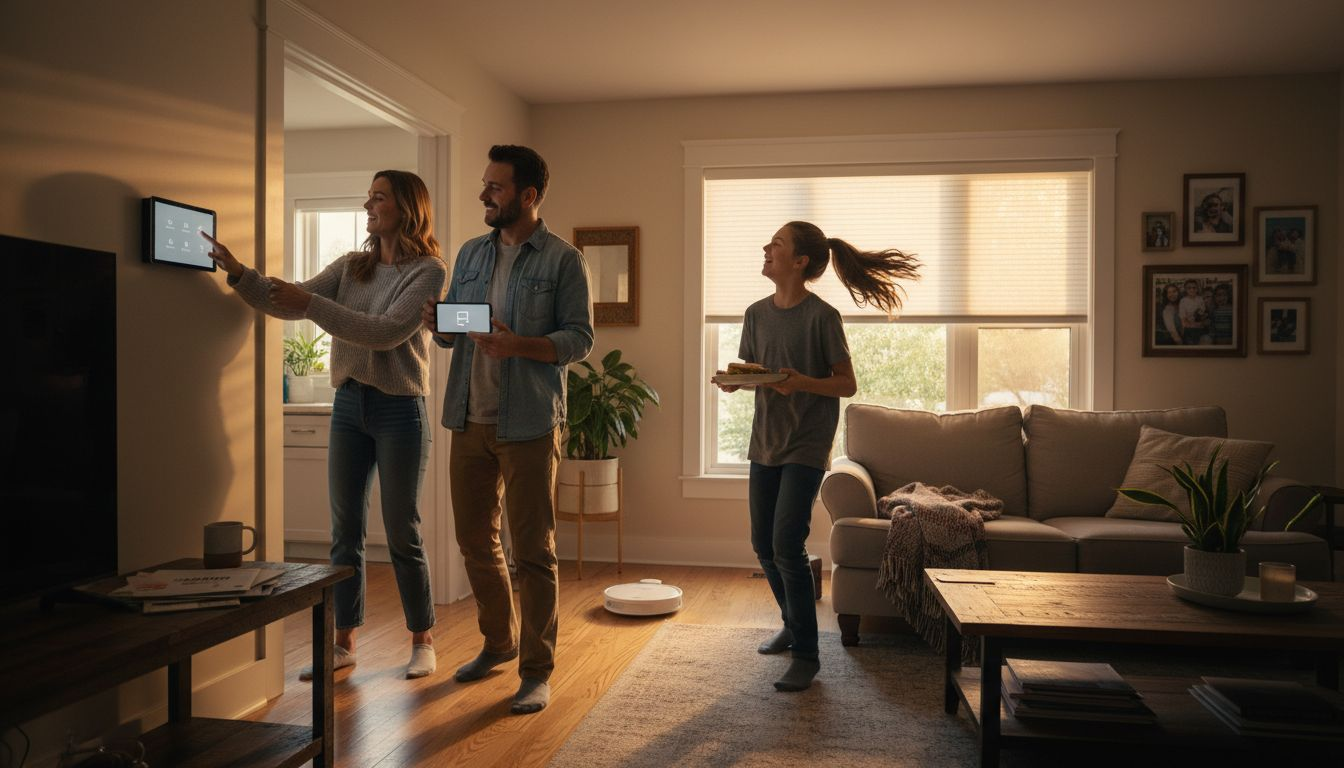
More than 60% of American households are now exploring smart home technology(also known as home automation) to shrink their energy bills and elevate daily comfort. However, For tech-savvy homeowners, the challenge goes beyond picking a few fancy gadgets. From automated lighting that sets the perfect mood to intelligent security systems, these innovations offer examples of home automation to manage your home’s energy, safety, and lifestyle. Discover how you can build a connected environment that adapts to your needs, saves money, and brings true peace of mind.
Affiliate Notice: If you click on a link to a product and make a purchase, I may receive a small commission at no extra cost to you.
Table of Contents
- Smart Lighting for Energy Savings and Ambiance
- Automated Thermostats for Comfort and Efficiency
- Voice-Controlled Assistants for Seamless Control
- Smart Security Cameras for Enhanced Protection
- Intelligent Door Locks for Keyless Entry
- Automated Blinds and Curtains for Convenience
- Connected Appliances for Effortless Living
Quick Summary
| Takeaway | Explanation |
|---|---|
| 1. Implement Smart Lighting for Energy Savings | Replace high traffic area bulbs with smart LED versions to reduce electricity consumption significantly while enhancing ambiance. |
| 2. Use Automated Thermostats for Efficient Climate Control | Automate your home’s heating and cooling to save up to 15% on energy costs through learned scheduling and remote access. |
| 3. Utilize Voice-Controlled Assistants for Convenience | Control your smart home effortlessly with voice commands, simplifying daily tasks and enhancing accessibility for all users. |
| 4. Install Smart Security Cameras for Enhanced Protection | Use intelligent cameras for real-time monitoring and alerts, improving home security through advanced behavior detection. |
| 5. Opt for Intelligent Door Locks for Keyless Entry | Choose smart locks with multiple authentication methods for improved security and ease of access while monitoring entry activity. |
1. Examples of Home Automation Ideas – Lighting for Energy Savings and Ambiance
Smart lighting(affiliate link) transforms your home’s energy efficiency and atmosphere with intelligent illumination solutions. By integrating Initially, advanced technology, you can create personalized lighting environments that reduce electricity consumption while enhancing your living space’s comfort and style.
Modern smart lighting systems leverage wireless networked lighting controls that automatically adjust brightness, color, and intensity based on time of day, occupancy, and personal preferences. These intelligent systems use sensors and algorithms to optimize energy usage without sacrificing visual comfort.
Implementing smart lighting means more than just installing LED Moreover, bulbs. It involves creating a comprehensive lighting strategy that adapts to your lifestyle. Motion sensors can automatically turn lights on and off in unoccupied rooms, while programmable schedules ensure lights are never left running unnecessarily. Color changing capabilities allow you to set different moods from energetic work lighting to relaxing evening ambiance with a simple smartphone command.
Furthermore, Energy savings are substantial with smart lighting solutions. LED bulbs consume up to 75% less energy compared to traditional incandescent bulbs, and smart controls can further reduce electricity consumption by an additional 30%. This translates to meaningful reductions in both your utility bills and carbon footprint.
Pro tip: Start your smart lighting journey by replacing high traffic area bulbs with smart LED versions and gradually expand your system to create a fully integrated home lighting network.
2. Home Automation with Automated Thermostats for Comfort and Efficiency
Smart thermostats(affiliate link) represent a revolutionary approach to home climate control that combines personalized comfort with remarkable energy efficiency. These intelligent devices go far Similarly, beyond traditional temperature settings by learning your preferences and adapting to your lifestyle.
Modern smart thermostats leverage advanced algorithms to automatically adjust heating and cooling based on occupancy, time of day, and individual behavioral patterns. By analyzing your temperature preferences and daily routines, these devices create a customized climate management strategy that maximizes both comfort and energy savings.
ENERGY STAR certified smart thermostats offer significant advantages for homeowners. They enable remote access through smartphone apps, allowing you to control your home’s temperature from anywhere. Scheduling features automatically lower temperatures when you are away or asleep, potentially reducing heating and cooling costs by up to 15 percent.
Implementing a smart thermostat involves more than just installation. These devices collect data about your temperature preferences and movement patterns, creating an intelligent system that progressively optimizes your home’s energy consumption. Some models even provide detailed energy reports, helping you understand and modify your consumption habits.
Pro tip: Position your smart thermostat away from direct sunlight, Additionally, drafts, and heat sources to ensure accurate temperature readings and more precise climate control.
3. Smart Home Voice-Controlled Assistants for Seamless Control
Voice-controlled assistants(affiliate link) represent transformative examples of home automation technology that enables hands-free control Notably, of your smart home environment through simple spoken commands. These intelligent systems convert verbal instructions into immediate actions across multiple devices and applications.
Modern voice assistants leverage artificial intelligence and natural language processing to understand and execute complex commands with remarkable accuracy. Unlike traditional interfaces, they allow you to manage your home environment without physical interaction using sophisticated algorithms that interpret context and intent.
The practical applications of voice assistants extend far beyond simple device control. You can set timers, create shopping lists, control smart home devices, play music, get weather updates, In addition, and even manage your daily schedule through voice commands. Their integration with smart home ecosystems creates a seamless, intuitive interaction that simplifies daily tasks and enhances home automation.
Accessibility is a significant advantage of voice-controlled technology. These systems provide enhanced independence for individuals with mobility challenges, allowing them to control home environments without physical interaction. Advanced models can even recognize different user voices, providing personalized responses and maintaining individual privacy.
Pro tip: Place your voice assistant in a central location with minimal background noise to ensure optimal voice recognition and command accuracy.
4. Home Automation Security: Smart Cameras for Enhanced Protection
Smart security cameras(affiliate link) represent a quantum leap in home protection technology, transforming passive surveillance into an intelligent active defense system. These advanced devices do far Clearly, more than simply record video they provide real time monitoring and threat detection.
Modern smart cameras leverage deep learning algorithms for behavior detection that can distinguish between normal activity and potential security risks. By using artificial intelligence, these systems can send immediate alerts when unusual movements or unauthorized individuals are detected around your property.
The technological capabilities of smart security cameras extend well beyond traditional recording. Features like night vision, wide angle lenses, two way audio communication, and cloud storage enable comprehensive home monitoring. You can access live Furthermore, feeds from anywhere using smartphone apps, receive instant notifications, and even communicate with visitors or potential intruders remotely.
Privacy and customization are key advantages of smart security systems. Most modern cameras allow you to create specific monitoring zones, schedule recording times, and control access to video footage. This means you can focus surveillance on entry points, driveways, or specific areas of concern while maintaining complete control over your home security ecosystem.
Pro tip: Position your security cameras at elevated angles near entry points and ensure they are mounted out of easy reach to maximize both visibility and protection.
5. Smart Home Intelligent Door Locks for Keyless Entry
Intelligent door locks(affiliate links) represent a revolutionary approach to home security and access management, transforming traditional entry Likewise, methods with sophisticated digital technology. These advanced systems eliminate the need for physical keys while providing enhanced control and flexibility.
Smart locks offer multiple secure access authentication methods that go beyond conventional lock and key mechanisms. Users can unlock doors through smartphone apps, PIN codes, biometric scans, voice commands, or temporary digital keys shared with guests or service providers.
The technological capabilities of intelligent door locks extend far beyond simple entry. They provide real time monitoring, allowing you to track who enters and exits your home, create custom access schedules for family members or contractors, and receive instant notifications about door activity. Some advanced models Moreover, integrate with broader smart home ecosystems, enabling seamless automation with security systems and voice assistants.
Security remains paramount in smart lock design. These devices incorporate robust encryption technologies, preventing digital hacking attempts and providing multiple backup entry options. Many models include tamper alerts, automatic locking features, and the ability to instantly revoke digital access credentials if a smartphone is lost or stolen.
Pro tip: Choose a smart lock with multiple authentication methods and ensure it includes mechanical key backup for ultimate reliability and security.
Smart Home Automated Blinds and Curtains for Convenience
Automated blinds and curtains(affiliate link) represent a sophisticated solution for homeowners seeking enhanced comfort and energy efficiency through intelligent window management. These innovative Similarly, systems transform traditional window coverings into dynamic, responsive home features.
Modern smart blinds leverage advanced motorized control technologies that allow seamless operation through smartphone apps, voice commands, or scheduled programming. By integrating with broader smart home ecosystems, these window treatments can automatically adjust based on sunlight intensity, room temperature, and time of day.
The practical benefits of automated blinds extend far beyond simple convenience. They contribute significantly to energy conservation by optimizing natural light and heat management. During summer, blinds can automatically close during peak sunlight hours to reduce cooling costs, while in winter they can In fact, open to maximize passive solar warming, potentially reducing heating and cooling expenses.
Installation options range from fully wireless retrofit systems that replace existing window treatments to integrated solutions built directly into new home construction. Many models offer granular control features like partial opening, scheduled movements, and synchronization with other smart home devices for comprehensive environmental management.
Pro tip: Select automated blinds with battery backup systems to ensure continued functionality during power outages or wireless network disruptions.
7. Examples of Home Automation Connected Appliances for Effortless Living
Connected appliances(affiliate link) transform everyday household tasks from manual chores into seamless automated experiences. These intelligent devices create a synchronized ecosystem that Finally, anticipates and responds to your lifestyle needs with minimal human intervention.
Modern smart appliances leverage IoT enabled control techniques to integrate multiple devices into a cohesive network. Refrigerators can track food inventory, washing machines can optimize cleaning cycles based on fabric types, and ovens can suggest recipes and monitor cooking progress remotely.
The practical benefits extend far beyond simple convenience.
Connected appliances provide real time energy consumption data, allowing you to optimize electricity usage and reduce utility costs. Smart refrigerators can alert you about expiring groceries, while intelligent dishwashers can automatically order detergent As a result,when supplies run low.
Interoperability is a key advantage of modern connected appliances. Most devices now communicate across different platforms and can be controlled through centralized smartphone apps or voice assistants. This means you can preheat your oven while driving home, start your washing machine from work, or check your refrigerator contents while grocery shopping.
Pro tip: Choose smart appliances that support universal communication protocols like Matter to ensure maximum compatibility and future flexibility in your connected home ecosystem.
Below is a comprehensive table summarizing the smart home technologies discussed throughout the article and their respective benefits and applications.
| Smart Technology | Primary Functionality | Key Benefits |
|---|---|---|
| Smart Lighting | Automated adjustment of illumination based on factors. | Enhances energy efficiency, reduces costs, and creates customizable ambiance. |
| Automated Thermostats | Climate control via learned preferences and algorithms. | Optimizes comfort, reduces energy use, and provides remote management. |
| Voice-Controlled Assistants | Hands-free operation of smart home devices. | Simplifies tasks, increases accessibility, and integrates with other systems. |
| Smart Security Cameras | Intelligent surveillance and real-time monitoring. | Enhances home safety, provides advanced monitoring, and integrates easily. |
| Intelligent Door Locks | Keyless and secure entry with monitoring features. | Simplifies access management and increases physical home security. |
| Automated Blinds | Remote and programmatic window covering control. | Improves energy management and enhances home convenience. |
| Connected Appliances | Responsive and automated household devices. | Optimizes energy use, provides remote control, and enhances daily efficiency. |
Discover Smarter Living with Expert Guidance and Trusted Reviews
The challenge of transforming a traditional home into a seamless smart living space requires reliable information and trustworthy recommendations. This article highlights the key aspects of Ultimately,home automation, from smart lighting and thermostats to security cameras and intelligent door locks. Homeowners often struggle with selecting compatible devices and ensuring easy setup while maximizing energy savings and security.
At Smart Home HQ, we understand these pain points and goals. Our comprehensive reviews and real-world insights help you navigate the complex world of smart home technology.and home automation systems Whether you want to enhance your home safety with the latest devices or automate everyday tasks effortlessly, we provide step-by-step guides tailored for all skill levels.
Take control of your smart home journey today by exploring our Smart Home Safety Archives – Smart Home HQ for expert safety device recommendations and visit our main site Smart Home HQ for unbiased, tested product reviews and installation help.

Ready to make your home smarter and safer with confidence Start exploring these practical examples of home automation along with trusted advice and detailed comparisons at Smart Home HQ to turn smart living ideas into reality now.
Examples of Home Automation – Frequently Asked Questions
What are the benefits of implementing smart lighting in my home?
Smart lighting can significantly reduce your electricity consumption by up to 30% beyond regular energy-efficient LED bulbs. Start by replacing bulbs in high-traffic areas with smart LED options to enhance energy efficiency and create customizable lighting moods. These are among the most popular examples of home automation.
How can automated thermostats improve energy efficiency?
Automated thermostats adjust heating and cooling based on occupancy and your personal preferences, potentially lowering costs by up to 15%. Set up a schedule to optimize temperature settings while you are away, ensuring comfort and significant energy savings. This is one of the best examples of home automation for energy efficiency.
What features should I look for in a voice-controlled assistant?
Look for features like multi-device control, voice recognition, and compatibilities with various smart devices to enhance your home automation experience. Position the assistant centrally in your home for better command recognition and seamless integration with your other devices.
How do smart security cameras enhance home protection?
Smart security cameras provide real-time monitoring and threat detection, distinguishing regular activity from potential risks. Install them at entry points to receive immediate alerts about unusual movements, increasing your home’s overall security.
What are the advantages of using intelligent door locks?
Intelligent door locks allow keyless entry with methods like smartphone apps, PIN codes, or biometric scans, enhancing convenience and security. Choose a lock that includes multiple authentication methods for added reliability, especially for home access management.
How can automated blinds help with energy management?
Automated blinds optimize natural light and temperature control, contributing to energy conservation by managing heat throughout the day. Schedule your blinds to close during peak sunlight hours in summer to reduce cooling costs efficiently.
Recommended
- Smart Home Automation Tutorial: Step-by-Step Setup Guide
- How to Set Up Smart Home for Beginners: Easy Steps
- smart thermostat integratio