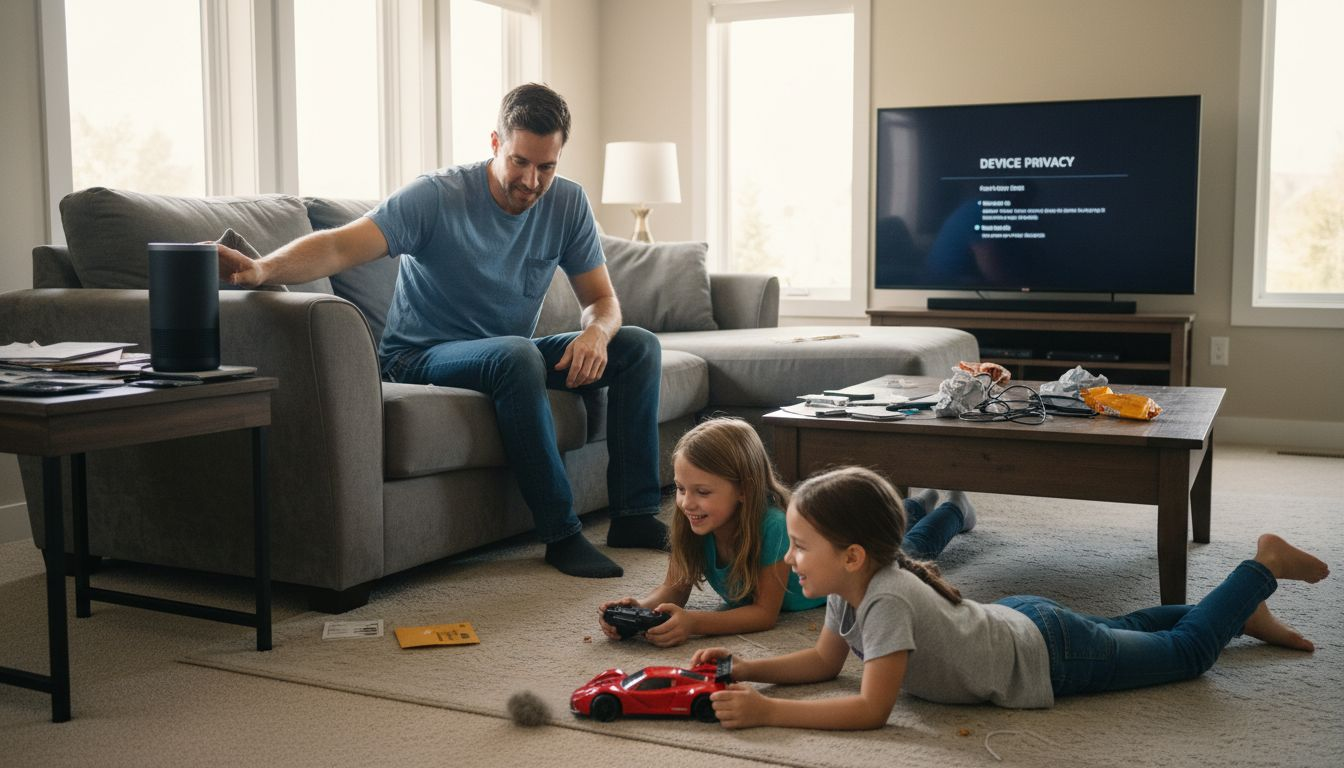
Smart home privacy is no longer a niche concern—it is the foundation of a safe, modern connected home and shapes the role of privacy in smart homes today. When every light, camera, speaker, and sensor is quietly collecting information about how you live, the real question is not whether your home is “smart,” but how much control you have over what’s recorded, where it goes, and who can see it.
Over 80% of smart home devices send your personal data to cloud servers, exposing you to third-party access and potential breaches. Most homeowners trust default settings to protect their privacy, but these defaults rarely prioritize data security. This guide reveals the privacy risks lurking in your connected home and shows you practical steps to safeguard your information while enjoying the convenience of smart technology.
Table of Contents
- Introduction To Smart Home Privacy
- What Personal Data Do Smart Home Devices Collect?
- How Data Flows And Stays At Risk In Smart Homes
- Privacy-By-Design And Brand Comparisons
- Common Misconceptions About Smart Home Privacy
- Practical Steps To Enhance Privacy In Your Smart Home
- Legal And Regulatory Environment In The U.S.
- Conclusion And Next Steps For Privacy-Conscious Smart Homeowners
- Explore Privacy-Focused Smart Home Solutions
- Frequently Asked Questions About Smart Home Privacy
Key Takeaways – Role of Privacy in Smart Homes
| Point | Details |
|---|---|
| Data Collection Scale | Smart speakers, cameras, and thermostats collect voice recordings, location data, and usage patterns daily. |
| Cloud Dependency Risks | Over 80% of devices transmit data to cloud services, increasing exposure to breaches and unauthorized access. |
| Privacy Reduction Potential | Effective privacy measures reduce data risk by over 70% when properly implemented across your smart home. |
| Legal Protections | CCPA and emerging federal IoT regulations grant homeowners rights to access, control, and delete their personal data. |
| Actionable Strategies | Configuring device settings, securing networks with WPA3, and choosing privacy-by-design products dramatically lower exposure. |
Introduction to Smart Home Privacy – Role of Privacy in Smart Homes
Privacy in smart homes means controlling what personal data your devices collect, how that data moves through networks, and who can access it. This definition matters because every connected device in your home creates a potential data pathway that could expose sensitive information about your daily routines, conversations, and personal habits.
Common smart home devices include:
- Smart speakers that respond to voice commands
- Security cameras monitoring entry points
- Thermostats learning temperature preferences
- Smart lights tracking usage patterns
- Video doorbells capturing visitor footage
These devices collect multiple types of personal data. Voice assistants record your conversations and questions. Security cameras capture video footage of you and your family. Thermostats track when you’re home or away. Smart lights reveal your daily routines through usage patterns. Some devices even collect biometric data like facial recognition profiles or voice prints.
Why does this matter? Because this data reveals intimate details about your life. A determined attacker could use your thermostat data to know when you’re on vacation. Voice recordings might contain financial information or private conversations. Camera footage shows who visits your home and when.

Think of smart home privacy as a layered system. The first layer is device data collection. The second is how that data flows through networks. The third involves privacy features built into devices. The fourth is your behavior and configuration choices. The fifth layer is regulatory protections. Each layer either strengthens or weakens your overall privacy posture.
What Personal Data Do Smart Home Devices Collect? – Role of Privacy in Smart Homes
Your smart devices gather far more information than you might realize. Understanding these data categories helps you make informed decisions about which devices to trust in your home.
Voice data comes from smart speakers and displays. Every wake word triggers recording. Some devices record continuously, storing snippets for processing. These recordings can capture background conversations, revealing personal details you never intended to share.
Location data flows from multiple sources. Your thermostat knows when you’re home. Smart locks track entry and exit times. Security cameras map movement patterns around your property. Combined, this data creates a detailed picture of your daily schedule.

Biometric information represents the most sensitive category. Facial recognition systems store templates of your face. Voice assistants create voice prints for personalization. Smart doorbells might capture and analyze faces of everyone who approaches your door.
Usage patterns reveal behavioral insights. Smart lights show which rooms you use and when. Thermostats learn your temperature preferences and schedule. Smart TVs track viewing habits. Entertainment systems monitor listening preferences.
Data granularity matters enormously. Aggregate data showing overall energy usage carries less privacy risk than minute by minute records of every light switch toggle. Fine-grained data enables detailed profiling of your household’s activities and habits.
The key insight? Every device type poses different privacy implications. Cameras and microphones present the highest risk because they capture direct observations of you. Sensors tracking environmental data like temperature pose lower immediate privacy concerns but still reveal patterns over time.
How Data Flows and Stays at Risk in Smart Homes – Role of Privacy in Smart Homes
Your smart home data takes a journey from collection to storage, creating multiple exposure points along the way. Understanding this flow reveals where vulnerabilities hide.
Typical data flow follows this path. Your device collects information, then transmits it through your home Wi-Fi router. From there, data travels across the internet to manufacturer cloud servers. Some devices offer local storage options, keeping data on your network, but these remain less common.
Encryption protects data during transmission. Most reputable manufacturers encrypt data between your device and their servers. However, encryption only secures the pipe. It doesn’t prevent the manufacturer from accessing your data once it reaches their servers. It also doesn’t protect against vulnerabilities in the device itself or your home network.
Over 80% of smart home devices send data to cloud services for processing, which exposes data to third-party servers with varying privacy controls. Cloud dependence creates several risks. First, manufacturers can access your data for analysis, improvement, or even monetization through partnerships. Second, cloud servers become targets for hackers seeking large data troves. Third, government agencies might request access through legal processes.
Interception points exist throughout this chain. Weak router security lets attackers eavesdrop on local traffic. Compromised manufacturer servers expose stored data. Devices with default passwords become easy targets. Each point represents a potential privacy breach.
Local data storage security offers an alternative for privacy-conscious homeowners. Devices that process and store data locally keep information within your control. You eliminate third-party server exposure. However, local storage requires more technical knowledge to implement and maintain securely.
Pro Tip:
Prioritize devices offering local processing options. Products from companies like Apple HomeKit often process data on-device rather than sending it to the cloud, dramatically reducing exposure to cloud service privacy concerns.
Your smart home network security forms the foundation of data protection. A compromised network undermines every other privacy measure you implement.
Privacy-by-Design and Brand Comparisons – Role of Privacy in Smart Homes
Privacy-by-design means manufacturers build privacy protections into products from the ground up rather than adding them as afterthoughts. This philosophy minimizes data collection, processes information locally when possible, and gives users granular control over sharing.
Major smart home brands take different approaches to privacy. Understanding these differences helps you choose ecosystems aligned with your privacy priorities.
| Brand | Privacy Features | Data Processing | User Control | Third-Party Sharing |
|---|---|---|---|---|
| Apple HomeKit | End-to-end encryption, on-device processing, minimal cloud dependence | Primarily local | Extensive settings, transparent policies | Limited, explicit consent required |
| Google Nest | Encryption in transit, cloud processing, activity controls dashboard | Primarily cloud | Moderate controls, deletion options | Used for Google services, ad personalization |
| Amazon Alexa | Encryption, voice history review and deletion | Primarily cloud | Basic controls, opt-out options | Third-party skills require permissions |
Major smart home brands
Apple HomeKit leads in privacy-by-design implementation. Devices must meet strict security requirements. Most processing happens on your iPhone or iPad rather than Apple’s servers. End-to-end encryption means even Apple cannot access your data. The trade-off? Fewer compatible devices and higher prices.
Google Nest emphasizes convenience and AI capabilities. This requires sending data to cloud servers for processing. Google’s business model relies on data analysis. However, they provide activity controls letting you review and delete voice recordings, video history, and sensor data. Their privacy dashboard shows what data they collect.
Amazon Alexa offers the broadest device compatibility. Voice data goes to Amazon’s cloud for processing. You can review and delete recordings through the Alexa app. However, third-party skills may access your data with permissions. Read skill privacy policies carefully.
Pro Tip: If privacy is your top concern, build your smart home around Apple HomeKit compatible devices. You’ll sacrifice some features and pay more, but gain significantly stronger built-in privacy protections. For balanced privacy and functionality, choose Google Nest with aggressive privacy settings configuration.
The ecosystem you choose shapes your privacy baseline. Supplement brand protections with your own smart home privacy practices for comprehensive protection.
Common Misconceptions About Role of Privacy in Smart Homes
Several persistent myths prevent homeowners from properly protecting their smart home data. Let’s clear up these misconceptions with evidence.
Myth: Default settings adequately protect my privacy. Reality: Manufacturers optimize defaults for functionality and data collection, not privacy. Default settings often enable maximum data sharing to improve services and train AI models. You must actively configure privacy settings on every device.
Myth: Cloud processing makes smart homes inherently insecure. Reality: Reputable cloud providers implement strong security controls including encryption, access logging, and regular security audits. The risk comes from how manufacturers handle data once it reaches their servers. Cloud processing itself isn’t the problem, but cloud dependence limits your control.
Myth: I can’t have a truly private smart home. Reality: Effective privacy measures can reduce data risk by over 70% with proper implementation, disproving myths that privacy is unattainable with smart homes. Combining privacy-by-design devices, careful configuration, and network security creates meaningful protection.
Myth: Reading privacy policies tells me everything manufacturers do with my data. Reality: Privacy policies use vague language and change frequently. They often grant broad permissions for data use and sharing. Policies describe possibilities rather than actual practices. Focus on device behavior and settings you control.
Consider this perspective from privacy researchers:
Smart home privacy requires a layered defense approach. No single measure provides complete protection, but combining device selection, network security, and user configuration creates robust privacy that doesn’t sacrifice convenience. The key is informed decision making at every layer.
The truth? Privacy in smart homes is achievable but requires active effort. Don’t rely on defaults. Don’t assume manufacturers prioritize your privacy over their business interests. Take control through deliberate choices and ongoing vigilance. Understanding smart home privacy myths debunked by research helps you focus on effective protections rather than false reassurances.
Practical Steps to Enhance Privacy in Your Smart Home
Protecting your smart home privacy requires concrete actions. Follow these steps to dramatically reduce your data exposure.
Audit your current devices and data collection. List every smart device in your home. Research what data each one collects. Check manufacturer privacy policies. Identify devices collecting data you’re uncomfortable sharing.
Configure privacy settings on each device. Disable voice recording storage on smart speakers. Turn off video storage on cameras unless needed for security. Opt out of data sharing for product improvement. Disable personalization features that require extensive data collection.
Secure your home network foundation. Change your router’s default admin password immediately. Enable WPA3 encryption if your router supports it, or at minimum use WPA2. Create a separate guest network for smart devices, isolating them from computers containing sensitive personal information. Update router firmware regularly to patch security vulnerabilities.
Choose privacy-by-design devices for future purchases. Prioritize products offering local processing. Look for devices with strong encryption standards. Research manufacturer privacy track records before buying. Favor ecosystems with transparent data practices.
Update device software and firmware regularly. Enable automatic updates when available. Check manually for updates monthly on devices without automatic options. Updates patch security vulnerabilities that attackers exploit to access your data.
Change default passwords on every device. Use unique, strong passwords for each device. Consider a password manager to track credentials. Default passwords are the first thing hackers try when targeting smart homes.
Disable unnecessary features and integrations. Turn off remote access if you don’t need it. Disable third-party skills or integrations you rarely use. Each connection point increases exposure. Minimize your attack surface by running only essential features.
Pro Tip:
Conduct a privacy audit every three months. Review what devices collect, check for software updates, and reassess your privacy settings. New features often reset settings to defaults, and manufacturers change data practices over time. Regular audits keep your protections current.
Your behavior matters as much as technology. Don’t discuss sensitive information near smart speakers. Consider unplugging devices when having private conversations. Be mindful that convenience often trades against privacy.
For comprehensive guidance, follow our improve smart home security guide and use our smart home security checklist to ensure you’ve covered all essential protections.
Legal and Regulatory Environment in the U.S.
Understanding your legal rights helps you demand privacy protections from manufacturers and take action when they fall short.
The California Consumer Privacy Act (CCPA) provides the strongest state-level privacy protections in the U.S. While technically California law, it affects smart home manufacturers nationwide. CCPA grants you rights to:
- Know what personal data companies collect about you
- Request deletion of your personal data
- Opt out of data sales to third parties
- Access your data in a portable format
Manufacturers must comply with CCPA requests within specified timeframes. They cannot discriminate against you for exercising privacy rights. Even if you don’t live in California, many companies extend these rights to all U.S. customers rather than maintaining separate systems.
Federal IoT privacy legislation is evolving. Congress has proposed several bills addressing connected device security and privacy. Expected regulations in 2026 may require:
- Minimum security standards for IoT devices
- Clear privacy labeling similar to nutrition labels
- Data breach notification requirements
- Restrictions on data collection from children
These regulations would create baseline protections across all states. Manufacturers would need to meet federal standards regardless of where you live.
How do laws influence smart home privacy?
Legal requirements push manufacturers to improve data protections, offer user controls, and maintain transparency. Companies face penalties for violations, creating financial incentives to respect privacy. However, laws lag behind technology. Don’t rely solely on legal protections.
Your rights under current laws include requesting your data, deleting accounts, and opting out of certain data uses. Exercise these rights regularly. Many manufacturers provide privacy dashboards or data portals. Use them to review what information they hold and request deletions.
Stay informed about privacy legislation. Laws change as privacy concerns grow. New protections may grant additional rights. Subscribe to privacy advocacy organizations for updates. Understanding U.S. privacy laws helps you navigate the legal landscape and hold companies accountable.
Conclusion and Next Steps for Privacy-Conscious Smart Homeowners
Smart home privacy boils down to understanding risks and taking control. Your devices collect extensive personal data, from voice recordings to location patterns. Most send this data to cloud servers, exposing it to third-party access and potential breaches. Default settings prioritize functionality over privacy, leaving you vulnerable.
However, you’re not powerless. Choosing privacy-by-design devices cuts exposure at the source. Configuring settings disables unnecessary data collection. Securing your network with strong passwords and encryption protects data in transit. These combined measures reduce data risk by over 70% when properly implemented.
Your next steps are clear. Audit your current devices. Configure privacy settings on everything. Secure your network infrastructure. Research privacy features before buying new devices. Stay informed about evolving privacy laws and manufacturer practices.
Smart home convenience doesn’t require sacrificing privacy. With informed choices and active management, you can enjoy connected home benefits while protecting your personal information. The key is ongoing vigilance rather than one-time setup.
Explore Privacy-Focused Smart Home Solutions
Ready to upgrade your smart home with privacy in mind? We’ve researched and tested hundreds of devices to identify products that deliver convenience without compromising your personal data.

Our curated selection features devices with strong encryption, local processing options, and transparent data practices. Explore our guide to smart home thermostats with privacy features for climate control that respects your data. Check out our reviews of top smart security systems balancing protection with privacy. Browse our complete collection of privacy-focused smart home products to find devices matching your privacy priorities and budget. We test every product personally, evaluating real-world privacy performance beyond manufacturer claims.
Frequently Asked Questions About Role of Privacy in Smart Homes
What types of personal data do smart home devices collect?
Smart devices collect voice recordings from speakers, video footage from cameras, location data from thermostats and locks, and usage patterns from lights and appliances. Some capture biometric data like facial recognition profiles or voice prints. The specific data depends on device type and features you enable.
How can I reduce data exposure on my smart devices?
Disable voice recording storage, turn off cloud video storage unless essential, opt out of data sharing programs, change default passwords, enable network encryption, and choose devices offering local processing. Configure privacy settings on each device individually rather than accepting defaults.
Are cloud-based smart home systems safe for privacy?
Cloud systems can be secure with proper encryption and access controls, but they require trusting manufacturers with your data. Reputable providers implement strong security, but cloud dependence means manufacturers can access your information. Local processing devices offer better privacy by keeping data under your control.
What US laws protect my smart home data?
The California Consumer Privacy Act grants rights to know what data companies collect, request deletion, and opt out of data sales. Many manufacturers extend these rights nationwide. Emerging federal IoT regulations in 2026 may establish minimum security standards and clearer privacy requirements across all states.
Can I use only local storage to keep my smart home data private?
Yes, devices supporting local storage and processing keep data on your network rather than cloud servers. Apple HomeKit and some security cameras offer local options. This approach maximizes privacy but requires more technical setup and may limit features dependent on cloud AI processing.
Recommended
- AI-Kitchen Privacy Security Checklist: Protect Smart Devices
- Facial Recognition Privacy Risks 2026
- Smart Home Trends 2026: How AI Reshapes Urban Living
- Why Prioritize Smart Home Security Now