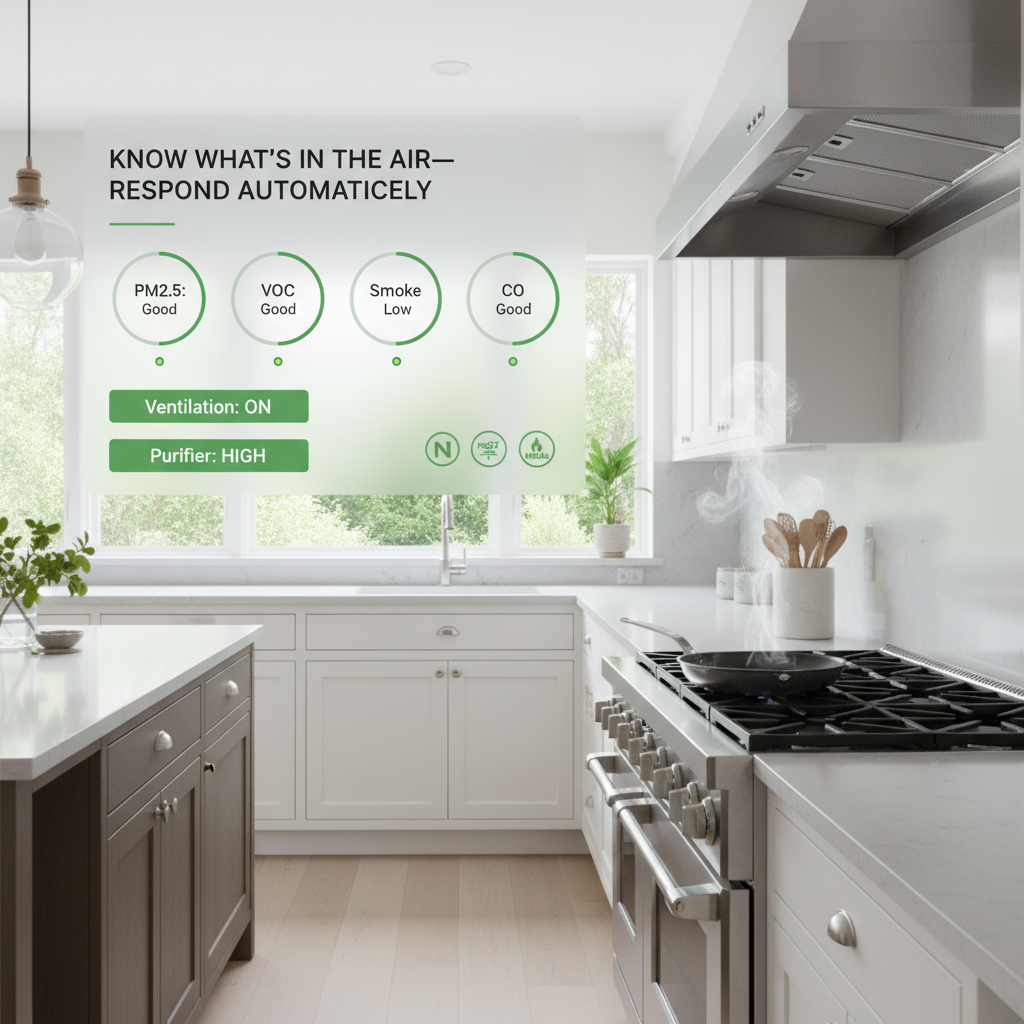
Smart Kitchen Air Safety is becoming essential as more homes add smart ranges, connected vents, and app-controlled appliances that can quietly affect the air you breathe. By combining smart smoke and carbon monoxide detection with PM2.5 and VOC monitoring, you can catch hidden problems like lingering cooking fumes, poor ventilation, or unsafe gas levels before they become serious. With the right sensors, alerts, and automated fan controls, a smart kitchen can actively protect your lungs, reduce exposure to harmful particles, and keep your cooking space comfortable every day.
Affiliate Disclosure: This page contains affiliate links. If you buy through our links, we may earn a commission at no extra cost to you.
✅ What “Smart Kitchen Air Safety” Means
- Detection: Fast smoke + carbon monoxide (CO) alerting (phone notifications, sirens, and device-to-device alarms).
- Monitoring: Continuous measurement of:
- PM2.5/PM10 (fine particles from frying, searing, broiling)
- VOCs (from cleaners, off-gassing, high-heat cooking oils, some sprays)
- Automation: Turn air awareness into action:
- Vent fan ON
- Air purifier ON / higher speed
- HVAC circulate
- Window/vent reminders
⚙️ Ventilation Triggers (Practical Automations)
– Smart Kitchen Air Safety
🌫️ Trigger Types
- Event-based triggers (Safety)
- Smoke alarm event → turn on all lights, unlock smart locks, notify household
- CO alarm event → HVAC OFF (to avoid circulation), urgent push/SMS alerts
- Threshold-based triggers (Air Quality)
- PM2.5 above X µg/m³ → range hood + purifier to high
- VOC above X ppb → increase ventilation, pause scented diffusers
- Time + activity triggers
- “Cooking mode” (manual button/voice) → ventilation ON for 30–60 minutes
- Stove-use proxy (if you have smart plugs/power monitoring on appliances) → ventilation ON
🧠 Suggested Baseline Thresholds (Adjust to Your Home)
- PM2.5: trigger ventilation at a sustained rise (e.g., 15–35 µg/m³ depending on sensitivity)
- VOCs: trigger when rising sharply vs. absolute number (VOC sensors vary widely)
- CO: treat any alarm as urgent—evacuate and follow local safety guidance
Note: Exact thresholds depend on your sensor type, home size, and local guidelines. Use trends + repeatable spikes as your “automation cues.”
🚨 Smoke/CO Alerts — What to Aim For

- Loud local alarm + mobile alerts
- Interconnected alarms (if one triggers, others sound)
- Battery + device health notifications
- Clear “what to do next” routines
- Smoke event: lights on, fan on (if safe), notify family
- CO event: urgent notification, HVAC off, guidance to exit
✅Review & purchase link – 3-Pack Wi-Fi Smoke Detector Carbon Monoxide Detector Combo with App Notifications (affiliate link)
✅Check it out & purchase – First Alert Combination Smoke & Carbon Monoxide Alarms (affiliate link) – Interconnect Hardwire Detector with Battery Backup and Voice & Location Alerts, SMCO100V-AC, 1-Pack
✅Review & purchase link – 5-in-1 Smoke and Carbon Monoxide Detectors Plug in (affiliate link) – Can monitor carbon monoxide, smoke, temperature, and humidity in real time
📊 PM/VOC Monitoring: What You’ll Learn Quickly

- Cooking methods that often spike PM2.5:
- Searing, frying, wok cooking, broiling
- Common VOC spike sources:
- Aerosol sprays, strong cleaners, air fresheners, some high-heat oils
- EPA guidance on indoor particulate matter from cooking
- Helpful outcome:
- You’ll identify “spike moments” and automate prevention (hood earlier, purifier sooner).
✅Review & purchase link – Professional 15-in-1 Air Quality Monitor with Smartphone APP(affiliate link) – Sensors Detect CO2, PM2.5/PM10, HCHO, TVOC | Real-Time Alerts & Custom Thresholds
✅ Quick Checklist: Safer Smart Kitchen Air Safety Setup
- Smoke/CO detectors installed correctly and tested regularly
- Air quality sensor placed away from direct steam/heat but in the kitchen airflow path
- Range hood used proactively (start it before searing/frying)
- Purifier sized for your space (CADR appropriate) and positioned for airflow
- Automations that prioritize safety over convenience
❓ FAQ – Smart Kitchen Air Safety
PM2.5 rises, VOC spikes, or a manual “Cooking Mode” button/voice command are the most reliable triggers. Smoke alarms should trigger safety routines, not just ventilation.
Not exactly. Smoke contains particles, but PM2.5 can rise from cooking even without visible smoke (especially frying or high-heat oils).
Typically no—it can spread contaminated air. Safer routine is evacuate, notify, and follow your device/local safety guidance.
Place it away from direct stove heat/steam but near the kitchen area where air mixes—often 6–10 feet from the cooktop, at breathing height.
VOC sensors are useful for trend detection (spikes and patterns). Absolute values vary by sensor; use them for automation cues and awareness.
Start the range hood early, use a high-CADR purifier, and reduce high-smoke-point oil misuse (avoid overheating oils).
Many setups support routines through their ecosystems (or via hubs/bridges). Goal routines: lights on, alerts, safety messaging, and non-hazardous ventilation actions.