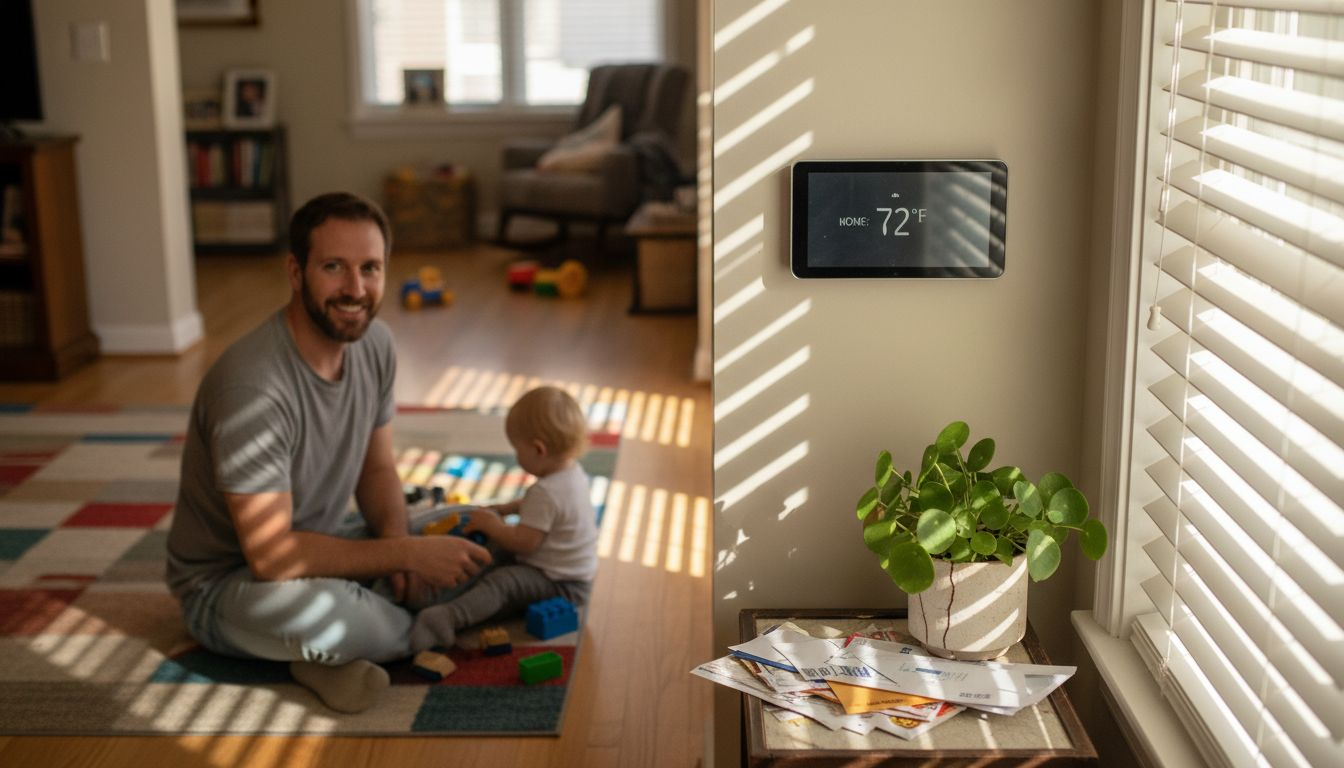
Managing temperatures room by room can feel impossible with traditional HVAC setups, especially in busy multi-story homes. Smart home zoning offers a clear path to greater comfort and lower energy bills by transforming how spaces are heated and cooled. With technologies like intelligent sensors and smart thermostats now providing digitally connected, automated services, homeowners can enjoy custom temperature settings and see the results in daily comfort and reduced energy waste.
Table of Contents
- Smart Home Zoning Explained: Core Concepts
- Types of Smart Home Zoning Systems
- How Smart Zoning Works In Practice
- Key Benefits For Homeowners And Families
- Costs, Setup Challenges, And Mistakes To Avoid
Key Takeaways
| Point | Details |
|---|---|
| Smart Home Zoning Enhances Comfort | By dividing living spaces into independently controlled zones, homeowners can achieve personalized climate management, addressing individual temperature preferences in each area. |
| Improved Energy Efficiency | Smart zoning reduces HVAC energy consumption by allowing tailored heating and cooling, potentially lowering utility bills by up to 30%. |
| Implementation Complexity | Careful planning is essential to avoid common mistakes such as device incompatibility and inadequate network coverage when setting up smart zoning. |
| Professional Consultation Recommended | Engaging with a professional can help identify suitable zoning systems based on unique home layouts and prevent costly installation errors. |
Smart Home Zoning Explained: Core Concepts
Smart home zoning represents a revolutionary approach to residential environmental control, transforming how homeowners manage temperature, energy consumption, and comfort. At its core, smart home zoning enables precise temperature management by dividing living spaces into independently controlled areas or “zones”, allowing customized heating and cooling strategies that traditional HVAC systems cannot achieve.
The fundamental principle behind smart home zoning involves using multiple sensors, smart thermostats, and automated dampers to create granular climate control. Smart home technologies provide digitally connected services that enable residents to customize their indoor environment with unprecedented precision. These systems can detect occupancy, track individual room temperatures, and adjust airflow dynamically, ensuring optimal comfort while minimizing energy waste.
Key components of smart home zoning typically include:
- Intelligent temperature sensors
- Smart thermostats with zoning capabilities
- Motorized dampers for airflow control
- Central control hub or smart home system
- Mobile app or voice control interfaces
By implementing smart zoning, homeowners can address the significant inefficiencies of traditional heating and cooling systems. Standard HVAC setups often treat entire homes as single thermal units, resulting in unnecessary energy consumption and uneven temperature distribution. However, smart zoning eliminates these issues by treating each area as a unique environment, responding to specific occupancy patterns and individual preferences.

Pro tip: Start your smart home zoning implementation by mapping your home’s unique thermal characteristics and identifying areas with distinct temperature requirements.
Types of Smart Home Zoning Systems
Smart home zoning systems are not one-size-fits-all solutions. Instead, they represent a diverse ecosystem of technologies designed to provide customized environmental control. Smart home automation technologies vary widely in their approach to managing residential climate and comfort, offering homeowners multiple strategic options for implementation.
The primary types of smart home zoning systems can be categorized into three main architectures:
- Wireless Zoning Systems
- Utilize WiFi, Zigbee, or Bluetooth communication protocols
- Easy installation with minimal structural modifications
- Ideal for retrofitting existing homes
- Lower initial cost
- Wired Zoning Systems
- Integrated directly into home’s HVAC infrastructure
- Requires professional installation
- More reliable signal transmission
- Higher upfront investment
- Best for new construction or major renovations
- Hybrid Zoning Systems
- Combine wireless and wired communication technologies
- Provide maximum flexibility and reliability
- Adaptable to various home configurations
- More complex setup and integration
Each system type offers unique advantages depending on specific home characteristics, budget constraints, and individual comfort requirements. Ultimately, the choice between wireless, wired, and hybrid solutions depends on factors like home age, existing infrastructure, technological comfort level, and desired customization.
Here’s how the main smart home zoning system types compare:
| System Type | Ideal Use Case | Installation Complexity | Cost Level |
|---|---|---|---|
| Wireless | Retrofitting older homes | Easy, minimal changes | Lower |
| Wired | New builds or renovations | Professional required | Higher |
| Hybrid | Mixed infrastructure homes | Moderate to complex | Moderate |
Pro tip: Consult with a professional smart home technician to assess your specific home layout and determine the most suitable zoning system type for your individual needs.
How Smart Zoning Works in Practice
Smart home zoning transforms temperature management through intelligent, dynamic environmental control. AI plays a pivotal role in automating HVAC decision-making by integrating advanced sensors, sophisticated algorithms, and precision mechanical components that work in seamless coordination.
The practical implementation of smart zoning involves several key technological components working together:
- Sensor Network: Multiple temperature and occupancy sensors strategically placed throughout different home zones
- Central Control Unit: Intelligent processor analyzing sensor data in real-time
- Smart Dampers: Mechanical vents that open and close to direct airflow precisely
- Thermostat Interface: User-friendly control panel for manual and automated adjustments
- Machine Learning Algorithms: Predictive systems that learn household patterns
Typical operation begins with continuous sensor monitoring. Initially, when a specific zone experiences temperature variations, the system instantly calculates optimal adjustments. Unlike traditional HVAC systems that treat entire homes as uniform spaces, smart zoning recognizes that different rooms have unique thermal characteristics. In other words, a sunny home office might require different cooling compared to a shaded bedroom, and the system adapts accordingly.

The most advanced smart zoning systems incorporate additional intelligence layers. They can factor in external weather conditions, individual room occupancy, time of day, and even personal temperature preferences to create a truly personalized climate management experience.
Pro tip: Map your home’s unique thermal zones before installing a smart zoning system to maximize efficiency and customize your approach.
Key Benefits for Homeowners and Families
Smart home zoning offers transformative advantages that extend far beyond simple temperature control. Smart home systems deliver multiple significant benefits by revolutionizing how families interact with their home’s environmental infrastructure.
The primary benefits of smart home zoning can be categorized into several key areas:
- Energy Efficiency and Cost Savings
- Up to 30% reduction in HVAC energy consumption
- Precise temperature management per zone
- Elimination of unnecessary heating and cooling
- Lower monthly utility bills
- Personalized Comfort
- Individual room temperature control
- Elimination of family temperature conflicts
- Customizable settings for different preferences
- Adaptive learning of household patterns
- Extended HVAC Equipment Lifespan
- Reduced system strain
- More balanced operational load
- Decreased mechanical wear and tear
- Potential maintenance cost reductions
Beyond immediate comfort, smart zoning contributes to broader environmental sustainability. For example, by optimizing energy consumption and reducing unnecessary conditioning of unoccupied spaces, homeowners simultaneously lower their carbon footprint and create a more intelligent living environment.
Here’s a quick look at common homeowner goals and how smart zoning addresses them:
| Goal | How Smart Zoning Helps | Result |
|---|---|---|
| Lower utility bills | Precise zone-based heating/cooling | Reduced energy use |
| Improve comfort | Adjusts to each room’s needs | Even temperatures |
| Reduce system wear | Balances operational demand | Longer HVAC lifespan |
| Eco-friendly home | Avoids waste in empty zones | Smaller carbon footprint |
Pro tip: Conduct a comprehensive home temperature audit before implementing smart zoning to identify specific areas with unique thermal characteristics and optimize your system’s configuration.
Costs, Setup Challenges, and Mistakes to Avoid
Smart home zoning implementation is not without its complexities. Common setup challenges can derail entire smart home projects if homeowners do not carefully plan and execute their strategy.
The most significant potential obstacles include:
Financial Considerations
- Initial installation costs ranging from $2,000 to $7,500
- Professional integration fees
- Potential network infrastructure upgrades
- Long-term maintenance expenses
Technical Challenges
- Ensuring robust Wi-Fi network coverage
- Verifying device compatibility across brands
- Managing complex communication protocols
- Preventing signal interference
Common Mistakes to Avoid
- Purchasing incompatible devices
- Neglecting network bandwidth requirements
- Skipping professional consultation
- Implementing without comprehensive home assessment
- Ignoring cybersecurity best practices
Successful implementation requires a strategic approach that balances technological sophistication with practical considerations. Homeowners must view smart zoning as an integrated system, not just a collection of individual devices. This means prioritizing comprehensive planning, understanding network requirements, and investing in scalable, interoperable technologies.
Pro tip: Conduct a professional home network assessment and compatibility audit before investing in any smart zoning equipment to minimize potential integration challenges.
Unlock Your Home’s True Comfort with Expert Smart Zoning Solutions
Many homeowners struggle with uneven temperatures, high energy bills, and the complexity of choosing the right technology for effective smart home zoning. This article highlights the challenge of implementing precise, zone-based heating and cooling systems that can adapt to individual room needs while reducing costs and equipment wear. Finally, you deserve a smart zoning strategy that fits your home layout and lifestyle without overwhelming you with technical barriers.
The Complete Smart Home Automation Master Guide Archives – Smart Home HQ offers carefully tested insights and step-by-step advice on selecting reliable smart thermostats, intelligent sensors, and zoning systems that truly deliver comfort and savings.

Take control of your home environment today by exploring trusted product reviews and setup guides at Smart Home HQ. Don’t let confusing technology hold you back from experiencing smarter, more efficient climate control. Visit now to find the solutions tailored for your unique needs and start transforming your home comfort right away.
Frequently Asked Questions
What is smart home zoning?
Smart home zoning is a system that allows homeowners to independently control heating and cooling in different areas or “zones” of their home, improving comfort and energy efficiency.
How does smart home zoning work?
Smart home zoning uses multiple temperature sensors, smart thermostats, and automated dampers to manage airflow and temperature in individual zones based on occupancy and personal preferences, optimizing climate control throughout the home.
What are the main types of smart home zoning systems?
The primary types of smart home zoning systems are wireless, wired, and hybrid systems. Wireless systems are easy to install and ideal for retrofitting. However, wired systems require professional installation and are reliable. Ultimately, hybrid systems combine both for added flexibility.
What are the cost benefits of implementing smart home zoning?
Smart home zoning can reduce HVAC energy consumption by up to 30%, leading to lower utility bills. By avoiding unnecessary heating and cooling, homeowners can achieve significant cost savings while enhancing overall comfort.
Recommended
- What Is a Smart Thermostat and Why It Matters
- Why Use Smart Thermostats: Benefits & ROI
- Why Use Smart Thermostats for Energy Savings
- Smart Thermostats: Complete 2026 Guide