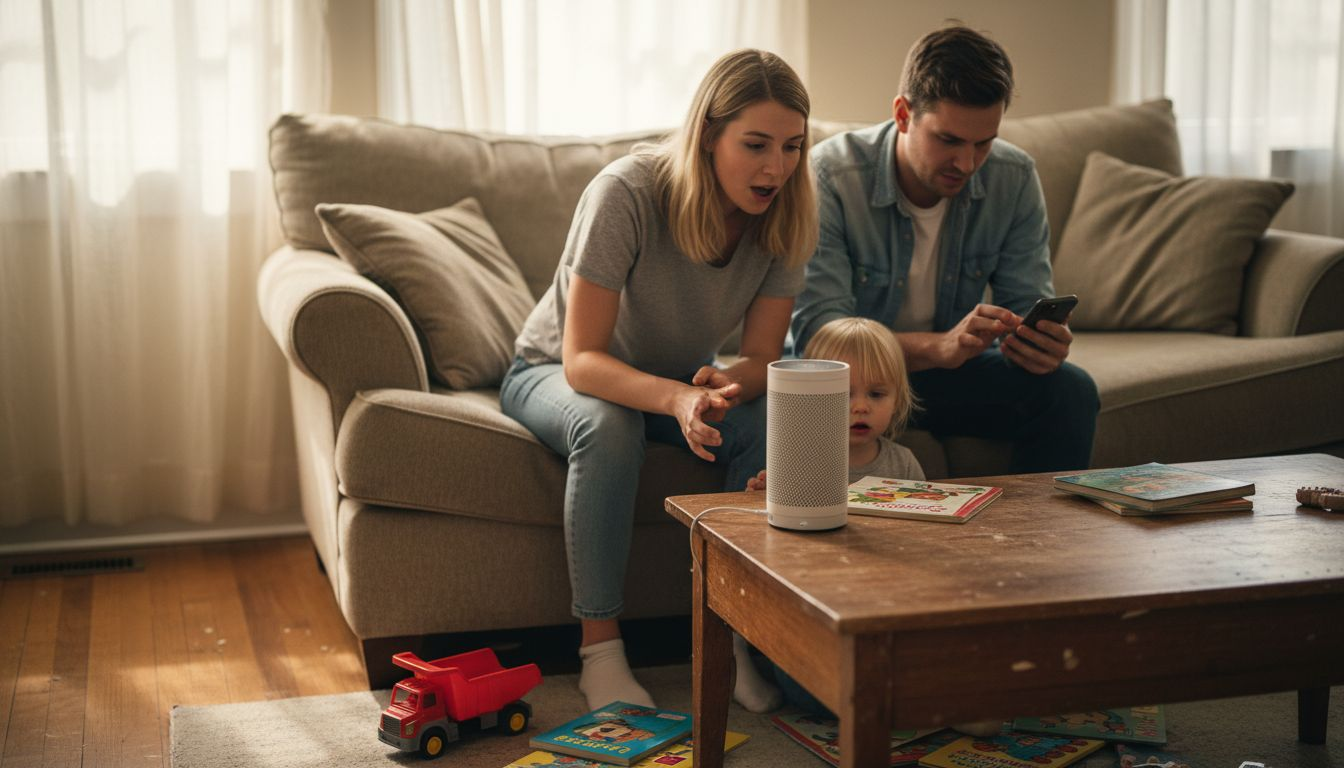
Choosing the right smart speaker can feel confusing for many American households entering the world of home automation. With over 35 percent of American homes embracing some form of smart technology, curiosity about these devices has never been higher. This guide explains what makes smart speakers unique, how they fit into daily life, and what features matter most for convenience and privacy at home.
Table of Contents
- What Is a Smart Speaker and Core Functions
- Major Types and Key Differences
- How Voice Control and Connectivity Work
- Popular Features and Real-World Applications
- Privacy, Security, and Cost Considerations
Key Takeaways
| Point | Details |
|---|---|
| Smart Speaker Functionality | Smart speakers combine high-quality sound and voice control, enabling hands-free management of tasks and smart home integration. |
| Major Platforms | Amazon Alexa, Google Assistant, and Apple Siri offer unique strengths and ecosystem integrations. |
| Voice Control Technology | Advanced technologies enable voice command interpretation and connectivity through Wi-Fi and Bluetooth, enhancing user interaction. |
| Privacy and Security | Users should consider privacy controls and security features, such as microphone mute options and voice data management. |
What Is a Smart Speaker and Core Functions
A smart speaker is an innovative audio device that transforms how we interact with technology at home. These intelligent devices combine high-quality sound reproduction with advanced voice recognition capabilities, enabling hands-free control of digital functions. Unlike traditional speakers, smart speakers integrate voice command technologies that allow users to perform multiple tasks through simple verbal instructions.
These devices leverage multiple microphones and sophisticated noise-cancellation software to detect voice commands from across rooms, even during audio playback. They typically feature a dedicated “wake word” – like “Alexa” or “Hey Google” – which activates the device’s virtual assistant. Once activated, these speakers can accomplish a wide range of tasks such as playing music, setting alarms, answering questions, controlling smart home devices, and providing personalized information based on individual user preferences.
The core functions of smart speakers extend far beyond basic audio playback. Modern devices can recognize individual voices, deliver personalized responses, and integrate seamlessly with other smart home technology. Users can control lighting, adjust thermostats, check security cameras, and even make online purchases through voice commands. This technology represents a significant leap in home automation, transforming how people interact with their living spaces and digital services.
Pro tip: When setting up a smart speaker, place it in a central location with minimal background noise to optimize voice recognition accuracy.
Major Smart Speaker Types and Key Differences
Smart speakers come in various configurations, primarily distinguished by their integrated virtual assistant platforms. Speaker classification depends on multiple factors, including audio capabilities, connectivity options, and built-in intelligent systems. The primary categories are defined by their core virtual assistant technology – Amazon Alexa, Google Assistant, and Apple Siri – each offering unique features and ecosystem integration.
The major types can be categorized across several dimensions. Audio performance ranges from entry-level models with basic sound reproduction to premium speakers featuring advanced acoustic engineering. Connectivity options include Wi-Fi, Bluetooth, and smart home protocol compatibility such as Thread and Matter. Some high-end models offer touchscreen displays, while others focus purely on voice interaction. The ecosystem compatibility varies significantly, with Amazon Echo devices providing deep Amazon service integration, Google Nest speakers offering robust Google ecosystem connections, and Apple HomePod devices exclusively supporting Apple’s platform.

Beyond virtual assistant differences, smart speakers vary in physical design and specialized capabilities. Compact models like portable Bluetooth speakers prioritize mobility, whereas stationary home units emphasize room-filling sound and comprehensive smart home control. Professional-grade speakers include advanced features like multi-room audio synchronization, high-fidelity sound drivers, and more sophisticated microphone arrays for improved voice recognition across noisy environments.
Here’s a summary comparing major smart speaker platforms and their unique advantages:
| Platform | Notable Strength | Integration Focus |
|---|---|---|
| Amazon Alexa | Largest selection of skills | Amazon services, smart home devices |
| Google Assistant | Strong context awareness | Google services, Android ecosystem |
| Apple Siri | High privacy standards | Apple devices, HomeKit products |
Pro tip: Consider your primary ecosystem and preferred virtual assistant when selecting a smart speaker to ensure maximum compatibility and seamless integration with your existing devices.
How Voice Control and Connectivity Work
Voice control in smart speakers operates through sophisticated voice user interface technologies that transform spoken commands into actionable digital instructions. These systems rely on multiple advanced technologies working simultaneously: sophisticated microphone arrays, noise-cancellation algorithms, natural language processing, and cloud-based artificial intelligence. When a user speaks a wake word like “Alexa” or “Hey Google,” the device activates its listening mode, capturing audio signals and preparing to interpret complex verbal commands.
The connectivity mechanism of smart speakers is equally intricate, primarily utilizing Wi-Fi and Bluetooth protocols to communicate with other devices and online services. Modern smart speakers support advanced communication standards like Thread and Matter, enabling seamless interoperability across different brand ecosystems. This connectivity allows devices to stream audio, control smart home appliances, access cloud-based services, and provide real-time responses to user queries. The underlying network infrastructure enables these devices to process voice commands by sending audio data to remote servers, which analyze speech patterns and determine appropriate responses.
Understanding voice recognition requires appreciating the complex computational process behind each interaction. Smart speakers use machine learning algorithms to continuously improve their ability to distinguish individual voices, understand context, and filter out background noise. These systems can recognize multiple users, adapt to different accents, and provide personalized responses based on individual user profiles. The entire process happens within milliseconds, creating a seamless interaction that feels almost instantaneous to the user.
Pro tip: Position your smart speaker away from loud devices and in an open area to maximize voice recognition accuracy and minimize potential misunderstandings.
Virtual Assistant Device – Popular Features and Real-World Applications
Smart speakers have evolved far beyond simple audio playback, transforming into comprehensive home management tools with an impressive array of smart home ecosystem capabilities. These devices now serve as central command centers for home automation, enabling users to control lighting, adjust thermostats, manage security systems, and interact with multiple smart home devices through simple voice commands. The integration extends to entertainment, where users can stream music, podcasts, audiobooks, and even control television sets or streaming devices without lifting a finger.

Beyond home management, smart speakers have become powerful information and productivity tools. They provide instant access to weather reports, news updates, calendar reminders, and real-time information like stock prices, traffic conditions, and sports scores. Language translation, unit conversion, cooking timers, and hands-free calculation represent just a fraction of their practical applications. For individuals with mobility challenges or those seeking enhanced accessibility, these devices offer unprecedented convenience, allowing complex tasks to be completed through voice interaction.
The communication and connectivity features of smart speakers continue to expand rapidly. Users can make hands-free phone calls, send text messages, host video conferences, and even communicate between different rooms in a home using intercom functions. Educational applications have also emerged, with smart speakers offering interactive learning experiences for children, providing math help, spelling challenges, and engaging storytelling. The devices are increasingly becoming sophisticated personal assistants, learning user preferences and delivering increasingly personalized experiences across various domains of daily life.
Pro tip: Create custom voice routines that combine multiple actions to maximize your smart speaker’s efficiency and streamline your daily tasks.
Privacy, Security, and Cost Considerations
Privacy in smart speaker usage is a complex landscape that demands careful consideration. Digital privacy standards reveal significant concerns about data collection, storage, and potential misuse of personal information. Smart speakers continuously record audio in homes, which raises critical questions about unauthorized surveillance and data management. Users must understand that these devices are essentially always listening, storing voice data, and potentially transmitting information to cloud servers, creating potential vulnerabilities in personal privacy.
Security measures vary significantly across different smart speaker platforms, making it essential for consumers to thoroughly investigate built-in protections. Most modern devices include encryption protocols, voice recognition technology, and user-controlled privacy settings designed to mitigate potential risks. Key security features include the ability to delete recorded conversations, disable microphones when not in use, and set up two-factor authentication. Some models offer physical microphone mute buttons, providing an additional layer of privacy control that gives users direct management over device listening capabilities.
Below is a snapshot of common smart speaker privacy controls and their practical benefits:
| Privacy Feature | User Benefit | Typical Availability |
|---|---|---|
| Voice deletion | Removes sensitive recordings | Most platforms |
| Microphone mute | Prevents unwanted listening | Physical button, app |
| Two-factor login | Enhances account security | Major brands only |
Cost considerations extend beyond the initial device purchase, encompassing potential subscription fees, compatibility with existing smart home ecosystems, and long-term value. Entry-level smart speakers typically range from $50 to $100, while advanced models with premium audio and extensive features can cost $200 or more. Consumers should evaluate not just the upfront expense, but also potential ongoing costs related to cloud services, smart home integrations, and potential upgrades. The total cost of ownership includes electricity consumption, potential subscription services, and the ecosystem investment required to maximize the device’s functionality.
Pro tip: Regularly review and adjust your smart speaker’s privacy settings, and consider using physical microphone mute options when discussing sensitive information.
Discover the Perfect Smart Speaker for Your Connected Home
Choosing the right smart speaker can feel overwhelming with so many features, privacy concerns, and compatibility questions to consider. This article highlights the challenges of voice recognition accuracy, smart home integration, and maintaining privacy in a busy household. If you want to unlock the full potential of voice control while ensuring your smart speaker fits seamlessly into your home ecosystem, expert guidance is essential.

At Smart Home HQ, we offer detailed, unbiased reviews and clear comparisons to help you select the ideal smart speaker tailored to your needs. Whether you prioritize audio quality, ecosystem compatibility with Amazon Alexa, Google Assistant, or Apple Siri, or advanced privacy controls, our step-by-step guides and real-world testing insights will give you the confidence to build a smart home that truly works for you. Start your journey today by exploring our comprehensive resources and let us help you transform your living space into a smarter, more connected home.
Frequently Asked Questions
What are the core functions of a smart speaker?
Smart speakers can play music, set alarms, answer questions, control smart home devices, and provide personalized information.
How does voice control work in smart speakers?
Voice control relies on advanced technologies like multiple microphones, noise-cancellation, natural language processing, and cloud-based AI to interpret spoken commands.
What are the major types of smart speakers?
Smart speakers are primarily categorized by their integrated virtual assistant platforms, such as Amazon Alexa, Google Assistant, and Apple Siri, each with unique features and ecosystem integration.
What privacy measures should I consider with smart speakers?
Key privacy measures include the ability to delete recorded voice commands, malware protection, and using physical microphone mute options to prevent unintended listening.