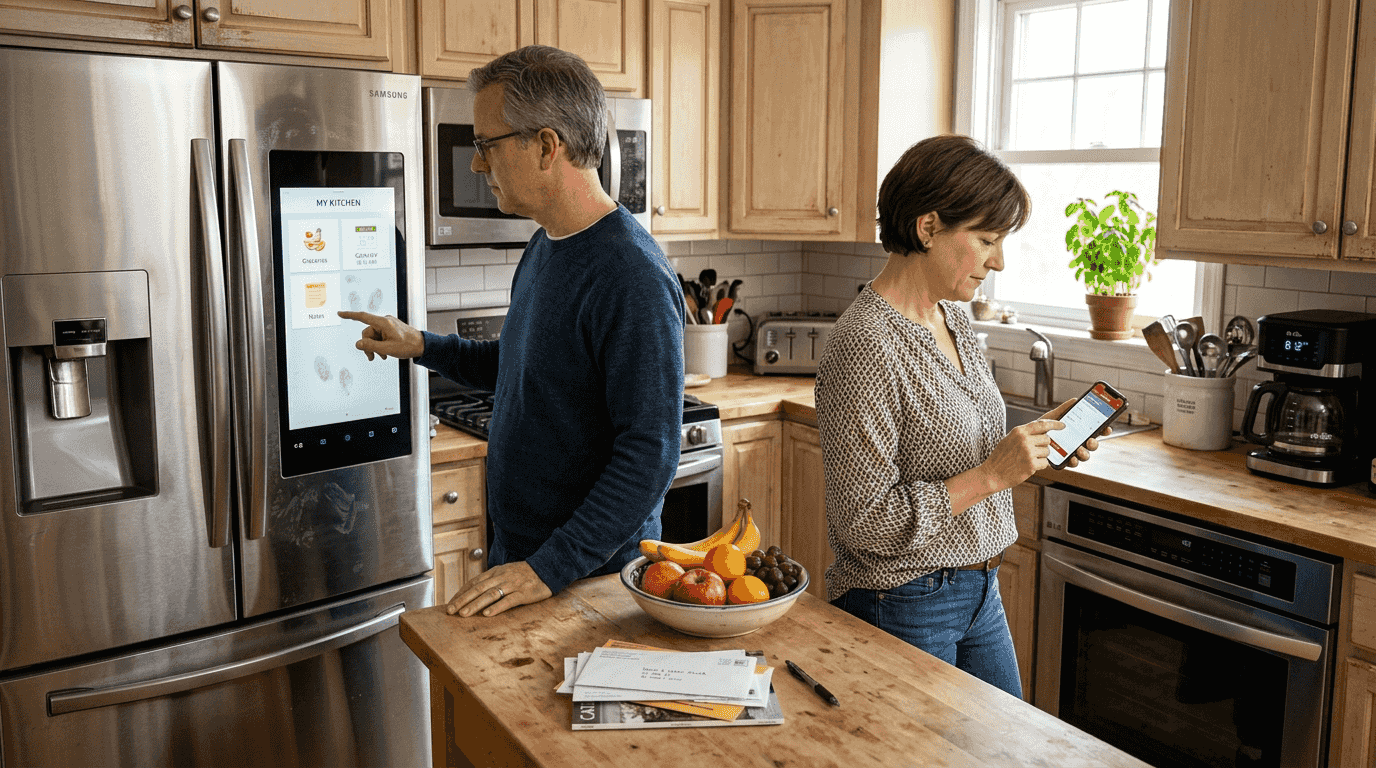
Most people think connected appliances are expensive gadgets for tech enthusiasts, but they’re actually practical tools that save money and simplify daily routines. These internet-enabled devices from refrigerators to thermostats let you monitor and control your home remotely while cutting energy costs. Whether you’re a homeowner looking to modernize or a renter seeking convenience without permanent installations, understanding connected appliances helps you make smart choices. This guide covers what they are, how they work, their benefits and limitations, plus actionable tips for integration into any living space.
Table of Contents
- Understanding Connected Appliances: What They Are And How They Work
- How Connected Appliances Save Energy And Enhance Convenience
- Challenges And Limitations Of Connected Appliances In Homes
- Practical Tips For Integrating Connected Appliances Into Your Home
- Explore Smart Home Products And Guidance At Smart Home HQ
Key takeaways
| Point | Details |
|---|---|
| Connected appliances are internet-enabled devices | Household items like refrigerators, washing machines, and thermostats that offer remote monitoring and control through apps or voice assistants. |
| Energy savings reach up to 72% with smart systems | Real-time feedback reduces gas by 6.9% and electricity by 2.2%, with properly configured systems achieving significant efficiency gains. |
| Privacy and connectivity are key concerns | Standby power use, security vulnerabilities, and Wi-Fi dependence require careful network management and device selection. |
| Matter compatibility ensures future-proof integration | Choosing Matter-compatible devices guarantees cross-brand interoperability and simplifies setup across different smart home ecosystems. |
| Renters benefit from portable, non-install options | Smart plugs, portable sensors, and wireless devices provide convenience without permanent modifications to rental properties. |
Understanding connected appliances: What they are and how they work
A connected appliance is a household device such as a refrigerator, washing machine, oven, thermostat, or light bulb that is equipped with internet connectivity, enabling remote monitoring and control. These devices transform ordinary household items into responsive tools that communicate with your smartphone, voice assistant, or central hub. The core difference between traditional and connected appliances lies in their ability to send data, receive commands, and adapt behavior based on your preferences or environmental conditions.
Common types of connected appliances include:
- Smart refrigerators that track inventory and expiration dates
- Connected washing machines and dryers with remote start and cycle notifications
- Smart ovens offering precise temperature control and recipe guidance
- Intelligent thermostats learning your schedule to optimize heating and cooling
- Connected light bulbs with color adjustment and automated scheduling
- Smart security cameras providing live feeds and motion alerts
- Electronic door locks with remote access and entry logs
Connectivity methods vary based on device requirements and home infrastructure. Wi-Fi remains the most popular option for appliances needing high bandwidth like cameras and refrigerators. Ethernet provides stable wired connections for stationary devices. Bluetooth LE works well for short-range communication between phones and nearby appliances. Zigbee and Z-Wave create mesh networks where devices relay signals to extend range and reduce power consumption. Thread represents newer technology designed specifically for low-power smart home devices with robust mesh capabilities.
Most connected appliances require a smartphone app for initial setup and ongoing management. These apps let you adjust settings, view status updates, and create automation rules. Voice assistants like Alexa, Google Assistant, and Siri provide hands-free control through simple commands. Some systems use central hubs that coordinate multiple devices and enable complex automation scenarios. The emerging Matter standard promises to simplify this landscape by ensuring devices from different manufacturers work together seamlessly, regardless of which ecosystem you prefer.
How connected appliances save energy and enhance convenience
Real-time feedback from smart appliances reduces gas by 6.9%, electricity by 2.2%, and total energy use by 5.8% with smart systems achieving up to 72% efficiency gains and significant cost reductions. These numbers translate to tangible savings on monthly utility bills while reducing your environmental footprint. The key lies in how connected appliances provide visibility into consumption patterns and enable precise control over when and how devices operate.
Energy savings manifest through several mechanisms:
- Smart thermostats learn occupancy patterns and adjust temperatures automatically, avoiding heating or cooling empty spaces
- Connected washing machines run during off-peak electricity hours when rates are lower
- Intelligent lighting systems turn off forgotten lights and dim based on natural daylight availability
- Smart power strips eliminate phantom load by cutting power to idle devices completely
- Energy monitoring plugs identify which appliances consume excessive power, guiding replacement decisions
Convenience benefits extend beyond energy management. Remote control means you can preheat your oven while commuting home, verify your door is locked from anywhere, or receive alerts when laundry finishes. Automation eliminates repetitive tasks by having lights turn on at sunset, coffee brew at wake time, or security cameras activate when everyone leaves. Integration with home automation platforms creates sophisticated scenarios where one trigger activates multiple devices, like “goodnight” mode that locks doors, arms security, adjusts thermostats, and turns off all lights simultaneously.
Pro Tip: Use a Kill-A-Watt meter to measure actual energy consumption before and after implementing smart controls. This validates whether your configuration delivers promised savings and helps identify misconfigured devices that might increase rather than decrease usage.
The table below shows typical annual savings by appliance category:
| Appliance Type | Average Annual Savings | Payback Period |
|---|---|---|
| Smart thermostat | $180-$240 | 1-2 years |
| Connected lighting | $50-$90 | 6-12 months |
| Smart power strips | $30-$60 | 3-6 months |
| Energy monitoring system | $120-$200 | 1-3 years |
These figures assume typical household usage and average utility rates. Your actual savings depend on current energy habits, local electricity costs, and how aggressively you optimize device schedules. The energy saving smart home guide provides detailed strategies for maximizing efficiency across all device categories.

Challenges and limitations of connected appliances in homes
Some connected appliances can increase energy consumption if misconfigured, with standby power use between 0.8-2.3W and privacy concerns as significant drawbacks. While benefits are substantial, understanding limitations helps you make informed decisions and avoid common pitfalls that undermine the value proposition.
Key challenges include:
- Privacy risks from data collection practices where manufacturers gather usage patterns, sometimes selling aggregated data to third parties without clear disclosure
- Increased standby power consumption as devices maintain constant internet connections, potentially offsetting savings if you deploy too many low-value connected items
- Security vulnerabilities when devices use outdated firmware or weak default passwords, creating entry points for network intrusions
- Complexity creep as multiple apps and ecosystems require separate management, leading to frustration rather than convenience
- Reliability concerns during internet outages when cloud-dependent devices lose functionality entirely
Power outages disable smart features unless backup power is available; renters face installation and permanence constraints; strong Wi-Fi is critical for reliable operation. These edge cases matter more than marketing materials suggest. A smart lock that defaults to locked during power loss could trap you outside, while a thermostat that resets to factory settings wastes the learning investment.
Renters face unique obstacles with connected appliances. Lease agreements often prohibit modifications like replacing thermostats or installing smart switches. Even removable devices create concerns about leaving expensive equipment behind when moving. The smart home for apartments guide addresses these constraints with portable solutions that deliver benefits without risking security deposits.
Pro Tip: Segment your network by placing all connected appliances on a separate Wi-Fi network or VLAN. This limits potential damage if one device gets compromised, preventing attackers from accessing computers or phones on your primary network. Many modern routers include guest network features perfect for this purpose.
Security best practices extend beyond network segmentation. Change default passwords immediately, enable two-factor authentication where available, and prioritize devices with local processing capabilities that don’t require cloud connectivity for core functions. Regular firmware updates patch known vulnerabilities, though automatic updates introduce their own risks if a bad update bricks devices. The AI kitchen privacy security checklist provides comprehensive guidance for protecting connected appliances.
Practical tips for integrating connected appliances into your home
Start small with basic devices; choose Matter-compatible appliances for future-proofing; segment networks for security; renters should prefer non-install devices for easy removal. This measured approach lets you learn what works for your lifestyle before committing significant money to a full smart home transformation.
Beginners should focus on high-impact, low-complexity devices:
- Smart plugs that add connectivity to existing appliances without replacement costs
- Programmable thermostats offering the best return on investment through heating and cooling optimization
- Connected light bulbs providing immediate convenience and energy savings
- Smart speakers that serve as voice control hubs while delivering entertainment value
- Video doorbells combining security, convenience, and package monitoring
Matter compatibility deserves special attention when selecting new devices. This universal standard launched in late 2022 and gained widespread adoption by 2024, meaning 2026 shoppers benefit from mature implementations across major brands. Matter-compatible devices work with Apple HomeKit, Google Home, Amazon Alexa, and Samsung SmartThings simultaneously, eliminating the ecosystem lock-in that plagued earlier smart home adopters. You can start with one platform and switch later without replacing devices.
Network segmentation protects privacy and security. Create a dedicated network for connected appliances separate from computers and phones. This isolation prevents compromised appliances from accessing sensitive personal data. Local hubs that process automation rules without cloud connectivity further enhance privacy while improving response times and reliability during internet outages. Devices supporting local control continue functioning even when your ISP experiences problems.
Pro Tip: Prioritize devices with energy monitoring features even if you don’t need the smart control aspects. Understanding which appliances consume the most power guides replacement decisions and identifies malfunctioning equipment before it fails completely, potentially preventing water damage or fire hazards.
Renters need portable solutions that don’t require permanent installation. Smart plugs, battery-powered sensors, and adhesive-mounted devices provide convenience without drilling holes or replacing fixtures. When you move, these items pack up and transfer to your new place. Avoid hardwired smart switches, built-in appliances, or anything requiring electrical work that might violate lease terms. The comparison table below helps evaluate installation requirements:
| Device Type | Installation Complexity | Renter Friendly | Portability |
| — | — | — |
| Smart plugs | Plug and play | Yes | Excellent |
| Battery sensors | Adhesive mount | Yes | Excellent |
| Smart bulbs | Screw in socket | Yes | Excellent |
| Hardwired switches | Electrical work | No | Poor |
| Built-in appliances | Professional install | No | None |
| Smart thermostats | Wire replacement | Maybe | Fair |
The best practices smart home setup 2026 guide provides detailed implementation steps, troubleshooting common issues, and optimization strategies for different home types and budgets. Following established patterns helps you avoid expensive mistakes and accelerates the path to a functional, reliable smart home.

Explore smart home products and guidance at Smart Home HQ
Now that you understand what connected appliances are and how they transform home management, Smart Home HQ offers the resources to turn knowledge into action. Our platform features comprehensive product tables comparing specifications, prices, and real-world performance across every device category from thermostats to security systems.

Whether you’re just starting with types of smart home devices every owner should know or refining an existing setup with best practices smart home setup 2026, we provide unbiased reviews based on extensive testing. Explore latest smart home devices 2026 to discover cutting-edge products that deliver genuine value. Our step-by-step guides walk you through installation, configuration, and optimization for maximum convenience and efficiency.
What is a connected appliance? FAQ
Do all connected appliances work together regardless of brand?
Not automatically, but Matter-compatible devices guarantee interoperability across Apple, Google, Amazon, and Samsung ecosystems. Older devices using proprietary protocols like Zigbee or Z-Wave require compatible hubs. Check for Matter certification when buying new appliances to ensure future compatibility.
Can renters use connected appliances without violating lease terms?
Yes, by focusing on portable devices that don’t require installation or modification. Smart plugs, battery-powered sensors, and screw-in smart bulbs provide full functionality without drilling or wiring. Always review your lease agreement before installing anything permanent like smart switches or thermostats.
What happens to connected appliances during internet outages?
Functionality depends on device design. Cloud-dependent appliances lose remote access and automation features entirely. Devices with local hubs or processors maintain basic functions and automation rules. Critical devices like smart locks typically include manual override options. Consider backup internet or cellular failover for essential security devices.
Are connected appliances secure from hackers and privacy breaches?
Security varies significantly by manufacturer and implementation. Reputable brands with regular firmware updates offer reasonable protection when you change default passwords and enable available security features. Network segmentation adds another protection layer. Avoid unknown brands with poor security track records. Review the smart home for apartments security section for detailed guidance.
How much do connected appliances really save on energy bills?
Typical households save 5-8% on total energy costs, with smart thermostats delivering the largest impact at $180-$240 annually. Actual savings depend on current usage patterns, local utility rates, and optimization effort. Poorly configured devices can increase consumption, so monitoring actual usage validates whether your setup delivers promised benefits.
Do I need a hub to use connected appliances?
It depends on the connectivity protocol. Wi-Fi devices connect directly to your router without additional hardware. Zigbee, Z-Wave, and Thread devices require compatible hubs. Matter-compatible devices work with existing smart speakers or displays that support the standard, eliminating the need for dedicated hubs in most cases.