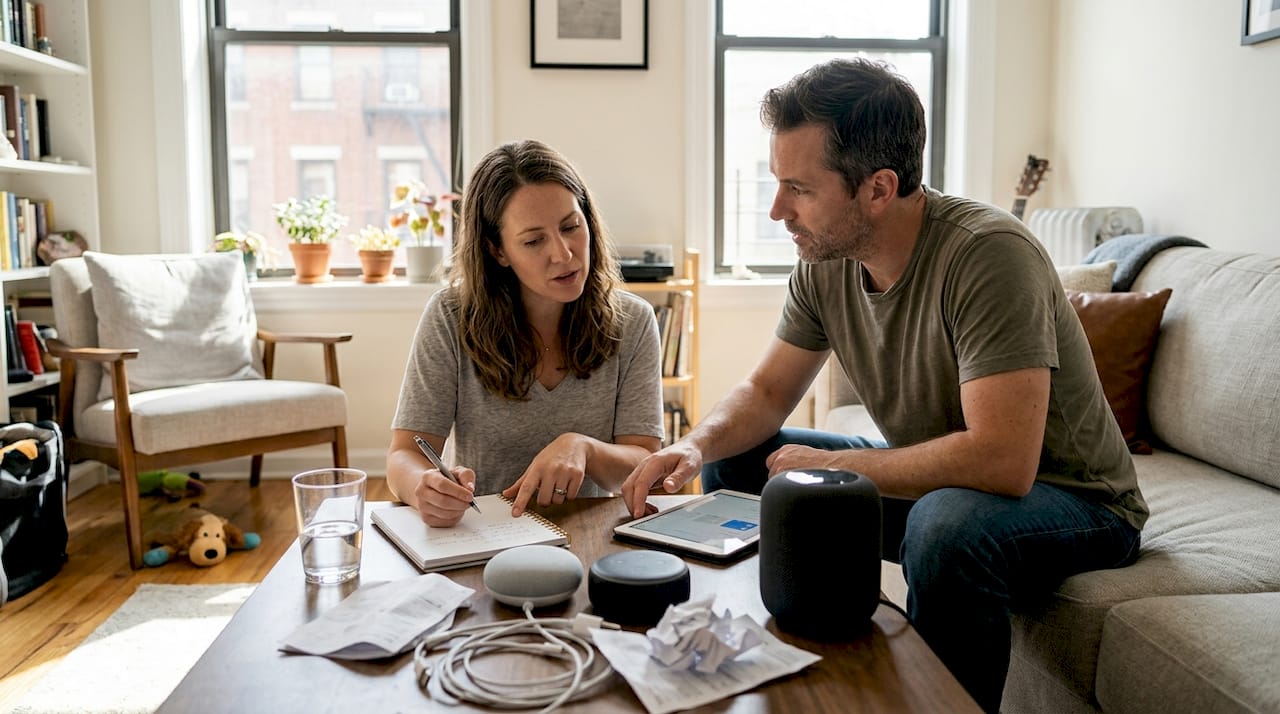
Picking the right smart speaker for your home feels straightforward until you actually start shopping. The market has exploded with options, each promising seamless voice control, rich audio, and deep smart home integration. Smart speaker adoption has soared as homeowners seek seamless connectivity and automation, making the decision harder than ever. This guide cuts through the noise with a clear, feature-by-feature breakdown of the top models so you can choose with confidence and build a smarter home without second-guessing yourself.
Table of Contents
- How to evaluate smart speakers: Criteria for your smart home
- Leading smart speakers: Detailed overview of top models
- Smart speaker comparison table: Features at a glance
- Best smart speaker for different needs: Personalized recommendations
- Smart speaker integration: Real-world use cases and home automation
- Explore more smart home solutions with Smart Home HQ
- Frequently asked questions
Key Takeaways
| Point | Details |
|---|---|
| Match by needs | Choose your smart speaker based on must-have features and ecosystem compatibility. |
| Compare side-by-side | Use the comparison table to quickly visualize differences and strengths. |
| Automation potential | Smart speakers unlock routines and energy savings when integrated into your home. |
| Focus on privacy | Consider privacy features and local processing if security is a top priority. |
How to evaluate smart speakers: Criteria for your smart home
Before you spend a dollar, you need a clear framework for what actually matters. Not every speaker excels at everything, and the wrong choice can leave you with a device that fights your existing setup instead of enhancing it. Here are the key criteria to weigh before buying:
- Sound quality: Audio performance varies widely. If music is your priority, look for speakers with dedicated tweeters and woofers, not just a single driver.
- Voice assistant compatibility: Alexa, Google Assistant, and Siri each have different strengths. Voice assistants automate 74% of smart home tasks, so picking the right one matters for daily convenience.
- Ecosystem integration: Your speaker needs to work with your existing devices. Check whether it supports Matter (the universal smart home standard), Zigbee, or Z-Wave protocols.
- Privacy controls: Some speakers process voice data locally; others send it to the cloud. Know where your data goes.
- Value for money: Premium price does not always mean premium fit for your needs. Budget models often cover 80% of use cases at half the cost.
For homeowners building a connected home, voice assistants for home automation are the backbone of daily routines, from morning briefings to locking doors at night. Understanding the broader voice assistant ecosystem helps you avoid locking yourself into a platform that limits future upgrades.
Pro Tip: Not all ecosystems support every smart device. Always cross-check compatibility between your speaker and your existing bulbs, locks, and thermostats before purchasing.
Leading smart speakers: Detailed overview of top models
With the criteria clear, let’s look at the leading smart speaker options shaping today’s market. Each model below has a distinct personality and a specific type of homeowner it serves best.
- Amazon Echo (4th Gen): The most versatile pick for automation. It supports Alexa, includes a built-in Zigbee hub (so it can control compatible smart devices directly), and works with thousands of third-party products. Ideal for homeowners who want broad device control.
- Google Nest Audio: Excellent for music and Google ecosystem users. It integrates tightly with Google Calendar, Maps, and YouTube Music. Best for households already using Android phones and Google services.
- Apple HomePod (2nd Gen): The privacy-first choice. It processes most requests on-device and integrates deeply with Apple HomeKit. Perfect for iPhone-heavy households that prioritize security.
- Sonos Era 100: The audiophile’s smart speaker. Sound quality is genuinely impressive, and it supports both Alexa and Google Assistant. Great for music lovers who also want smart home control.
- Bose Home Speaker 300: Balanced audio with 360-degree sound. It supports Alexa and Google Assistant and works well in open-plan living spaces.
AI-driven enhancements for personalization and better security are now built into several of these models, making them smarter over time without requiring manual updates. If you want a deeper look at how these devices perform in real automation setups, the guide on smart speakers for automation covers hands-on testing results. You can also check out the Alexa vs Google Home overview for a focused head-to-head.
Pro Tip: Look for speakers with intercom (drop-in) features or local control options. These add real flexibility, especially in larger homes where room-to-room communication is useful.

Smart speaker comparison table: Features at a glance
Now, here’s a direct side-by-side comparison to help you evaluate each speaker quickly. Comprehensive product comparisons reveal strengths and trade-offs not seen in marketing materials, which is exactly why this table exists.
| Feature | Amazon Echo | Google Nest Audio | Apple HomePod | Sonos Era 100 | Bose Home Speaker 300 |
|---|---|---|---|---|---|
| Sound quality | Good | Very good | Excellent | Excellent | Very good |
| Voice assistant | Alexa | Google Assistant | Siri | Alexa or Google | Alexa or Google |
| Smart home hub | Yes (Zigbee) | No | Yes (HomeKit) | No | No |
| Privacy | Moderate | Moderate | High | Moderate | Moderate |
| Price range | $99 | $99 | $299 | $249 | $229 |
| Best for | Automation | Google users | Apple users | Music lovers | Open spaces |
| Matter support | Yes | Yes | Yes | Yes | Limited |
Understanding what makes a smart speaker tick helps you read this table more effectively. If you are still weighing whether a smart speaker is worth it at all, the breakdown of benefits of smart speakers is a practical starting point.
Best smart speaker for different needs: Personalized recommendations
Armed with the side-by-side comparison, let’s match the best speaker to your priority and household situation. One size does not fit all here.
- Music lovers: Go with the Sonos Era 100. The audio quality is noticeably better than the competition at a similar price point, and it still handles smart home commands reliably.
- Privacy-first users: Apple HomePod is the clear winner. On-device processing means fewer voice clips stored in the cloud.
- Large homes: Amazon Echo paired with Echo Dot satellites gives you whole-home coverage without breaking the bank. The intercom feature works across all Echo devices.
- Tight budgets: Echo Dot (5th Gen) or Google Nest Mini deliver solid performance for under $50. You get most of the core features at a fraction of the cost.
- Senior-friendly households: Top marks for ease of use in multi-generational households go to Amazon Echo and Google Nest Audio, both of which offer simple voice commands and large speaker output for clear audio.
- Energy-conscious homeowners: Any Matter-compatible speaker pairs well with smart thermostats and energy monitors. Check out energy-saving automation ideas to see how much you can realistically save.
“The best smart speaker is not the most expensive one. It is the one that fits your ecosystem, your household habits, and your long-term smart home goals.”
For families still deciding, the guide on choosing smart speakers for your family walks through practical scenarios that make the decision much easier.
Smart speaker integration: Real-world use cases and home automation
Once you have chosen a device, here is what you can actually achieve by integrating it into your smart home. The real value of a smart speaker shows up in daily routines, not just one-off commands.
Smart speakers offer seamless control for lights, thermostats, and security systems, which means you can build routines that run automatically without lifting a finger. Here are the most practical integrations homeowners use every day:
- Smart lighting: Dim or turn off all lights with a single voice command or a scheduled routine at bedtime.
- Thermostat control: Adjust your Nest or Ecobee thermostat by voice or set it to drop automatically when you leave for work.
- Security systems: Arm your alarm, check door locks, or view camera feeds through compatible displays like the Echo Show.
- Media and entertainment: Group speakers for whole-home audio, control your TV, or start a playlist in any room.
- Voice calling and intercom: Use drop-in features to communicate between rooms or call family members hands-free.
- Energy monitoring: Pair your speaker with a smart plug or energy monitor to track and reduce consumption. The guide on controlling home energy with speakers shows you exactly how to set this up.
A practical example: set a “Good Morning” routine that turns on the kitchen lights at 70% brightness, reads your calendar, starts the coffee maker (via a smart plug), and gives you a weather update. All of that runs from one voice command or a scheduled trigger. That is the kind of everyday convenience that makes a smart speaker genuinely useful, not just a novelty.
Explore more smart home solutions with Smart Home HQ
Choosing the right smart speaker is just the beginning. Once your speaker is set up and running routines, you will likely want to expand into lighting, security, thermostats, and more. Smart Home HQ has the tested guides and product comparisons to help you do exactly that.

Use our interactive tool to compare smart speakers side by side with filters for budget, ecosystem, and features. If you are ready to go beyond speakers, the guide to smart home device types gives you a full picture of what is possible. And for the newest releases hitting the market, browse our roundup of latest smart home devices to stay ahead of the curve.
Frequently asked questions
What is the best smart speaker for home automation?
Amazon Echo and Google Nest stand out for broad compatibility and reliable automation, but the best choice depends on your preferred ecosystem. Smart speakers excel in automating home tasks across platforms, so matching the speaker to your existing devices is the key step.
Which smart speaker is most secure for privacy?
Apple HomePod leads for privacy, offering local processing and strong security controls that keep more of your data off the cloud. AI advancements continue to increase privacy protections in leading smart speakers across all brands.
Can smart speakers save energy in my home?
Yes. They automate and monitor energy use by controlling compatible thermostats, smart plugs, and lighting on schedules or triggers. Smart speakers optimize energy management through integration with dedicated energy monitors.
How do I set up my smart speaker with other smart home devices?
Most speakers use a companion app with guided step-by-step instructions to connect lights, thermostats, locks, and more in minutes. Seamless integration for many devices is a core feature of modern smart speakers, making setup beginner-friendly.
Are there any affordable smart speakers that still work well?
Budget options like the Echo Dot and Nest Mini provide excellent performance for their price and retain most core smart features. Entry-level models are a smart starting point if you want to test smart home automation before committing to a premium device.
Recommended
- Alexa versus Google Home used by Seniors in the Kitchen
- Why Use Smart Speakers: Four Key Home Benefits
- What Is a Smart Speaker: Transforming Home Living