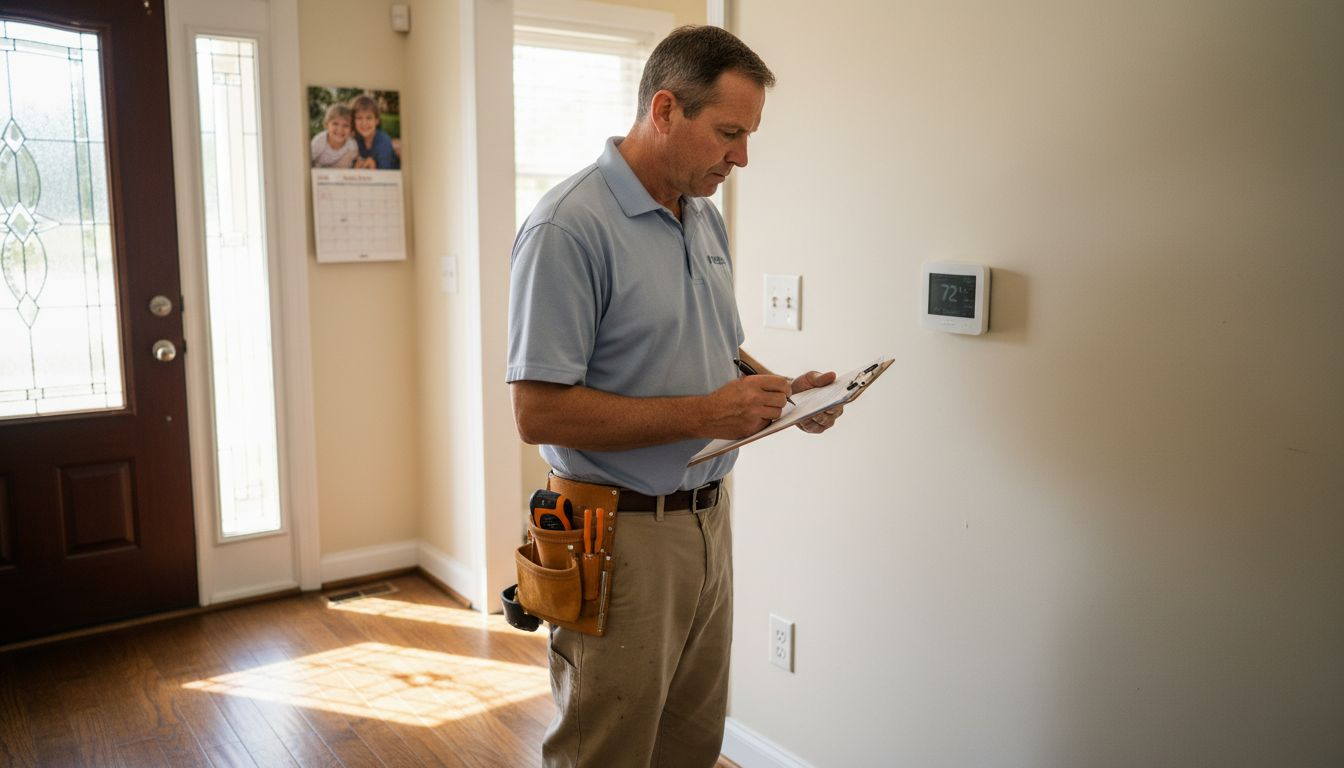
Finding ways to cut energy bills without sacrificing comfort is a challenge many urban homeowners face. Upgrading your thermostat is more than a quick swap—it is a move toward smarter energy management that adapts to your daily routine. Smart thermostats use learning algorithms and occupancy sensing to optimize heating and cooling, letting you enjoy a personalized climate while keeping costs in check. Discover how these innovative devices reshape home comfort and support a smarter approach to energy savings.
Table of Contents
- What Upgrading Thermostats Really Means
- Smart, Programmable, or Manual: Key Differences
- How Modern Thermostats Save Energy and Money
- Integration With Smart Home Devices Explained
- Upfront Costs, ROI, and Common Pitfalls
Key Takeaways
| Point | Details |
|---|---|
| Smart Thermostats Enhance Energy Efficiency | They utilize adaptive learning algorithms to optimize heating and cooling, offering potential savings of 10-15% annually. |
| Types of Thermostats Varied by Functionality | Manual, programmable, and smart thermostats each offer different levels of customization and energy savings, with smart thermostats being the most advanced. |
| Financial Return on Investment is Significant | Initial costs range from $150 to $350, but homeowners can see savings of $100-$250 per year, resulting in a payback period of 1-2 years. |
| Proper Installation is Crucial for Performance | Ensuring professional installation and compatibility with existing systems maximizes energy savings and performance benefits. |
What Upgrading Thermostats Really Means
Upgrading thermostats represents more than just replacing an old device – it’s a strategic transformation of home energy management. Modern smart thermostats are sophisticated systems that go far beyond traditional temperature controls, integrating advanced energy modeling techniques to optimize heating and cooling efficiency.
These intelligent devices bring several key technological enhancements to home climate control:
- Adaptive learning algorithms that understand household occupancy patterns
- Real-time energy consumption tracking
- Automated temperature adjustments based on external weather conditions
- Remote control via smartphone applications
- Integration with broader smart home ecosystems
Smart thermostats transform how homeowners interact with their home’s climate system. Unlike traditional manual units, these advanced devices use machine learning and sensor technologies to create personalized, energy-efficient environments. They automatically adjust temperatures during sleeping hours, detect when rooms are unoccupied, and provide detailed energy consumption insights.
The technological leap is significant. Modern smart thermostats represent a data-driven approach to home comfort, enabling precise control that can dramatically reduce energy waste. By understanding occupancy patterns and learning household preferences, these devices can potentially cut heating and cooling expenses by 10-15% annually.
Smart thermostats are not just temperature controls – they’re intelligent energy management systems that adapt to your lifestyle.
Pro tip: Schedule a professional home energy audit to understand how a smart thermostat could optimize your specific living space’s energy efficiency.
Smart, Programmable, or Manual: Key Differences
Navigating the world of home temperature control requires understanding the fundamental differences between manual, programmable, and smart thermostats. Thermostat technologies have evolved dramatically in recent years, offering homeowners increasingly sophisticated options for managing home climate and energy consumption.
Here’s a breakdown of the three primary thermostat types:
Manual Thermostats
- Lowest cost option
- Require physical adjustment for temperature changes
- No automated features
- Basic functionality
Programmable Thermostats
- Allow preset temperature schedules
- Can set different temperatures for day/night
- Basic energy-saving potential
- Limited customization
Smart Thermostats
- Advanced learning algorithms
- Wi-Fi connectivity
- Remote smartphone control
- Detailed energy consumption tracking
- Automatic adjustments based on occupancy
The most significant leap in technology comes with smart thermostats. Unlike manual and programmable versions, these devices learn from your behavior, automatically adjusting temperatures for maximum comfort and efficiency. They can detect when you’re home or away, integrate with other smart home systems, and provide comprehensive energy usage reports.

Here’s a side-by-side comparison that highlights how each thermostat type influences home comfort and savings:
| Criteria | Manual Thermostat | Programmable Thermostat | Smart Thermostat |
|---|---|---|---|
| User Effort Required | Manual adjustment | Set schedules | Minimal, learns behavior |
| Customization Level | Very limited | Moderate | Highly personalized |
| Potential Savings | Minimal | Moderate | Maximum (up to 17.5%) |
| Connectivity | None | None | Wi-Fi, smartphone apps |
Smart thermostats don’t just control temperature – they transform how we interact with home climate management.
Economically, the investment in smart technology pays off quickly. These advanced systems can reduce heating costs by approximately 10-15% and cooling expenses by up to 17.5%, making them a compelling choice for budget-conscious homeowners seeking long-term savings.
Pro tip: When upgrading, compare your household’s specific usage patterns to determine which thermostat type will deliver the most significant energy and cost savings.
How Modern Thermostats Save Energy and Money
Smart home technologies are transforming energy management, with modern thermostats leading the charge in reducing household electricity consumption. These intelligent devices do more than simply control temperature – they actively learn and optimize your home’s energy usage, creating substantial financial and environmental benefits.
Key energy-saving mechanisms of modern thermostats include:
Automated Temperature Optimization
- Adjust heating and cooling based on occupancy
- Learn household temperature preferences
- Minimize unnecessary energy consumption
Strategic Energy Cost Management
- Detect off-peak energy pricing hours
- Automatically schedule heating/cooling during cheaper periods
- Reduce overall utility expenses
Advanced Sensor Technologies
- Use occupancy detection
- Monitor humidity levels
- Track environmental conditions
- Provide detailed energy usage reports
Unlike traditional thermostats, modern systems use sophisticated learning algorithms to understand your specific comfort needs while simultaneously minimizing energy waste. By analyzing your daily routines, these devices can automatically precool or preheat your home during optimal times, significantly reducing unnecessary HVAC system runtime.
Smart thermostats don’t just monitor temperature – they actively manage your home’s energy ecosystem.
Economically, the impact is substantial. Most homeowners can expect to reduce their heating and cooling costs by 10-15% annually, translating to hundreds of dollars in savings. The initial investment in a smart thermostat typically pays for itself within two years through these consistent energy efficiency improvements.

Pro tip: Combine your smart thermostat with additional home insulation and weatherstripping to maximize your energy savings potential.
Why Upgrade Thermostats – Integration With Smart Home Devices Explained
Smart home platforms are revolutionizing device connectivity, transforming how modern thermostats interact with broader home automation ecosystems. These intelligent devices no longer operate in isolation but function as sophisticated network components that communicate seamlessly across multiple platforms and technologies.
Key integration capabilities include:
Voice Command Compatibility
- Amazon Alexa integration
- Google Assistant support
- Apple HomeKit connectivity
Cross-Platform Communication
- Wireless protocol synchronization
- Automated routine creation
- Unified control interfaces
Advanced Sensor Coordination
- Occupancy detection sharing
- Environmental condition monitoring
- Real-time energy consumption reporting
The sophistication of modern smart thermostats extends far beyond temperature control. These devices now function as central nodes in intelligent home networks, using advanced sensors and learning algorithms to dynamically adjust climate settings based on intricate environmental and behavioral patterns.
Smart thermostats are not just climate control devices – they are intelligent home management systems.
By leveraging occupancy sensors and learning algorithms, these systems can automatically coordinate with other smart home devices, creating a responsive and energy-efficient living environment. Imagine your thermostat communicating with smart windows, automatically adjusting internal temperatures based on external conditions, or coordinating with security systems to optimize energy usage when no one is home.
Pro tip: Verify device compatibility before purchasing by checking manufacturer integration specifications to ensure seamless smart home performance.
Why Upgrade Thermostats – Upfront Costs, ROI, and Common Pitfalls
Smart thermostat investments require careful financial analysis, with upfront costs and potential long-term savings playing crucial roles in decision-making. Typically, homeowners can expect to invest between $150 and $350 for a quality smart thermostat, including professional installation.
Key financial considerations include:
Initial Investment Range
- Basic models: $150-$250
- Advanced models: $250-$350
- Professional installation: $50-$100
Potential Annual Savings
- Energy cost reduction: 10-23%
- Average annual savings: $100-$250
- Payback period: 1-2 years
ROI Performance Factors
- ENERGY STAR certification
- Home insulation quality
- User interaction patterns
- Local energy rates
The return on investment can be substantial, with potential savings ranging from 200% to 500% over the device’s operational lifespan. However, realizing these benefits depends on strategic implementation and understanding potential pitfalls.
This summary table outlines common ROI factors and pitfalls to consider when investing in a smart thermostat:
| Financial Factor | Impact on ROI | Common Pitfall |
|---|---|---|
| Installation Quality | Ensures peak savings | Improper setup reduces value |
| Home Insulation | Boosts efficiency | Poor insulation lowers ROI |
| Device Compatibility | Smooth operation | Incompatible HVAC systems |
| User Engagement | Drives savings | Manual overrides waste energy |
| Energy Rates | Higher savings possible | Not adjusting for rate changes |
Smart thermostat savings are not guaranteed – they require active engagement and proper setup.
Common challenges include compatibility issues with older HVAC systems, over-manual adjustments that negate automated efficiency, and improper installation. Homeowners must carefully assess their specific home infrastructure and energy consumption patterns to maximize potential savings.
Pro tip: Consult with a professional HVAC technician to ensure your smart thermostat is compatible with your existing system and optimally configured for maximum energy efficiency.
Upgrade Your Thermostat, Transform Your Energy Bills Today
Struggling with rising energy costs and outdated heating or cooling controls The article highlights how smart thermostats use adaptive learning and automated adjustments to save up to 17.5 percent on your energy bills These advanced devices bring the power of real-time control and seamless smart home integration into your living space for ultimate comfort and savings. Experience a data-driven approach to managing your home energy efficiently without the guesswork

Discover thoroughly tested smart thermostat reviews and step-by-step setup guides on Core Device Categories Archives – Smart Home HQ and explore comprehensive smart home solutions at Smart Home HQ. Begin your transformation now to enjoy smarter climate control and lower energy costs that pay off quickly Take control of your home’s comfort and savings today by visiting Smart Home HQ and turning your thermostat upgrade into a smart energy investment
Why Upgrade Thermostats – Frequently Asked Questions
What are the benefits of upgrading to a smart thermostat?
Upgrading to a smart thermostat offers advanced features like adaptive learning algorithms, remote control via smartphone, and real-time energy consumption tracking. These enhancements improve heating and cooling efficiency, potentially lowering energy bills by 10-15% annually.
How do smart thermostats save energy compared to manual or programmable thermostats?
Smart thermostats utilize machine learning to adapt to your household’s occupancy patterns and preferences, automating temperature adjustments. This data-driven approach optimizes energy usage, unlike manual thermostats that require manual changes and programmable ones that may not adapt to real-time conditions.
What factors should I consider when choosing a thermostat?
When choosing a thermostat, consider its type (manual, programmable, or smart), your energy consumption patterns, integration with other smart home devices, and the quality of your home insulation. These factors significantly influence the potential energy savings and overall efficiency.
What is the average return on investment for upgrading to a smart thermostat?
The typical return on investment for a smart thermostat can range from 200% to 500% over its lifespan, with potential energy cost reductions of 10-23%. Homeowners can expect average annual savings between $100 and $250, making it a financially sound upgrade.
Recommended
- Smart Thermostats: Complete 2026 Guide
- What Is a Smart Thermostat and Why It Matters
- Why Use Smart Thermostats for Energy Savings