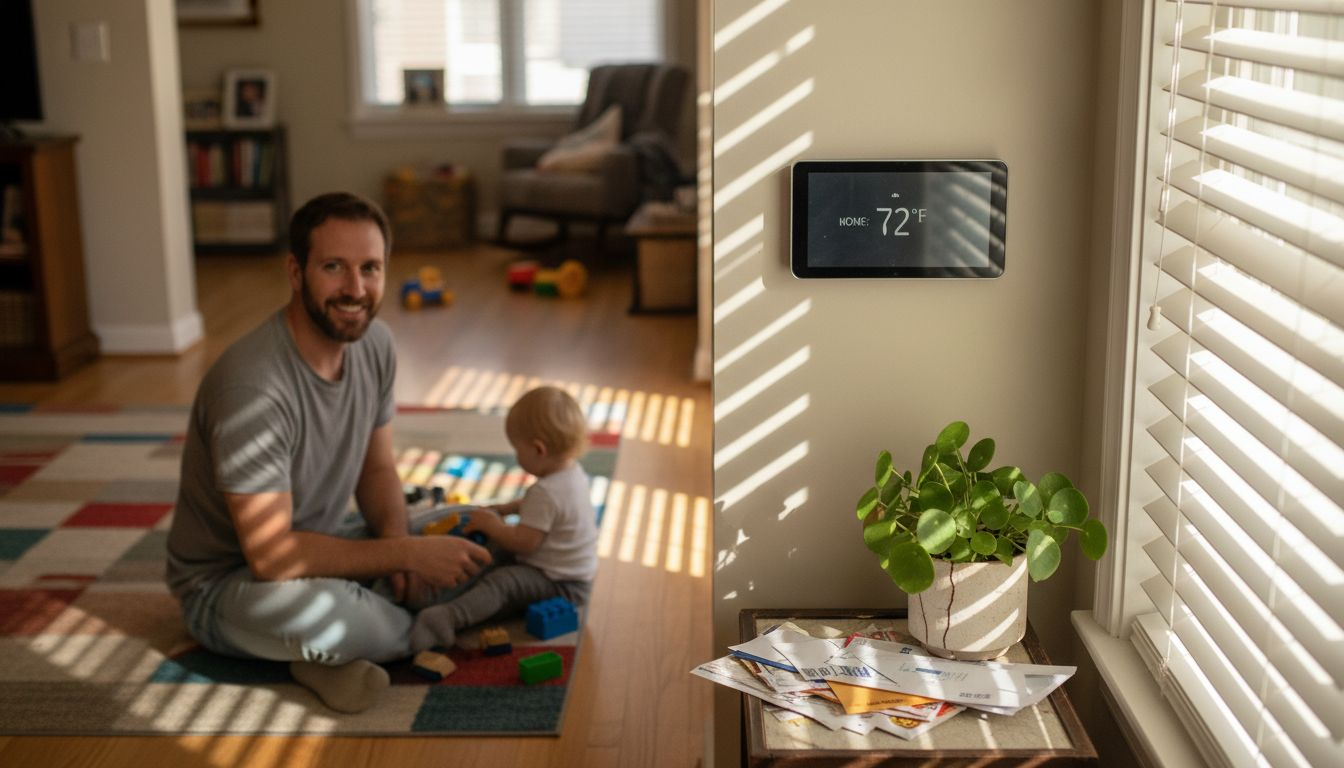
Keeping your home comfortable year-round often means juggling energy bills and adjusting temperatures all day long, but there’s a better way when you follow a few essential smart thermostat tips. Instead of relying on manual thermostat changes that quietly drive up costs, you can use these smart thermostat tips to let your device handle routine adjustments for you. As a result, you’ll unlock the full power of your smart thermostat to automatically optimize heating and cooling for maximum efficiency and comfort.
You’ll discover actionable ways to program schedules, use geofencing, make seasonal adjustments, and take advantage of features that can help your thermostat save you up to 10% a year on heating and cooling costs. These practical strategies are easy to implement and make a big difference without sacrificing comfort.
Each tip uncovers a fresh method for saving energy, improving convenience, and making sure your smart thermostat does the hard work for you. Get ready to transform your home environment with simple, effective insights that put you in control of your energy usage.
Table of Contents
- 1. Set Up Schedules for Daily Comfort and Savings
- 2. Use Geofencing to Automate Temperature Changes
- 3. Adjust Settings for Seasonal Efficiency
- 4. Monitor Energy Reports to Track Savings
- 5. Integrate with Voice Assistants for Easy Control
- 6. Enable Smart Alerts for Maintenance and Safety
- 7. Update Firmware Regularly for Best Performance
Quick Summary
| Takeaway | Explanation |
|---|---|
| 1. Program Daily Schedules | Set strategic temperature schedules to boost comfort and save up to 10% on energy costs. |
| 2. Leverage Geofencing Technology | Use geofencing to automatically adjust temperatures based on your location, potentially saving 15% on annual bills. |
| 3. Adjust Settings Seasonally | Modify thermostat settings for winter and summer to maximize energy efficiency and maintain comfort. |
| 4. Monitor Energy Reports | Regularly check energy reports to understand usage patterns and identify further savings opportunities. |
| 5. Enable Maintenance Alerts | Set smart alerts for HVAC maintenance tasks to prevent costly repairs and ensure system efficiency. |
1. Set Up Schedules for Daily Comfort and Savings
Your smart thermostat is more than just a temperature control device – it’s your personal energy management system. By creating strategic daily schedules, you can simultaneously maximize home comfort and minimize energy expenses.
Programmable thermostats offer powerful opportunities for automatic temperature adjustments that adapt to your lifestyle. Here are key strategies to optimize your home’s temperature settings:
- Reduce temperatures by 7-10°F during sleep or work hours
- Set lower temperatures in winter while sleeping or away
- Program higher temperatures during summer when home is unoccupied
- Create different schedules for weekdays and weekends
Most smart thermostats allow detailed programming that can save up to 10% annually on heating and cooling costs. By automatically adjusting temperatures based on your daily routine, these devices prevent unnecessary energy consumption without sacrificing comfort.
Strategic temperature programming can reduce energy bills while maintaining consistent home comfort.
Consider your typical day and create a schedule that matches your actual living patterns. For example, lower the temperature an hour before bedtime and raise it shortly before you wake up. During workdays, program a setback temperature during standard work hours.
Pro tip: Experiment with different temperature settings to find the optimal balance between comfort and energy efficiency, and don’t be afraid to make gradual adjustments.
2. Use Geofencing to Automate Temperature Changes – Smart Thermostat Tips
Geofencing represents a game changing technology that transforms how smart thermostats manage home comfort and energy consumption. By leveraging location-based smart home automation, your thermostat can intelligently adjust temperatures based on your actual presence.
Here’s how geofencing works:
- Creates a virtual boundary around your home using GPS
- Automatically triggers temperature adjustments when you enter or leave
- Prevents energy waste by heating or cooling only when needed
- Provides seamless comfort without manual intervention
Geofencing technology allows your smart home to anticipate your needs before you even walk through the door. When your smartphone crosses the predefined perimeter, the thermostat springs into action – cooling or warming your home to the perfect temperature.
Smart homes respond to your lifestyle automatically and efficiently.
The energy savings can be significant. By eliminating unnecessary heating and cooling during empty hours, homeowners can potentially reduce their energy bills by up to 15% annually. Modern smart thermostats make this process incredibly simple with user-friendly mobile apps that configure geofencing boundaries.
Pro tip: Test your geofencing settings with a small radius first and gradually expand to find the most comfortable and efficient configuration for your specific home layout.
3. Adjust Settings for Seasonal Efficiency
Seasonal temperature adjustments are the secret weapon for maximizing your smart thermostat’s energy-saving potential. Understanding how to optimize thermostat settings can significantly reduce your energy bills while maintaining home comfort.
Here’s a strategic approach to seasonal temperature management:
- Winter settings: Lower temperatures when sleeping or away
- Summer settings: Raise temperature when home is unoccupied
- Aim for 68°F-70°F when awake during colder months
- Avoid extreme temperature swings that strain your HVAC system
Smart thermostats excel at seasonal adaptability. During winter, programming a setback of 7-10 degrees for 8 hours daily can save approximately 10% on heating costs. In summer, similar strategies prevent unnecessary cooling when you’re not home.
Intelligent temperature management transforms energy consumption into cost savings.
Modern smart thermostats make seasonal adjustments incredibly simple. Most devices offer preset seasonal programs that automatically optimize temperature based on external weather conditions and your personal comfort preferences.
Pro tip: Create separate winter and summer profiles in your smart thermostat settings to streamline seasonal transitions and maximize energy efficiency.
4. Monitor Energy Reports to Track Savings
Smart thermostats do more than regulate temperature – they’re powerful tools for understanding and reducing your home’s energy consumption. By tracking detailed energy reports, you can transform abstract utility bills into actionable insights.
Your smart thermostat’s energy monitoring features offer several key benefits:
- Visualize exact heating and cooling energy usage
- Identify peak consumption periods
- Compare monthly energy performance
- Understand the impact of temperature adjustments
- Track potential cost savings over time
Energy reports reveal hidden consumption patterns. Most smart thermostats generate comprehensive dashboards that break down your energy use by day, week, and month. These reports help you understand exactly how your temperature settings translate into real-world energy expenses.
Knowledge of your energy consumption is the first step toward meaningful savings.
Some advanced programs even offer rewards for energy-efficient behaviors. By participating in demand response events and optimizing your thermostat settings based on these reports, you can potentially reduce both your carbon footprint and utility costs.
Pro tip: Review your energy reports monthly and look for consistent patterns that indicate opportunities for additional energy optimization.
5. Integrate with Voice Assistants for Easy Control
Voice assistants have transformed how we interact with smart home technology, turning complex temperature management into a simple spoken command. Voice control technologies enable hands-free thermostat adjustments that make home comfort effortless.
Your smart thermostat can integrate with multiple voice assistant platforms:
- Amazon Alexa
- Google Assistant
- Apple HomeKit
- Samsung SmartThings
- Custom home automation systems
Voice commands unlock incredible home convenience. Imagine adjusting your home’s temperature without lifting a finger – while cooking, carrying groceries, or relaxing on the couch. These integrations mean you can raise or lower temperatures using natural language instructions.
Smart home technology adapts to your lifestyle, not the other way around.
Most modern smart thermostats support multiple voice platforms, allowing seamless integration into your existing smart home ecosystem. The natural language processing behind these systems understands context and can execute complex instructions like “lower the temperature by two degrees” or “set home temperature to 72 degrees”.
Pro tip: Test your voice commands during initial setup to ensure smooth communication between your thermostat and voice assistant.
6. Enable Smart Alerts for Maintenance and Safety – Smart Thermostat Tips
Smart thermostats have evolved far beyond simple temperature control – they now serve as proactive guardians of your home’s HVAC system. Home system maintenance alerts provide early warnings that can prevent costly repairs and potential safety risks.
Your smart thermostat can monitor and alert you about:
- Air filter replacement reminders
- Unusual system performance indicators
- Potential mechanical failures
- Temperature inconsistency warnings
- Battery and sensor health notifications
Preventive maintenance prevents expensive repairs. These intelligent alerts act like a digital technician constantly monitoring your heating and cooling system. By catching small issues early, you can address potential problems before they escalate into major, costly breakdowns.
Smart technology transforms home maintenance from reactive to proactive.
Most smart thermostats provide multiple notification channels including mobile apps, email, and text messages. This ensures you never miss critical information about your home’s HVAC system, even when you’re away.
Pro tip: Configure your alert settings to match your personal preferences and set up secondary contact methods in case you miss the primary notification.
7. Update Firmware Regularly for Best Performance
Your smart thermostat is essentially a sophisticated computer that manages your home’s comfort and energy efficiency. Firmware updates are critical for maintaining peak performance and protecting against potential vulnerabilities.
Firmware updates provide several key advantages:
- Patch security vulnerabilities
- Improve energy-saving algorithms
- Enhance device compatibility
- Add new features and functionality
- Fix performance bugs and glitches
Software evolution keeps your smart home smart
Just like smartphones and computers, smart thermostats require ongoing updates to remain effective and secure. These updates can dramatically improve your device’s ability to learn and adapt to your specific living patterns.
Technology that doesn’t update becomes obsolete technology.
Most modern smart thermostats automatically download and install firmware updates, but it’s wise to periodically check for manual updates. These updates can introduce machine learning improvements that help your thermostat become more intelligent about managing your home’s temperature efficiently.
Pro tip:
Enable automatic firmware updates and periodically review your thermostat’s settings to ensure you’re running the latest software version.
Below is a comprehensive table summarizing the key strategies, benefits, and tips discussed in the article regarding optimizing the use of a smart thermostat for comfort and energy efficiency.
| Strategy | Description | Benefits |
|---|---|---|
| Customize Scheduling | Configure daily temperature schedules based on home occupancy and activity patterns. Adjust settings for sleep hours and work hours, optimizing comfort and efficiency. | Reduces energy costs and maintains the desired comfort level throughout the day. |
| Leverage Geofencing | Utilize GPS-based automation to adjust home temperatures upon departure or arrival automatically. | Minimizes unnecessary energy use, ensuring the home is comfortable when occupied without manual intervention. |
| Seasonal Adjustments | Modify thermostat settings depending on the season, such as reducing heating in winter or limiting cooling in summer during absence hours, and maintaining optimal temperatures for energy efficiency. | Enhances HVAC system performance and reduces seasonal utility expenses effectively. |
| Monitor Energy Reports | Regularly review energy consumption data from the thermostat’s analytics to identify usage trends and optimize settings. | Improves cost savings through data-driven decisions about temperature management practices. |
| Integrate Voice Control | Enable integration with popular voice assistants for hands-free temperature regulation using voice commands. | Adds convenience and accessibility to managing indoor temperature across various scenarios. |
| Enable Maintenance Alerts | Set up notifications for system maintenance like filter replacement or performance irregularities. | Protects the longevity of HVAC equipment and prevents potential costly repairs through timely maintenance reminders. |
| Perform Firmware Updates | Keep the thermostat software updated to ensure up-to-date performance, security, and features. | Enhances device functionality and adaptability to changes in user requirements or technology advancements. |
Discover the Ultimate Smart Thermostat Solutions for Your Home
Struggling to harness the full benefits of your smart thermostat can be frustrating. From setting precise schedules to leveraging geofencing and seasonal adjustments, optimizing your device is key to saving energy and enhancing comfort. If you want to transform your home’s energy management with expert guidance and tested device recommendations, look no further than Core Device Categories Archives – Smart Home HQ.

Take control of your smart thermostat efficiency today with detailed insights, step-by-step setup guides, and honest reviews tailored just for you. Visit Smart Home HQ now to start optimizing your home comfort and cutting down those energy bills. For a broader understanding of smart home technology integration, explore The Complete Smart Home Automation Master Guide Archives – Smart Home HQ. Embrace smarter living by making informed decisions now.
Frequently Asked Questions – Smart Thermostat Tips
How can I create an optimized schedule for my smart thermostat?
Here are revised FAQ answers with natural transition words integrated.
How can I create an optimized schedule for my smart thermostat?
To create an optimized schedule, start by programming your thermostat to adjust temperatures around your daily routine. For example, you can lower the temperature by 7–10°F during sleep or work hours to save energy, and then gradually bring it back to a comfortable level before you wake up or return home.
What is geofencing and how does it work with my smart thermostat?
Geofencing is a feature that allows your thermostat to automatically adjust settings based on your location, which makes energy management much more hands-off. After you set a virtual boundary around your home, the thermostat will then adjust temperatures when you enter or leave this area, helping to reduce energy waste without constant manual changes.
How do I adjust my smart thermostat settings for different seasons?
To adjust for different seasons, begin by programming lower temperatures in winter when you are asleep or away and higher temperatures in summer when the house is unoccupied. For instance, you can aim for 68°F–70°F during the colder months when awake, which balances comfort and efficiency while still keeping energy use under control.
What type of data can I monitor with my smart thermostat to track my energy use?
Your smart thermostat provides energy reports detailing heating and cooling usage, peak consumption times, and monthly performance comparisons, so you can clearly see how your home uses energy. With this information, you can then identify trends and make informed adjustments to improve energy efficiency over time.
How can I use voice assistants to control my smart thermostat?
You can control your smart thermostat using various voice assistants like Amazon Alexa or Google Assistant, which makes changing settings much more convenient. Once you complete the integration, you can simply use voice commands to adjust your home’s temperature instead of interacting directly with the thermostat.
Why is it important to regularly update the firmware of my smart thermostat?
Regular firmware updates enhance performance, patch security vulnerabilities, and introduce new features for your smart thermostat, so your device keeps getting smarter and safer. Therefore, it’s a good idea to schedule time every few months to check for updates and ensure your thermostat operates at peak efficiency.
Recommended
- Best Smart Thermostats 2026 for Homeowners Explained
- Smart Thermostat Installation Process for Homeowners
- Why Upgrade Thermostats: Transform Energy Bills Now
- Smart Thermostats: Complete 2026 Guide