The Future of Home Coffee
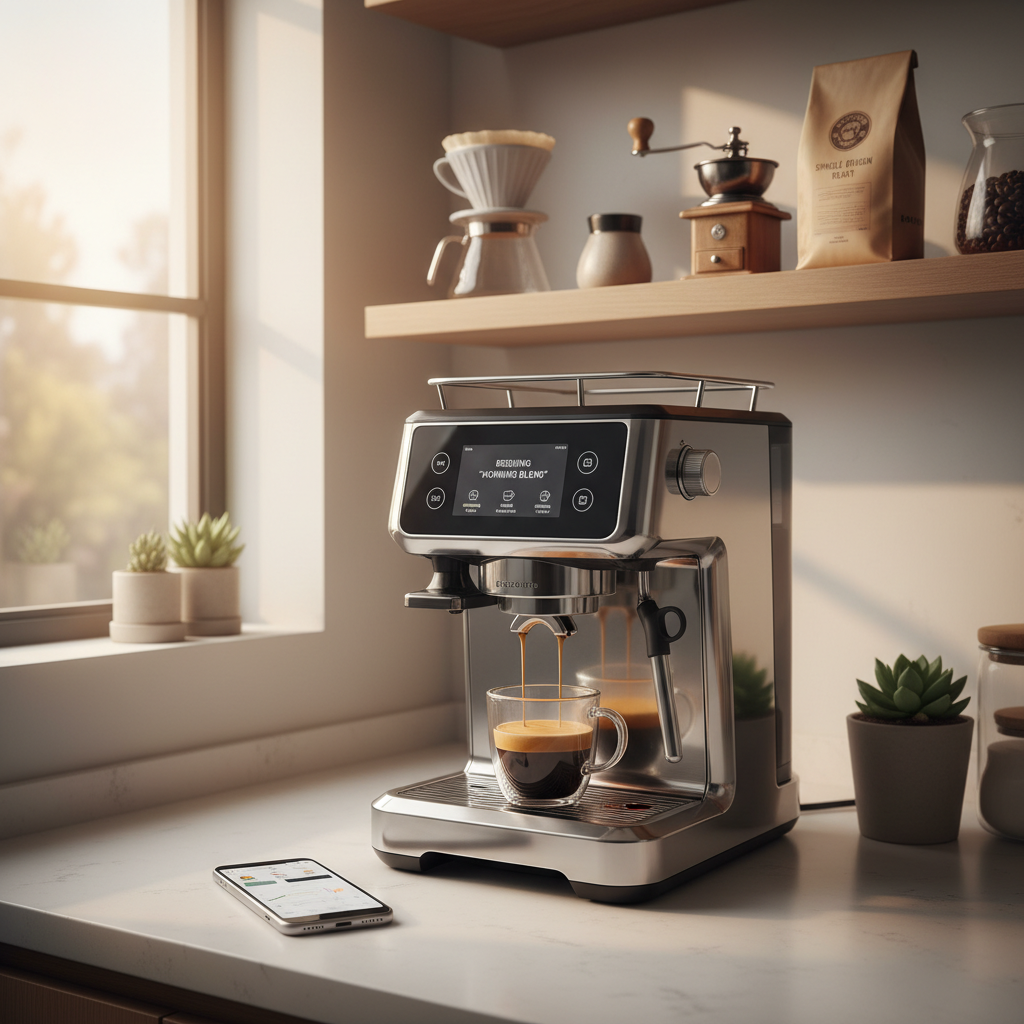
Coffee enthusiasts are experiencing a revolution in home brewing. The AI smart coffee bar represents the best of this transformation. Namely, combining artificial intelligence with precision engineering. Modern technology allows you to create café-quality beverages without leaving your kitchen.
Smart devices now understand your preferences. Accordingly, they adjust brewing parameters automatically, and even anticipate your morning routine. This integration of technology and coffee culture delivers consistency and convenience previously reserved for professional baristas.
Affiliate Disclosure: This page contains affiliate links. If you buy through our links, we may earn a commission at no extra cost to you.

Table of contents
- The Future of Home Coffee
- 🤖 Understanding AI in Coffee Technology
- 🏗️ Essential Components for Your AI Smart Coffee Bar
- 📱 Integration and Connectivity Setup
- 🎯 Optimizing Your AI Coffee Bar Layout
- 🔧 Advanced AI Features Worth Considering
- 💰 Budget Planning for Different Experience Levels
- 🔄 Maintenance and Optimization
- 🌟 Maximizing Your Investment
- 🎓 Learning Resources and Community
- ♻️ Sustainability Considerations
- 📊 Common Questions About AI Smart Coffee Bar
- 🚀 Getting Started: Your Action Plan – AI Smart Coffee Bar
- Related Links
🤖 Understanding AI in Coffee Technology
Understanding AI in coffee equipment begins with knowing what makes this technology truly “smart.” Rather than stopping at basic user programs, these systems continuously learn from your habits. Therefore, responding to changing conditions, and, as a result, fine‑tune every stage of the brewing process.
What Makes Coffee Technology “Smart”?
Artificial intelligence in coffee gear goes far beyond simple timers or presets. For example, these systems learn from your daily routine, then automatically adjust to environmental factors like room temperature or humidity so they can consistently optimize each brew.
Key AI Features Include:
- Machine learning algorithms that adapt to your taste preferences
- Environmental sensors monitoring temperature and humidity
- Predictive maintenance notifications
- Voice-activated controls through smart home integration
- Remote operation via smartphone applications
According to research from the Specialty Coffee Association, precision in brewing variables significantly impacts the final cup quality. Thus, making AI assistance invaluable for consistent results.
The Science Behind Smart Brewing
Modern AI coffee systems do not look at a single metric in isolation. Instead, they analyze multiple data points at the same time. In practice, temperature stability, water flow rate, and extraction time are all tracked in real‑time. This coordinated monitoring ensures each cup reaches optimal extraction for the specific beans you are using.
🏗️ Essential Components for Your AI Smart Coffee Bar
1. The Smart Espresso Machine
Your foundation requires an intelligent espresso machine with connectivity features. Therefore most premium models offer:
- Automatic grinding adjustments based on bean density
- Pressure profiling that adapts throughout extraction
- Temperature stability within 0.5-degree accuracy
- App connectivity for remote programming
- Usage analytics tracking your consumption patterns
Budget Range: $800 – $4,500
2. Precision Grinders with AI Calibration
Grinding consistency dramatically affects extraction quality. Therefore, smart grinders feature:
- Automatic dosing by weight rather than volume
- Burr wear detection and compensation
- Bean recognition technology
- Grind size recommendations based on brew method
- Integration with your espresso machine for seamless operation
Budget Range: $500 – $1,800
3. Smart Scales and Monitoring Devices
Precision measurement transforms good coffee into exceptional coffee. Therefore, invest in:
- Connected scales with 0.1-gram accuracy
- Real-time extraction monitoring showing flow rates
- Timer integration synchronized with your brewing device
- Recipe storage in cloud-based applications
Budget Range: $100 – $300
📱 Integration and Connectivity Setup
Creating Your Smart Ecosystem – AI Smart Coffee Bar
Building an effective AI coffee bar requires thoughtful integration. For this reason, start with devices sharing compatible communication protocols.
Essential Setup Steps:
- Establish a dedicated WiFi network for your coffee devices
- Choose a central control platform (Google Home, Amazon Alexa, or Apple HomeKit)
- Install manufacturer applications for each device
- Configure automation routines for different times of day
- Set up voice commands for hands-free operation
Network Requirements
Your smart coffee bar performs optimally with stable connectivity. Therefore, ensure your network provides:
- Minimum 10 Mbps download speed
- 2.4 GHz and 5 GHz dual-band capability
- Strong signal strength in your coffee bar location
- Router supporting multiple simultaneous connections
🎯 Optimizing Your AI Coffee Bar Layout
Ergonomic Design Principles
Physical arrangement matters as much as technology selection. Consequently, position equipment for efficient workflow.
Layout Considerations:
- Workflow zones: Separate preparation, brewing, and serving areas
- Electrical access: Multiple outlets preventing extension cord clutter
- Water source proximity: Minimizing refill inconvenience
- Counter space: Adequate room for simultaneous operations
- Storage solutions: Organized placement for beans, tools, and accessories
Lighting and Ambiance
Smart lighting enhances both functionality and atmosphere. Install:
- Under-cabinet LED strips with adjustable color temperature
- Task lighting focused on preparation areas
- Ambient lighting creating café-style atmosphere
- Motion-activated features for early morning convenience
🔧 Advanced AI Features Worth Considering
Predictive Brewing Technology – AI Smart Coffee Bar
Cutting-edge systems anticipate your needs through pattern recognition. Additionally, these devices learn when you typically make coffee, pre-heating before you arrive in the kitchen.
Advanced Capabilities:
- Calendar integration adjusting to your schedule variations
- Weather-based adjustments modifying brew strength on cold mornings
- Inventory monitoring alerting you when supplies run low
- Preference profiles for multiple household members
Water Quality Management
Water comprises 98% of your coffee. Consequently, this makes water quality paramount. Smart filtration systems offer:
- Real-time monitoring of mineral content
- Automatic filter replacement reminders
- pH level optimization for different coffee varieties
- Temperature pre-heating for immediate brewing
Research published by MIT’s Computer Science and Artificial Intelligence Laboratory demonstrates how AI algorithms can optimize complex beverage preparation through multi-variable analysis.
💰 Budget Planning for Different Experience Levels
Entry-Level Smart Coffee Bar ($1,500 – $3,000)
Recommended Components:
- Semi-automatic espresso machine with basic connectivity
- Manual grinder with digital display
- Connected scale with timer
- Smart plug for scheduling
Intermediate Setup ($3,000 – $7,000)
Enhanced Features:
- Fully automatic espresso machine with app control
- Smart grinder with dosing automation
- Integrated brewing station with milk frothing
- Water filtration system
- Multiple accessory tools
Premium Experience ($7,000 – $15,000+)
Professional-Grade Equipment:
- Commercial-quality espresso machine with AI profiling
- Professional smart grinder with particle distribution analysis
- Complete water management system
- Voice-activated controls throughout
- Dedicated espresso bar furniture and design
🔄 Maintenance and Optimization
Automated Maintenance Features – AI Smart Coffee Bar
Modern smart coffee equipment simplifies upkeep through automation. For instance, these systems track usage and remind you about necessary maintenance.
Maintenance Notifications Include:
- Cleaning cycle reminders based on actual usage
- Descaling schedules adjusted for water hardness
- Burr replacement recommendations
- Filter change alerts
- Software update notifications
Performance Monitoring
Your AI coffee bar continuously analyzes its own performance. Additionally, dashboard applications may display:
- Extraction quality scores
- Temperature consistency graphs
- Pressure profile comparisons
- Historical brewing data
- Troubleshooting recommendations
🌟 Maximizing Your Investment
Continuous Learning and Improvement – AI Smart Coffee Bar
Smart technology becomes more valuable over time through software updates and expanded features.
Optimization Strategies:
- Regularly update firmware on all connected devices
- Experiment with recipes using guided modes
- Participate in online communities sharing optimization tips
- Track your preferences through app analytics
- Adjust settings seasonally as bean varieties change
Expanding Capabilities
Your coffee bar can grow alongside your expertise. Additionally, consider these expansions:
- Additional brewing methods like pour-over stations with smart kettles
- Cold brew systems with automated timers
- Roasting equipment for complete bean-to-cup control
- Milk alternatives with specific frothing requirements
🎓 Learning Resources and Community
Educational Opportunities – AI Smart Coffee Bar
Technology enhances your coffee journey through accessible learning. Also, smart devices often include:
- Built-in tutorials explaining brewing science
- Video demonstrations of proper techniques
- Community forums within manufacturer apps
- Expert barista consultations via video chat
- Recipe libraries from coffee professionals
Connecting with Other Enthusiasts – AI Smart Coffee Bar
Furthermore, online communities provide valuable support:
- Reddit’s r/Coffee and r/espresso communities
- Facebook groups dedicated to specific equipment
- Discord servers for real-time troubleshooting
- YouTube channels reviewing smart coffee technology
- Instagram accounts showcasing setup inspiration
♻️ Sustainability Considerations
Energy Efficiency – AI Smart Coffee Bar
Smart technology reduces environmental impact through intelligent power management. For example, modern devices feature:
- Automatic standby modes conserving electricity
- Scheduled operation minimizing idle consumption
- Energy usage tracking promoting awareness
- Eco-modes optimizing efficiency without sacrificing quality
Waste Reduction
AI systems help minimize waste through precise measurement:
- Exact dosing eliminates excess grounds disposal
- Predictive inventory prevents bean staleness
- Reusable filter compatibility in smart systems
- Water usage optimization for cleaning cycles
📊 Common Questions About AI Smart Coffee Bar
You can start building an AI smart coffee bar with approximately $1,500. This budget allows for an entry-level connected espresso machine, basic smart scale, and essential accessories. However, more sophisticated setups with advanced features typically require $3,000-$7,000 for optimal performance and automation capabilities.
Most modern smart coffee devices offer straightforward setup processes designed for non-technical users. Typically, setup involves downloading manufacturer apps, connecting to WiFi, and following guided installation wizards. Likewise, manufacturers provide detailed video tutorials, and most users complete initial setup within 30-60 minutes per device.
AI-powered coffee machines significantly improve consistency and quality through precise control of critical variables. Specifically, these systems maintain exact temperatures, adjust extraction pressure in real-time, and compensate for environmental factors that manual brewing cannot address consistently. Professional taste tests demonstrate measurable improvement in cup quality compared to traditional methods.
More Common Questions – AI Smart Coffee Bar
Reputable manufacturers provide long-term software support extending device lifespan significantly. Additionally most premium smart coffee equipment receives updates for 5-7 years minimum. Additionally, many devices function perfectly as traditional equipment even after smart features become outdated, protecting your investment.
A small kitchen does not rule out an AI smart coffee bar. Instead, you can choose compact machines, stack gear vertically. Likewise, use under‑cabinet lighting and wall‑mounted accessories so the space feels organized rather than crowded.
Once it is dialed in, an AI smart coffee bar can save you several minutes every morning by pre‑heating on schedule and automating grind and brew steps. Over a month, that can easily add up to hours that you would otherwise spend fussing with manual adjustments.
Yes, most AI coffee setups work very well in multi‑user homes. You can create separate profiles with each person’s favorite drinks and strengths. As a result, switching from one user to another is as simple as choosing a name in the app or using a different voice command.
🚀 Getting Started: Your Action Plan – AI Smart Coffee Bar
Month One: Research and Planning
Begin your journey with thorough investigation and space assessment:
- Measure your available space and electrical capacity
- Research specific models reading reviews from verified purchasers
- Join online communities asking questions about experiences
- Visit showrooms to experience equipment firsthand
- Create a prioritized wishlist of must-have features
Top Smart Coffee Machine Options to Research:
- Breville Oracle Touch (affiliate link) – Features automatic grinding, dosing, and milk texturing with touchscreen interface and customizable profiles
- De’Longhi Dinamica Plus (affiliate link) – Offers app connectivity, automatic cleaning. Also features a built-in LatteCrema system for beginners
- Jura Z10 (affiliate link) – Premium choice with AI-powered brewing optimization. Also has voice activation capabilities
- Philips 5400 LatteGo (affiliate link) – Mid-range option featuring 12 drink selections and intuitive app control
Month Two: Initial Purchase and Setup
Focus on core equipment establishing your foundation:
- Purchase your primary espresso machine
- Select your smart grinder
- Install and configure according to manufacturer guidelines
- Experiment with basic functions understanding capabilities
- Document your baseline preferences before AI customization
- Begin training the system through consistent usage
Select your smart grinder considering these top-rated options that integrate seamlessly with your AI coffee bar:
- Baratza Sette 270Wi (affiliate link) – WiFi-enabled with precise weight-based dosing and smartphone connectivity
- Fellow Ode Brew Grinder(affiliate link) – Minimalist design with app-based grind adjustments, Thus, delivering consistent particle distribution
- Eureka Mignon Single Dose (affiliate link) – Silent operation with stepless adjustment and excellent retention specs
- Niche Zero – Single-dose capability with micro-adjustment dial and zero-retention design
Month Three: Optimization and Expansion
Fine-tune your setup achieving peak performance:
- Analyze usage data identifying patterns and opportunities
- Adjust automation rules matching your lifestyle
- Consider complementary devices enhancing functionality
- Share experiences with online communities
- Plan future upgrades as your expertise grows