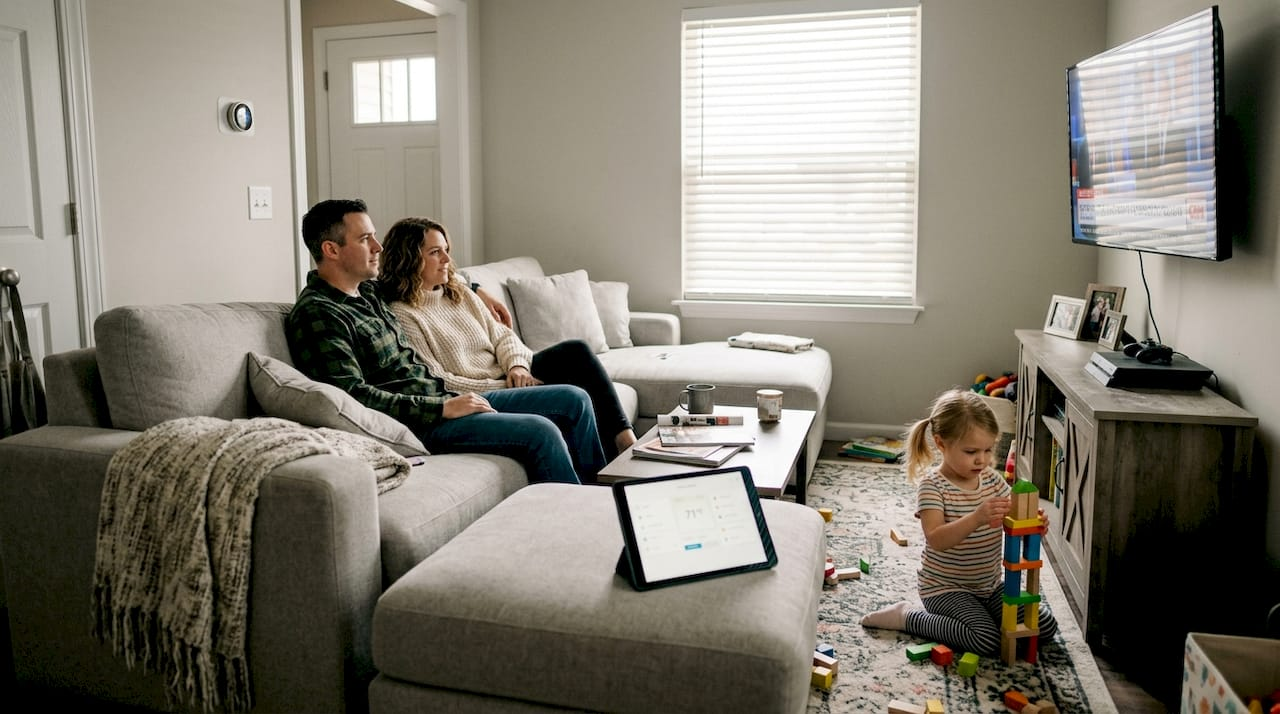
Balancing comfort, security, and rising energy costs is a real challenge for most homeowners. Home automation addresses all three at once, and the benefits often go further than people expect. Whether you’re thinking about your first smart thermostat or planning a fully connected home, the advantages are backed by research and real-world results. This article breaks down the most significant benefits, from measurable energy savings to daily convenience upgrades, so you can make a confident, informed decision about where home automation fits into your life.
Table of Contents
- Save energy and reduce costs automatically
- Increase security and gain peace of mind
- Ultimate convenience: Automate daily routines
- Powerful integration: A connected and smarter ecosystem
- Positive environmental impact and future-proofing
- Why most homeowners underestimate home automation’s value
- Explore the best home automation solutions with Smart Home HQ
- Frequently asked questions
Key Takeaways
| Point | Details |
|---|---|
| Major energy reductions | Smart home automation can reduce energy use and emissions by up to 65% and cut monthly bills through real-time optimization. |
| Maximized home security | Automated security devices, alerts, and monitoring lower break-in risks while streamlining peace of mind. |
| Effortless comfort and routines | Home automation makes everyday living simpler, with automations that save time and reduce manual chores. |
| Integration boosts value | Connecting more devices unlocks greater savings, convenience, and future-proofing for any home. |
Save energy and reduce costs automatically
Energy bills are one of the biggest motivators for homeowners exploring automation, and the results are genuinely impressive. Smart thermostats, automated lighting, and connected appliances work together to cut electricity use without requiring you to constantly manage settings. The system does the heavy lifting for you.
According to a recent sustainability study, smart home automation reduces annual carbon emissions by up to 65% compared to continuous operation, thanks to intelligent HVAC and A/C control. That’s not a marginal improvement. That’s a fundamental shift in how your home consumes energy. IoT-based (Internet of Things) systems go even further by automating devices based on occupancy, lighting conditions, and remote control, which reduces electricity consumption across the board.
Here’s what makes automated energy management so effective:
- Smart thermostats learn your schedule and adjust heating and cooling automatically
- Motion-activated lighting ensures lights are never left on in empty rooms
- Smart plugs and outlets cut standby power from devices you’re not using
- AI-driven scheduling optimizes appliance use during off-peak energy hours
- Real-time energy dashboards show exactly where your electricity is going
For deeper strategies, check out these energy saving tips for smart homes and the full smart home energy guide for a step-by-step approach to maximizing efficiency.
Pro Tip: Pair occupancy sensors with scheduled automations. When a room is empty for more than 10 minutes, the system can automatically lower the thermostat and turn off lights, saving energy without any manual effort on your part.
Increase security and gain peace of mind
As vital as energy savings are, a secure home is even more non-negotiable for most families. Home automation gives you a layered security setup that works around the clock, even when you’re not there.

47% of US internet households now own home security solutions, and security is the leading driver of device integration. Households with security systems are far more likely to connect multiple devices: 54% of security households have integrated devices compared to just 35% of those without. That tells you something important about how security motivates smarter setups overall.
Automated security systems provide real-time monitoring and remote access, motion-activated lights and alarms, and measurable reductions in theft and burglary risk. You can check your front door camera from anywhere, lock a door you forgot to close, or get an instant alert if a sensor is triggered.
| Security feature | Standalone device | Automated system |
|---|---|---|
| Remote access | Limited | Full, via app |
| Motion alerts | Basic | Real-time, customizable |
| Integration with locks | None | Seamless |
| Response automation | Manual | Instant, triggered |
Key security benefits you get with automation:
- Smart locks that auto-lock at set times or when you leave
- Video doorbells with motion detection and two-way audio
- Window and door sensors that trigger alerts instantly
- Automated lighting that simulates occupancy when you’re away
For a closer look at how this all works together, read more about automation for home security and how integrated systems outperform standalone devices.
“Security is not just about cameras. It’s about building a responsive system that reacts before problems escalate.”
Ultimate convenience: Automate daily routines
Energy and security are core, but true quality of life improvements come with convenience automations. This is where home automation shifts from useful to genuinely life-changing for many people.
Think about your morning routine. Lights gradually brighten at your wake time, the coffee maker starts automatically, and the thermostat adjusts to your preferred daytime temperature. By the time you’re out of bed, your home is already working for you. In the evening, a single “goodnight” command locks the doors, dims the lights, and sets the thermostat for sleep.
60% of smart device users report finding them more convenient than they expected, which means the reality often exceeds the hype. That’s a strong signal for anyone on the fence about getting started.
Practical convenience automations worth setting up:
- Morning scene: Lights on, coffee starts, thermostat adjusts, all triggered at a set time
- Away mode: Locks engage, cameras activate, and energy-saving settings kick in when you leave
- Sunset lighting: Outdoor and indoor lights turn on automatically as daylight fades
- Arrival trigger: Your home detects your phone’s location and unlocks the door, adjusts temperature, and turns on lights before you walk in
- Bedtime routine: One tap or voice command handles locks, lights, and climate for the night
The real value here is reducing mental load. You stop thinking about whether you turned off the lights or locked the door. The system handles it. Explore how smart home integrations make these routines work seamlessly, and see why integrating smart devices together delivers far more value than using them separately.
Pro Tip: Start with two scenes: one for morning and one for evening. Even basic automations like these immediately reduce the number of manual tasks you handle each day.
Powerful integration: A connected and smarter ecosystem
To get all these benefits, it’s integration, which means connecting devices into a coherent system, that truly unlocks home automation’s full potential. Individual gadgets are useful. A connected ecosystem is transformative.
85% of homeowners already use at least one smart device, and 77% are interested in holistic energy management. Higher integration consistently boosts satisfaction and savings. AI-driven smart buildings show 14% energy savings with 91% resident satisfaction, alongside a 17.6% reduction in operational costs and 13.2% in maintenance costs. Those numbers reflect what happens when devices work together instead of in isolation.
| Integration level | Energy savings | Resident satisfaction | Cost reduction |
|---|---|---|---|
| Single device | Minimal | Moderate | Low |
| Partial integration | Moderate | High | Moderate |
| Full AI-driven system | Up to 14%+ | 91% | Up to 17.6% |
If you’re new to integration, here’s a practical starting sequence:
- Choose a central hub or platform (such as Google Home, Amazon Alexa, or Apple HomeKit) to connect all your devices
- Add a smart thermostat as your first high-impact device for immediate energy savings
- Connect smart lighting and set up basic occupancy or schedule automations
- Integrate security devices like cameras and smart locks into the same platform
- Expand with sensors and routines to create automated responses across multiple devices
For a broader view of your options, compare whole home automation versus a room-by-room approach, and use these smart home integration tips to avoid common setup mistakes.
Positive environmental impact and future-proofing
Beyond personal comfort, smart automation is changing how homes impact the planet and adapt to new technologies. The environmental case for home automation is just as strong as the financial one.
As noted earlier, carbon emissions drop by up to 65% with smart automation compared to systems running continuously. That’s a meaningful contribution to reducing household energy demand at scale, especially as more homes adopt these systems.
Key environmental and future-proofing benefits include:
- Renewable energy compatibility: Smart systems can prioritize solar power use and shift loads to match solar generation peaks
- EV charging integration: Automated scheduling charges electric vehicles during off-peak hours to minimize grid strain and cost
- Demand response participation: Some smart home platforms let you earn credits by reducing energy use during high-demand grid periods
- Property value boost: Homes with integrated automation systems consistently attract higher resale interest and valuations
- Technology adaptability: Modern platforms like Matter (a universal smart home standard) ensure your devices stay compatible as new tech arrives
Setting up thermostat integration is one of the fastest ways to start reducing your environmental footprint while also cutting costs. As renewable energy becomes more accessible, a smart home is already positioned to take full advantage of it.
Future-proofing also means your investment holds value. Buyers in 2026 increasingly expect smart features, and homes with automation systems tend to sell faster and at better prices than comparable non-automated properties.
Why most homeowners underestimate home automation’s value
Here’s something we’ve noticed after reviewing and testing dozens of smart home setups: most homeowners think about automation in terms of individual gadgets, not systems. They buy a smart bulb, enjoy it, then stop. Or they install a video doorbell and consider themselves “done” with smart home tech.
The real value doesn’t come from any single device. It comes from layering automations over time, where each addition makes the whole system smarter and more responsive. A thermostat alone saves energy. A thermostat connected to occupancy sensors, a smart lock, and a weather forecast API saves significantly more, and does it without any input from you.
The other thing most people underestimate is the compounding effect on daily life. The time and mental energy you recover from not managing routine tasks adds up fast. Following a solid automation setup guide from the start helps you avoid the piecemeal trap and build something that actually delivers on the promise of a smarter home.
Explore the best home automation solutions with Smart Home HQ
If you’re convinced it’s time for a smarter, safer, and more convenient home, here’s where to find everything you need to get started.

Smart Home HQ takes the guesswork out of building your automated home. Whether you’re just starting out or ready to upgrade an existing setup, you’ll find clear, tested guidance at every step. Browse our curated list of essential smart devices to see what’s worth buying, compare products side by side in our automation product list, and follow our 2026 smart home setup guide for best practices that save you time, money, and frustration from day one.
Frequently asked questions
How much money can you actually save with home automation?
Smart automation can cut energy use significantly, with carbon emissions reduced by up to 65% and AI-driven systems showing 14% energy savings alongside lower operational and maintenance costs.
Is home automation worth it for small homes or apartments?
Absolutely. IoT systems automate devices based on occupancy and lighting regardless of home size, making energy management and security just as impactful in smaller spaces.
What types of devices offer the best return on investment?
Security devices, smart thermostats, and integrated lighting deliver the fastest ROI, with security devices topping purchase intentions and consistently high utility ratings among homeowners.
Do I need to automate my whole house at once?
No. 85% of homeowners use at least one smart device and gain real benefits from partial setups, so starting small and expanding gradually is a perfectly effective approach.
Recommended
- Examples of Smart Home Automation for Owners – Practical Ideas
- Examples of Home Automation for Easy Smart Living
- Role of Automation in Homes: Security and Savings